The ABCs of STEM Research
June 24, 2026
Annie Zaleski
Header photo credit: Yevhen Gulenko
In fall 2026, Oberlin will start offering students pursuing a wide range of eligible majors—including biochemistry, neuroscience, physics, geosciences, and biology—the option to earn a Bachelor of Science degree.
Not only does this degree reflect Oberlin’s spirit of interdisciplinary inquiry, but it affirms the impressive scientific research and academic training that happens on campus every day. Students are presenting at symposia, co-authoring papers in scientific journals, and building skills for graduate school and beyond. The following projects represent a small fraction of the research that happens on campus every day—and illustrate the robust support system students have as they pursue world-changing discoveries.
C is for CLEAR
Via peer mentorship and an array of programs and events, the Center for Learning, Education, and Research in the Sciences (CLEAR) provides tailored support for students historically excluded from STEM fields. For example, dedicated academic tutors help students thrive in foundational STEM classes, while post-graduation career panels and seasonal community events build community.
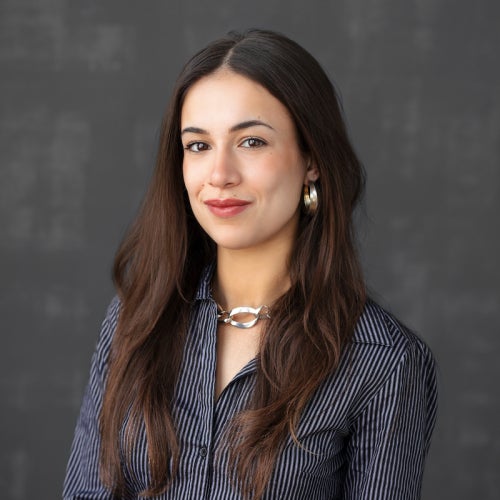
Julia Ludwig ’27 started as a CLEAR mentor and later became a CLEAR coordinator, a leadership position in which she helps the next generation of mentors support future superstar scientists. The biochemistry and neuroscience double major already knows plenty about success: Her research project “Identification and Characterization of Environmentally and Clinically Derived Pathogens,” which she completed in the Gaybe Lab, run by Assistant Professor of Biology Gaybe Moore ’15, isolated and analyzed bacteria found on campus.
Using the Galleria mellonella infection model, Ludwig discovered that a strain of bacteria that usually doesn’t cause disease in humans, Priestia megaterium, actually triggered more of an immune response. “My findings suggest that these species may possess overlooked pathogenic traits,” she says. “This contributes to a growing understanding that microbial classifications may need to be reevaluated as new evidence emerges.”
Ludwig, who was invited to present a poster on this research at a biomedical conference for minority scientists, envisions additional work to understand why and how this occurs. “Understanding these pathways could offer deeper insights into bacterial-host interactions,” she says, “and inform better strategies for infection control in both healthcare and community settings.”
D is for Double Degree
Double Degree students at Oberlin have the best of both worlds: majors in both the college and conservatory, giving them the flexibility to pursue research alongside their artistic training.
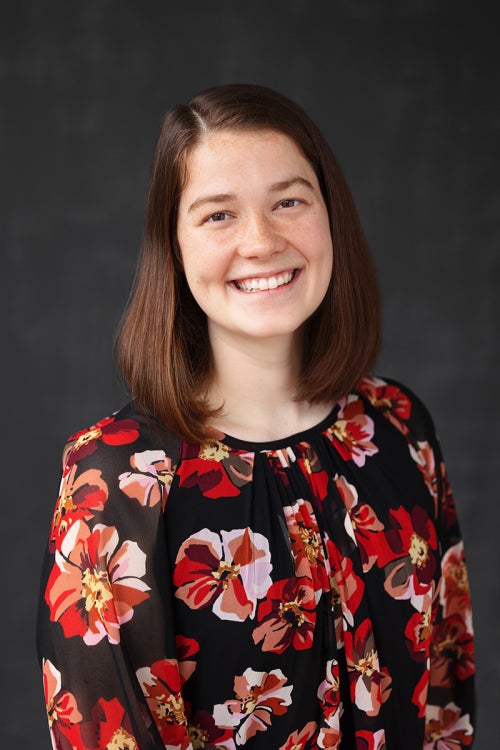
You can frequently find Molly Foley ’25 in a performance space. A Double Degree student who majored in biochemistry and horn performance, Foley played in multiple ensembles, including the Oberlin Orchestra and the Oberlin Contemporary Music Ensemble, and explored chamber music with her woodwind quintet.
However, Foley is equally at home conducting research. After her first year, she joined Professor of Chemistry and Biochemistry Matt Elrod’s atmospheric chemistry lab, where she was part of the team that published a paper in the August 2025 ACS ES&T Air examining the role of atmospherically relevant carbonyl organonitrates on secondary organic aerosol formation. Next, she joined the lab of Associate Professor of Chemistry and Biochemistry Lisa Ryno, studying how lactose, glucose, and galactose influence bacterial biofilm formation, composition, and antibiotic sensitivity.
In summer 2025, these experiences led Foley, who was supported by Oberlin’s Internship+ program, to a biogeochemical lab for a summer research experience. She spent a month at the Georgia Institute of Technology and another month with her lab aboard a research boat roughly 100 miles offshore in the Atlantic Ocean, collecting samples and conducting fieldwork.
Oberlin prepared her well, she says. Her chemistry courses gave her the strong foundation to understand the techniques involved in the research: “Working in two different chemistry labs at Oberlin allowed me to feel confident conducting research independently.”
F is for Funding
Students interested in research have access to a variety of funding sources through Oberlin, including fellowships, scholarships, and grants.
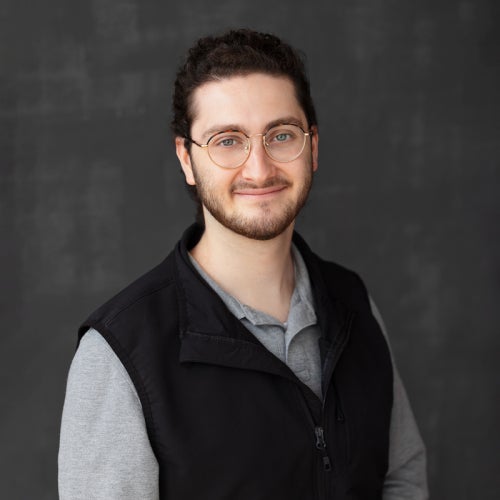
Luke De Carlo-McCann ’26’s geosciences and anthropology studies have taken him to Alaska, where his collaborative research focuses in and around the Sitka area, particularly on intertidal fieldwork and ecology. He has also served as a committee member on the Arctic Research Consortium of the United States (ARCUS). After graduation, De Carlo-McCann, who’s also earned a prestigious Goldwater Scholarship and the Nexial Prize, plans to head back to Alaska, this time as a biological science technician with the U.S. Fish and Wildlife Service.
De Carlo-McCann’s research is a long-term project involving California mussels; it “investigates how changing environmental and climatic conditions are recorded in [their] shells … and what this means for the stability of the species and those who rely on it as a traditional source of food into the future,” he says.
By tracking the growth of mineral crystals in these shells, De Carlo-McCann can record ocean changes and climate variations over time. “For thousands of years, this edible species has remained integral to the culture, economy, and diet of Indigenous coastal communities,” he says. “My work emphasizes the impacts these changes have on the growth of this species and the human communities that depend on it as a source of food.”
De Carlo-McCann’s research has been supported by multiple funding sources, including Oberlin’s Internship+ program via the Oberlin Summer Research Institute (OSRI); a Western Society of Malacologists James H. McLean Student Grant in Collections-Based Research; and awards from the Richard ’63 and Karen Cowan ’63 Ford Endowed Anthropology Fund and the Abbie Helene Roth ’90 Science Research Fund.
Working in two different chemistry labs at Oberlin allowed me to feel confident conducting research independently.
Molly Foley '25
I is for Internship+
Earmarked for third-year students, Oberlin’s Internship+ program provides funding for high-quality summer experiential learning opportunities—ensuring that Obies can explore career interests, gain experience, and build their professional networks.
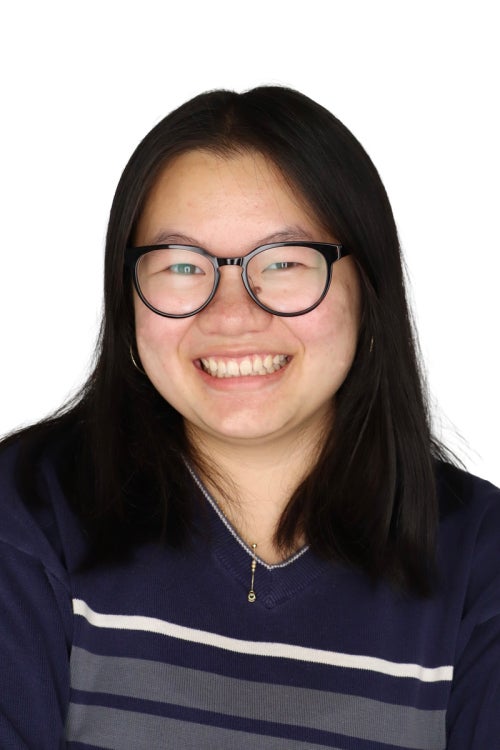
Last summer, Victoria Adair ’26 was an undergraduate research fellow at Columbia University. A psychology major with a concentration in data science, she designed a research project on the neural mechanisms of social categorization, including a literature review, a proposal, data analysis, and an oral report.
“One of my primary goals was to go through the process of creating, proposing, and beginning a research project from the ground up in a quantitative area of psychology,” Adair says. “Since I plan to pursue a career in research, it was essential to develop the ability to turn broad interests into testable questions and manage projects productively and efficiently.”
This experience built on her work as a research assistant in the Asian American Identity and Mental Health Lab of Assistant Professor of Psychology and Comparative American Studies Danielle Godon-Decoteau. Together, they worked on a qualitative study on how second-generation Asian Americans initiate conversations about race with their elders. Adair presented the lab’s research results at several conferences, taking third prize for a poster at the Asian American Psychological Association’s annual convention, and wrote a final report for submission to a journal.
M is for Mentorship
Since Oberlin is an undergraduate-only institution, students work closely with faculty members on their research—leading to lab experience, symposium presentations, and author credits on published academic papers.
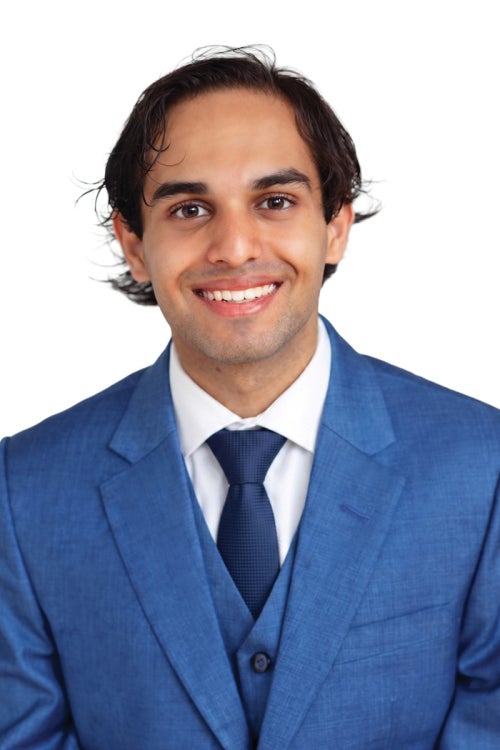
Shaswat Gajurel ’27’s childhood was filled with memories of his parents conducting research and writing papers on internal medicine. A biochemistry and biology major, he is following in his family’s footsteps by working with Professor of Biology Aaron Goldman on research into molecular evolution prior to the emergence of the Last Universal Common Ancestor (LUCA). More specifically, the Goldman lab studies universal paralog families—protein groups with duplicated members present in the LUCA.
“Through a comprehensive database, we reconstruct the amino acid sequences of ancestral proteins, shedding light on the ancient genetic landscape of life on Earth,” Gajurel says. “By unraveling the evolutionary history encoded in these proteins, we aim to uncover pivotal insights into the origins and early diversification of life.”
Goldman’s “expertise in the field of genomics and evolutionary biology has guided the overall direction of the project,” Gajurel says. “On a more personal level, his guidance has improved my technical skills and taught me the importance of patience. If something goes wrong, just try again or try a new methodology.”
O is for OSRI
The Oberlin Summer Research Institute (OSRI) is an immersive eight-week residential program that offers faculty-mentored research alongside skill development, academic advancement, and personal and professional growth.
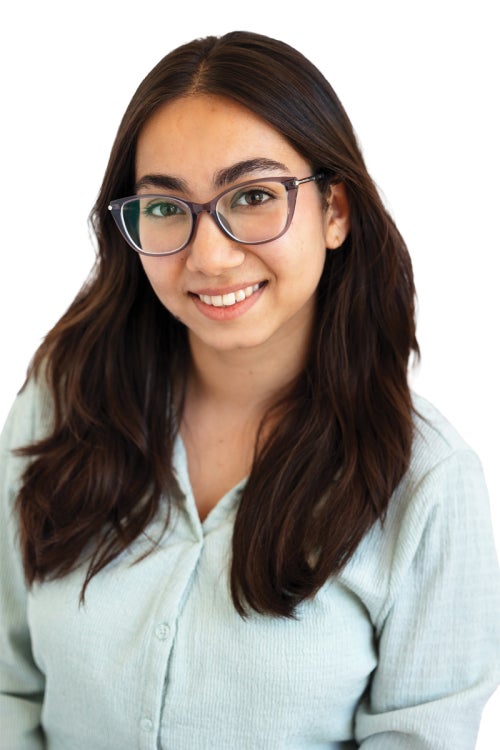
While still in high school, Maria Mozumdar ’28 conducted research at a children’s hospital in Bangladesh. “I assisted in diagnosing infectious diseases and saw firsthand how lack of data delayed treatment,” she says. “That experience made me realize that research—especially data-driven research—was essential to improving health care outcomes.” In college, Mozumdar was drawn to research opportunities that combined biostatistics and global health, so she developed the skills to address real-world disparities, particularly in under-resourced settings like Bangladesh.
Her 2025 OSRI presentation, “Integrating Survival Analysis and Machine Learning to Predict Breast Cancer Outcomes in Young Women,” investigates survival trends and risk factors in an often underrepresented group in research: women under 40. Mozumdar applied classical statistical modeling techniques and machine learning to existing data to identify the demographic, clinical, and tumor-related factors that most influence patient outcomes.
“The goal is to better understand the unique challenges faced by young women with breast cancer and provide insights that can inform earlier detection, personalized treatment, and more inclusive public health strategies,” she says. “By combining data science with public health, this research aims to bridge gaps in cancer care and reduce age-related disparities in survival outcomes.”
Through hands-on experiments, critical analysis of primary literature, and discussions on translational implications, I gained a deeper understanding of how basic neuroscience can inform therapeutic strategies.
Anna Fritz '26
P is for Presenting
Many undergraduates present their research at regional and national conferences and symposia.
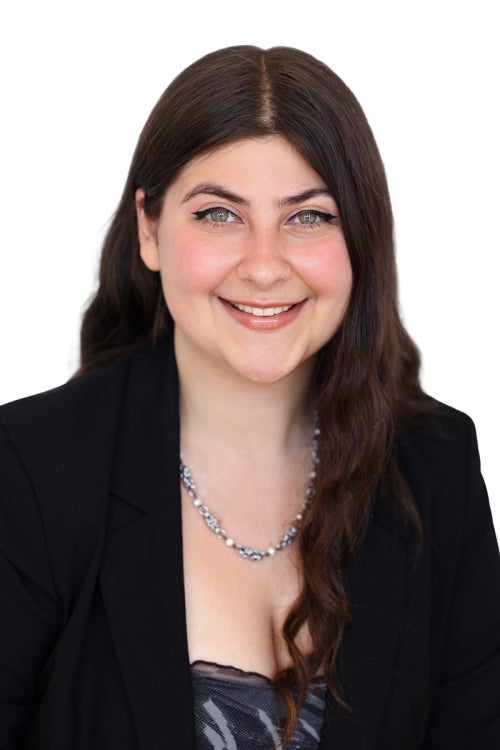
In the lab of Assistant Professor of Neuroscience Michelle Johnson '15, Haley Gottesman ’26 studies fused in sarcoma (FUS), a binding protein present in about 10 percent of people living with frontotemporal lobar degeneration (FTD). In these cases, DNA damage causes FUS to accumulate in cell cytoplasm. However, researchers are unsure why this damage occurs and how the FUS came to settle in the cytoplasm, both of which could be key to understanding why these people develop FTD.
In her honors thesis, “The Impact of Phosphorylation-Dephosphorylation Dynamics on Fused in Sarcoma (FUS) Subcellular Localization in Response to DNA Damage,” Gottesman used techniques such as biochemical fractionation and fixed-cell time course experiments to identify the mechanisms behind these FUS FTD cases. “We determined methodological immunofluorescence conditions such as block, permeabilization condition, and primary antibody to alter the visualization of FUS subcellular localization within cells,” she says. At Oberlin, Gottesman presented sophisticated research like this at several professional conferences. “Interacting with mentors from all over and discussing with a diverse group of peers from across disciplines provided me with transferable skills.”
S is for STRONG
The STRONG (Science and Technology Research Opportunities for a New Generation) program supports first-generation and income-eligible students from backgrounds traditionally underrepresented in STEM. STRONG Scholars participate in a first-year experience designed to help them adapt to college and thrive in their ongoing STEM journeys.
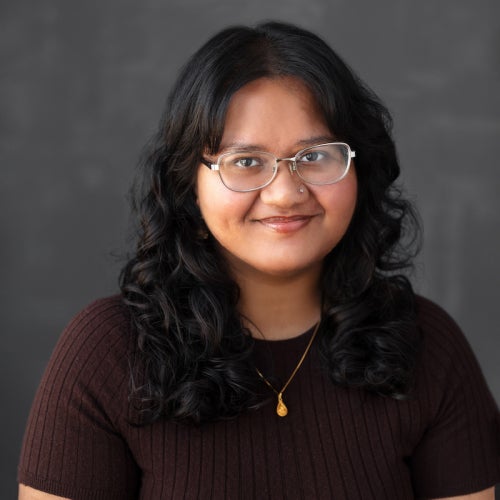
Tanisha Shende ’26, a computer science and mathematics major with a sociology minor, entered Oberlin as a STRONG scholar. She landed prestigious summer research positions at Cornell University and the MIT Media Lab—funded in part by a 2025 Goldwater Scholarship.
Focusing on human-computer interaction, human-centered design, and accessibility, Shende explores how technology can reinforce and mitigate social issues. “I study how AI can describe images and surroundings to blind and low-vision people, but also how it can perpetuate labor exploitation and environmental harm and remain a legally ambiguous space where digital harm outpaces regulation and case law.”
Having published five papers to date, Shende credits her STEM and humanities coursework as a catalyst for her success. “I am still exploring research areas,” says Shende, “but I’ve already done a lot of work in making existing technology more accessible for disabled people. Regardless of my specialization, I want the technology I study and develop to contribute to social good.” Shende is already seeing the impact of her work: In June 2026, she was coauthor on an MIT-led research paper published in the journal Communications Engineering on how creating real-time 3D medical ultrasound imaging in augmented reality could make ultrasounds easier to interpret.
U is for Undergraduate Research Intensive (URI) courses
Undergraduate Research Intensive (URI) courses offer hands-on research experiences guided by faculty—and let students immerse themselves in research within their field of study.
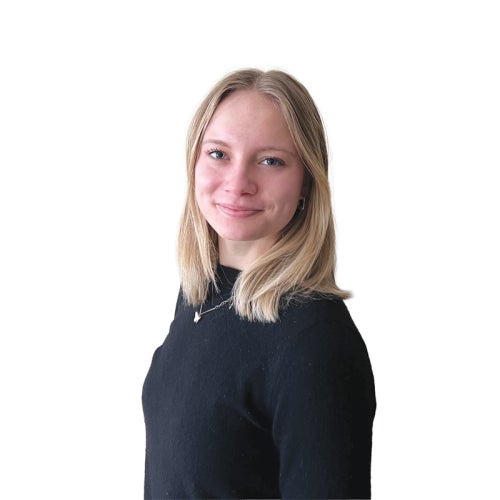
From a young age, Anna Fritz ’26 has been fascinated by the brain. Her Oberlin classes, specifically Professor Michelle Johnson's Developmental Neurobiology course and Professor Gunnar Kwakye's Laboratory in Neurotoxicology and Neurodegeneration URI, only intensified her interest.
“I began to appreciate the complexity of neural development, the vulnerability of the brain to toxic insults, and the intricate molecular pathways underlying neurodegenerative diseases,” she says. “Through hands-on experiments, critical analysis of primary literature, and discussions on translational implications, I gained a deeper understanding of how basic neuroscience can inform therapeutic strategies.”
Fritz is currently studying gene-environment interactions in Huntington’s disease with Kwakye. Last summer, she pursued a rewarding Internship+ experience: an eight-week Boston University Summer Program in Neuroscience. In the program’s STEPP Lab, a sensorimotor rehabilitation engineering lab, she focused on a project related to speech disorders in Parkinson’s disease. “This internship gave me direct insight into my post-Oberlin goals,” she says. “I am confident that I want to pursue translational and patient-centered research into neurodegenerative diseases.”
This story originally appeared in the Spring 2026 Oberlin Alumni Magazine. For more information on programs and opportunities for research at Oberlin, visit the Undergraduate Research hub.
You may also like…
James Millette, Professor Emeritus of African American Studies, Dies at 92
Trinidad and Tobago native made a late-career transition to Oberlin, where he was a staunch advocate for Black students and a mentor to young faculty.
Building Blocks for a Dynamic Future
At Oberlin, Frank Kusi Appiah ’29 combines an engineering degree with a liberal arts education and research opportunities
Oberlin Reimagines Humanities Education Through $1.487M Grant
New “HOPE” initiative centers humanities learning with real-world impact.