Program Overview
Chemistry and Biochemistry
Explore the dynamic center of the sciences.
Why Chemistry? A Transformative, Ubiquitous Field of Modern Science
Featured Facts and Stories
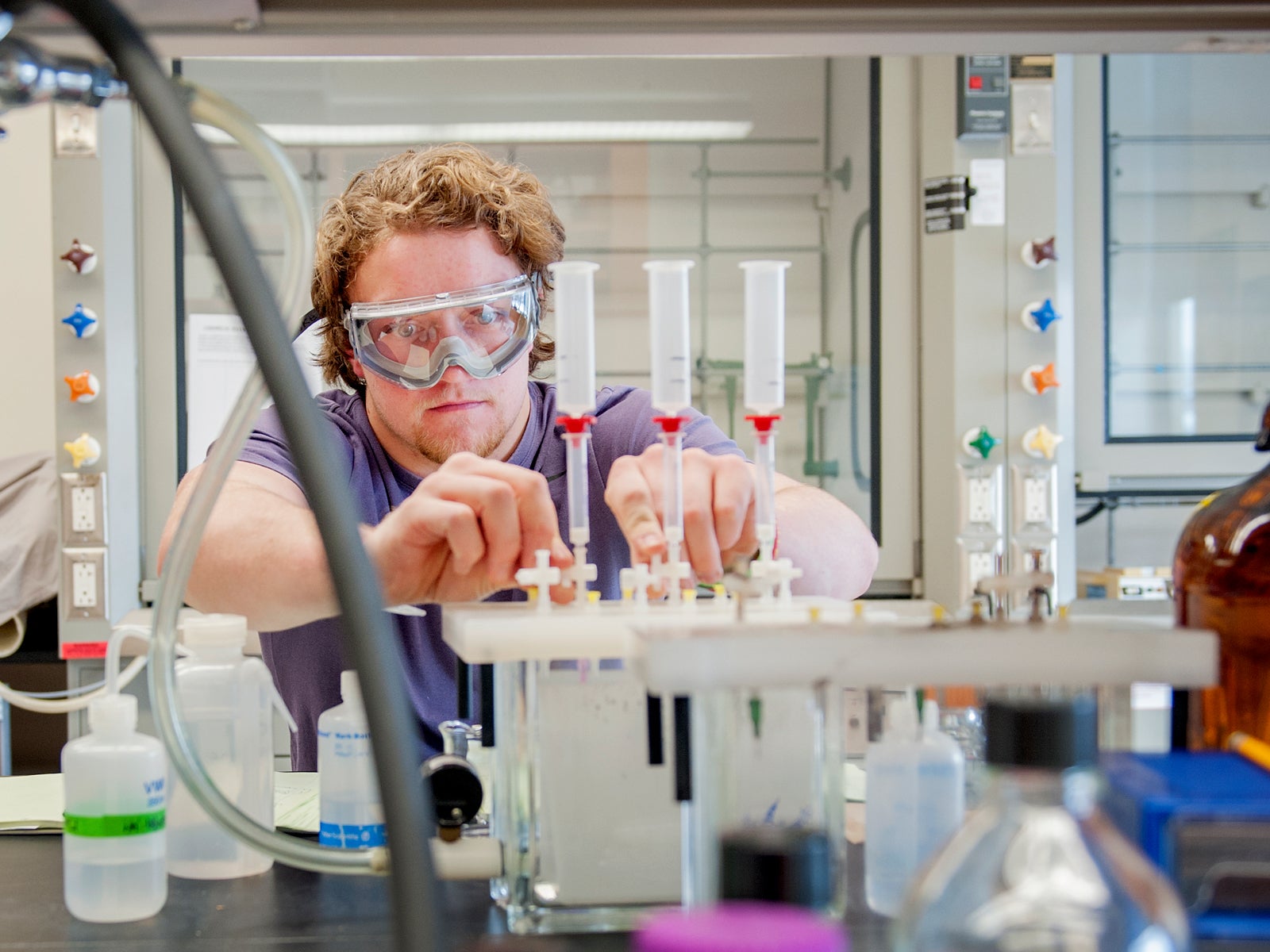
Over 75% of majors collaborate with faculty on publishable research
Careers in Medicine
The best physicians combine scientific expertise with a well-rounded interpersonal skill set. At Oberlin, work with our advisors to help pursue your career goals in health and medicine.
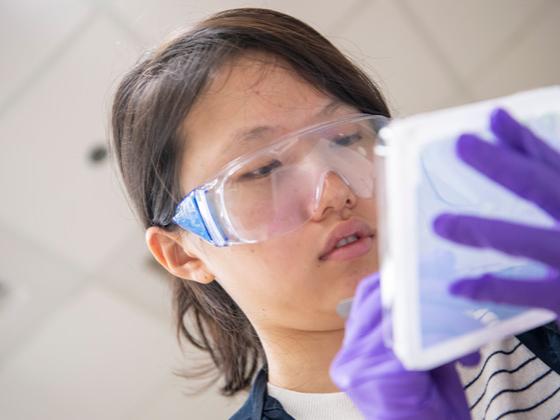
Over 9 active laboratories for students to get engaged
Faculty-Student Collaboration
Mentorship and research are cornerstones of the chemistry and biochemistry programs. At Oberlin, students work with faculty to achieve new scientific discoveries.

Undergraduate Research
What drives me the most in the research process is the possibility of discovering new things.
Featured Courses
FYSP 009
Drugs!
From aspirin to zantac, and oxycodone to gene editing, the development of therapeutic drugs is an interdisciplinary scientific effort that can have profound impacts on our health and society. This course will introduce chemical and biological concepts used in the drug discovery process, as well as ethical, economic, and political considerations.
- Taught by
- Jason Belitsky
CHEM 101
Structure and Reactivity
This entry-level course introduces students to the foundational study of reactions, chemical periodicity, bonding, molecular structure, and other questions central to the field of chemistry. Students have the option to join sections that are taught in workshop mode, emphasizing collaborative problem solving and peer discussion.
- Taught by
- Matthew (Matt) Elrod
CHEM 327
Synthesis Laboratory
This course introduces students to laboratory work involving the synthesis of organic and inorganic compounds by a variety of techniques (e.g. photochemical, electrochemical, inert atmosphere) and the use of spectroscopic methods (e.g. Fourier-transform NMR, infrared, and ultraviolet) for their characterization. Our lectures further develop the theory and unified application of spectroscopic analysis to solve structural problems.
- Taught by
- William (Will) Parsons, Shuming Chen
CHEM 374
Biochemistry
Learn about the mechanisms of action of modern pesticides and debate their ethical use. Explore how your body uses the biomolecules in the foods you eat to fuel essential cellular functions. Conduct laboratory experiments that identify and quantify proteins in complex solutions like human serum using state-of-the-art instrumentation.
- Taught by
- Lisa Ryno
Student Profiles
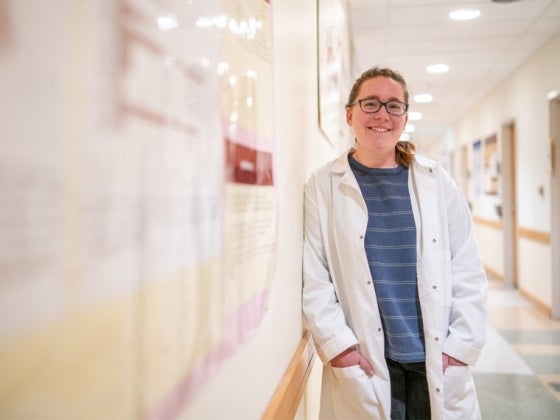
Recent Grad Earns Fulbright Study/Research Award
Julia Cronin ’25 double majored in chemistry and environmental studies at Oberlin. Now, the recent alum is conducting research on ice cores at the Niels Bohr Institute in Denmark.
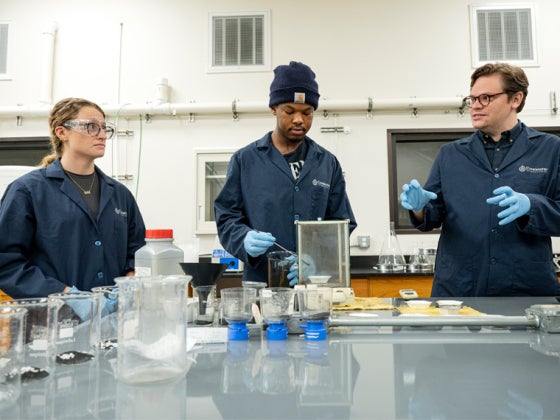
Groundbreaking work in water treatment
At CoreWater Technologies, Obies have developed a breakthrough way to eliminate harmful forever chemicals in a sustainable way. They’re working to remove these contaminants, called PFAS, from drinking water while reducing environmental impact and pollution.
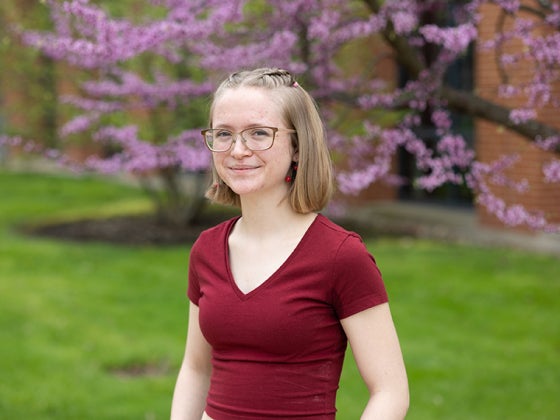
Chemistry Major’s Prestigious CBYX Fellowship
Elizabeth Rigby ’22 was one of 75 Americans selected to live and study in Germany for a year as part of the Congress-Bundestag Youth Exchange (CBYX) for Young Professionals program. She also completed a chemistry internship during her time there.
What does Chemistry at Oberlin look like?
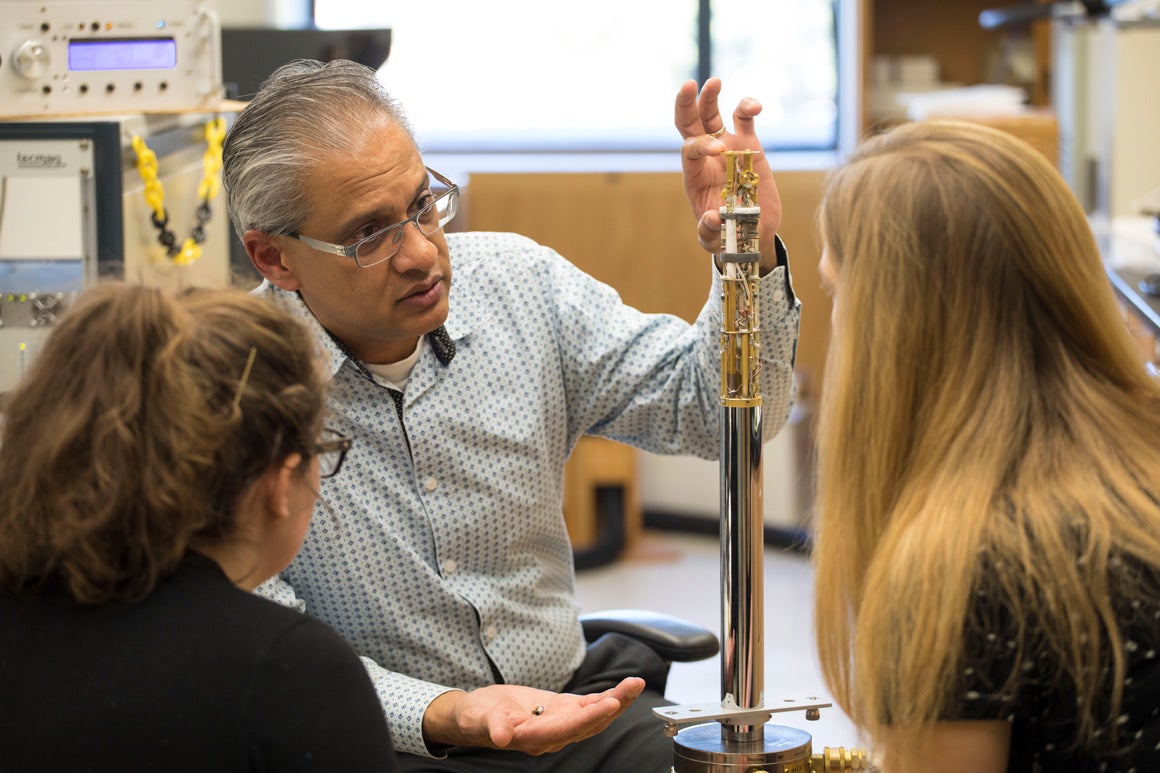
Professor Manish Mehta demonstrates an NMR probe for students.
Photo credit: Yvonne Gay
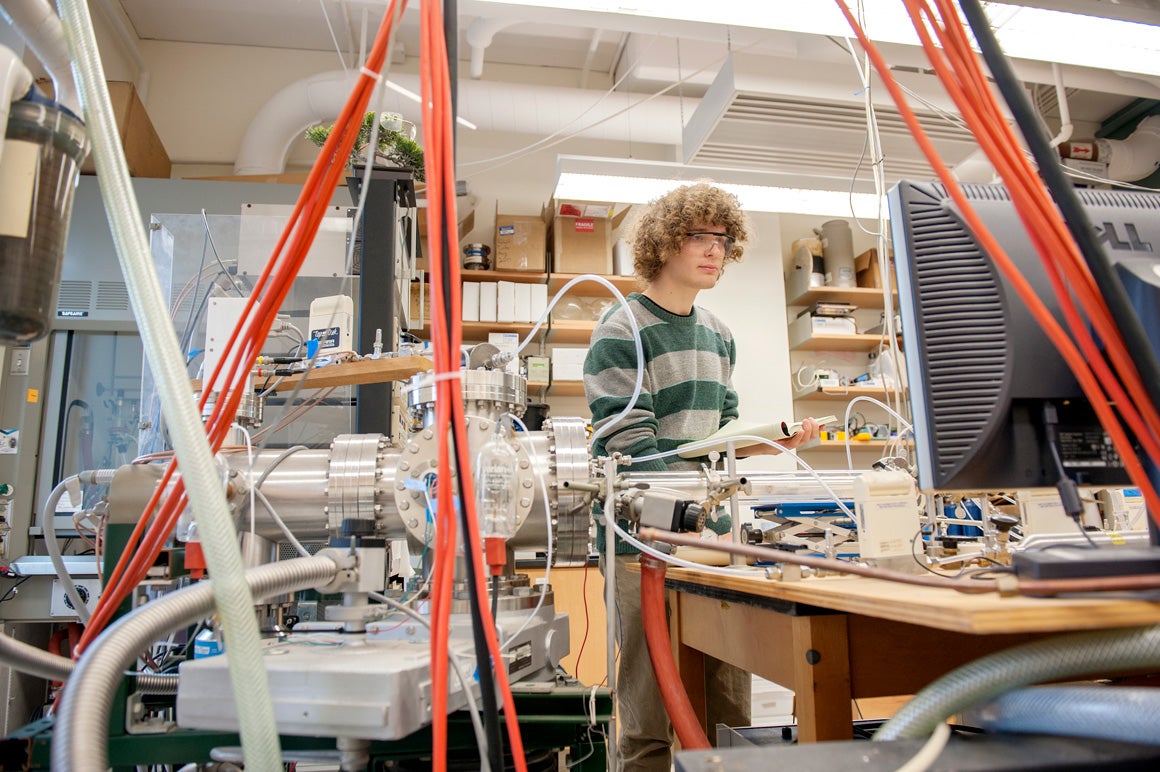
Chemistry major William Dresser '19 worked with Professor Matt Elrod on atmospheric research during winter term.
Photo credit: Mike Crupi
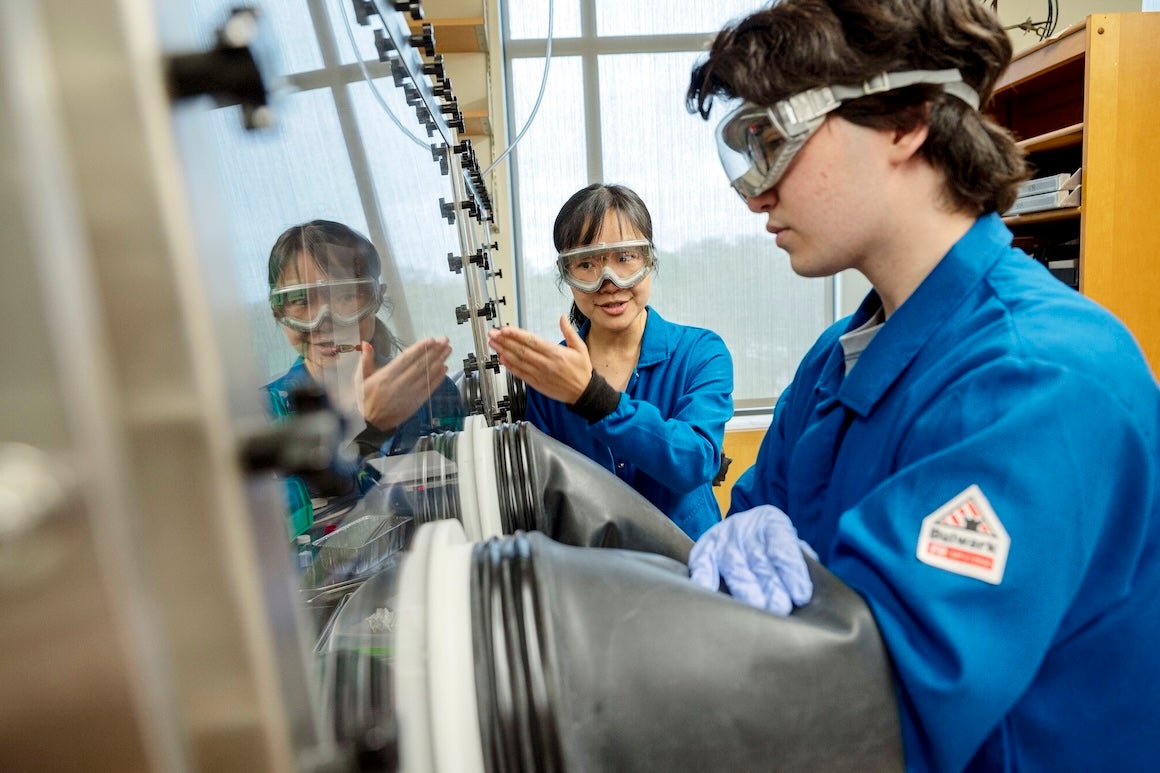
Students in Professor Shuming Chen’s lab learn the appropriate handling of highly reactive chemicals in an inert-atmosphere glove box.
Photo credit: Nathaniel Liu
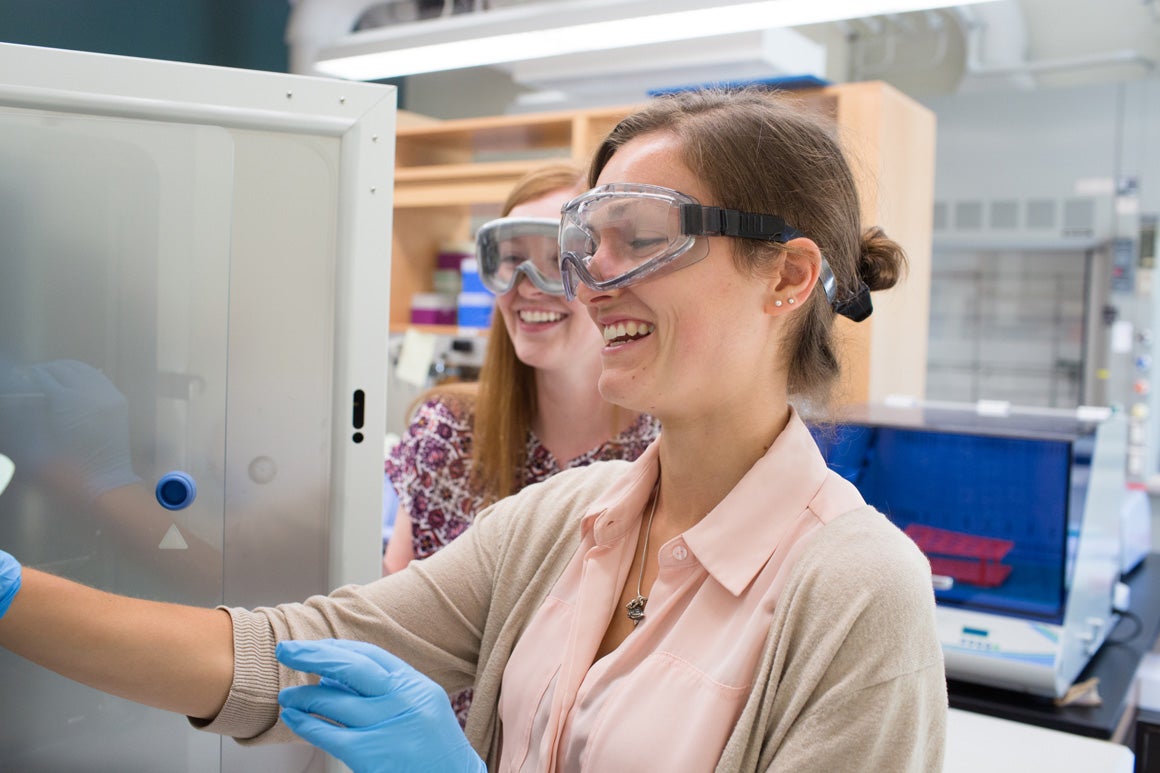
In Lisa Ryno’s lab, students use fluorescence and scanning electron microscopy to explore antibiotic stress responses.
Photo credit: Tanya Rosen-Jones
Chemistry and Biochemistry News
Dylan Hwang ’26 Connects Chemistry to Patient Care
A CELA-supported internship in Singapore reveals how analytical science drives medical breakthroughs.
Zosia Greer ’27 Earns Goldwater Scholarship for Neuroscience Research
Junior neuroscience and biology major honored for her extensive research into Parkinson’s disease treatments and the dopamine system.
Formulating a Future: Finding a Calling in Pharmaceutical Science
Chemistry major Alex Xie ’26 utilizes CELA’s research fellowships and scholarship advising to transition from campus labs to a future in pharmaceutical research.
Next Steps
Get in touch; we would love to chat.