
Undergraduate Research
Oberlin Summer Research Institute
The Oberlin Summer Research Institute (OSRI) is an immersive 8-week residential program in Oberlin each June and July that offers Oberlin students an intensive faculty-mentored research experience. The Institute provides targeted programming to support OSRI Fellows’ skill development, academic advancement, and personal and professional growth.
The application for OSRI 2027 will open on November 9, 2026.
History and Overview
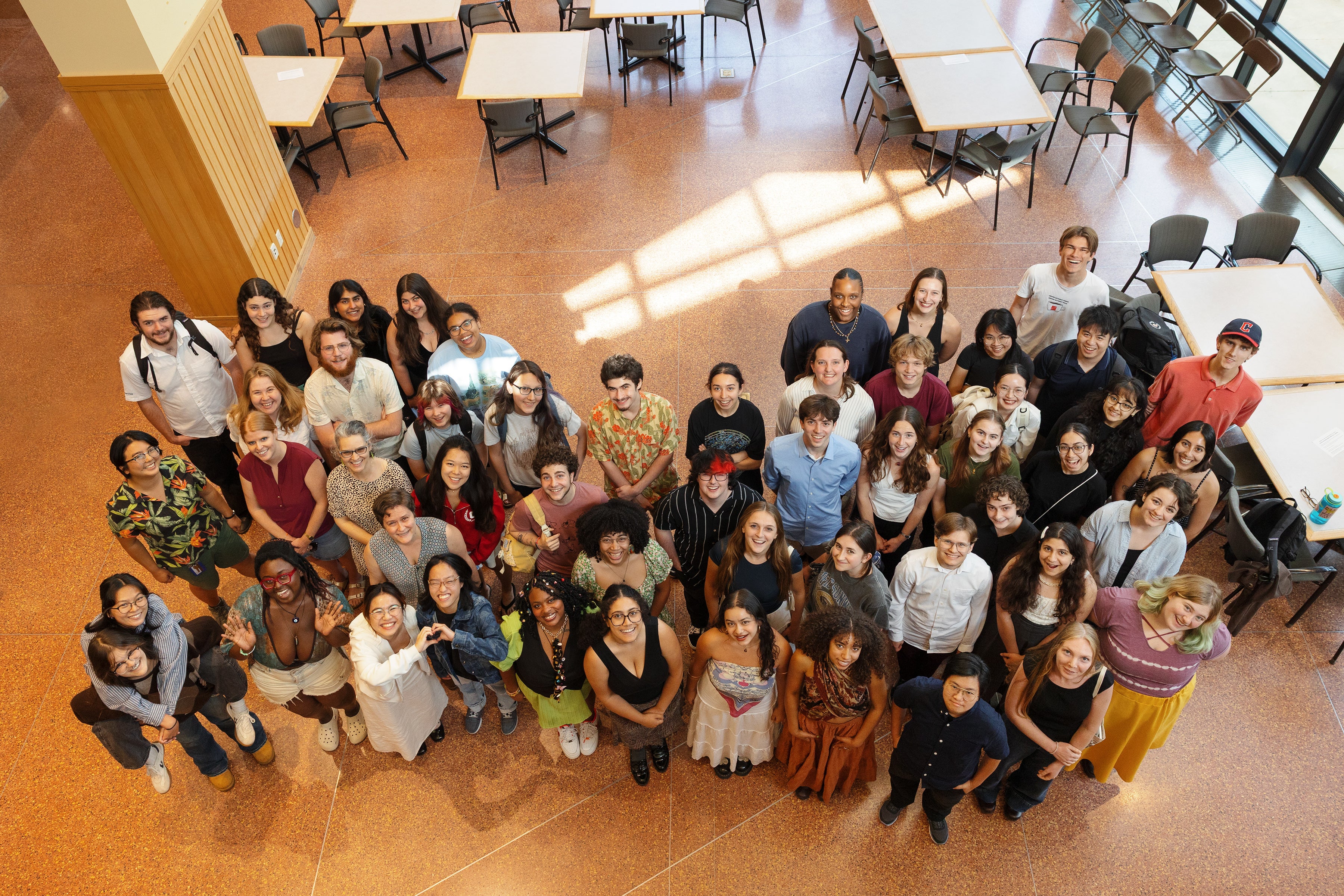
Originally envisioned by Professor of Biology Yolanda Cruz in 2006, the Institute has a rich legacy. OSRI's workshops and community events support research and foster a sense of community among Oberlin students and faculty mentors across disciplines. OSRI has also served as an important step in many Obies' research journeys. It acts as an incubator for new ideas, provides opportunities to work towards honors projects and fellowship applications, and prepares students for internships, graduate school, industry, and off-campus research experiences including REUs.
Each year, students across the sciences, humanities, social sciences, and arts work with faculty mentors to develop in-depth research proposals and mentorship plans to submit as part of their OSRI Fellowship application. Recent successful applications have included projects investigating ableism amongst autistic adults, the role of gene expression during vertebrate development, and the application of machine learning to predict opioid hotspots, among many others.
OSRI and Oberlin’s Office of Undergraduate Research has given me such fantastic framework and support, easing me into the process and providing me with resources that have helped me become both a better student and researcher.
Max Lang
OSRI Fellows work closely with faculty mentors on their research projects throughout the summer. In the sciences, students conduct experiments and collect and analyze data. In the humanities and social sciences, students may engage in archival research and text analysis. They might also conduct interviews or surveys and apply qualitative analysis methods, such as examining cultural trends or public opinion on social issues. Across all disciplines, students learn to design research questions, evaluate evidence, and present their findings, gaining hands-on experience that builds both specific technical skills and broader critical thinking abilities, such as problem-solving, effective communication, and analytical reasoning. The summer culminates in a research symposium in which OSRI Fellows share their work with the entire community. After OSRI concludes, students often continue their research in new contexts, such as presenting at conferences, pursuing honors projects, or applying for fellowships.
OSRI's Collaboration with Internship+
Through a partnership between Oberlin Undergraduate Research and Career Exploration and Development, OSRI integrates Internship+ funding into its summer research model. To access their Internship+ funds to support on-campus research, rising seniors will apply for an OSRI Fellowship. If their application is successful, Internship+ funds will automatically be allocated to support their OSRI experience. This will simplify the funding process and make the on-campus research more accessible. The collaboration will expand OSRI's capacity for faculty-mentored research while maintaining its competitive and prestigious nature, fostering inclusive excellence in research across divisions. All non-graduating students remain eligible to apply for an OSRI Fellowship.

Amanda Rabin presents during the Oberlin Summer Research Institute 2025 Symposium.