Diversity and Inclusion at Oberlin
For Obies, there is no typical college experience—Oberlin means different things to different students. Yet students who are attracted to Oberlin find an environment that is supportive, intellectually challenging, engaging, socially active, artistic, and exciting.
Students come to Oberlin from across the nation and around the world to pursue a relevant, extraordinary education. They come for opportunities to learn and grow in their personal lives. They come because they believe in Oberlin’s legacy of inclusion and diversity.
Multicultural Offices, Organizations, and Housing Communities
At Oberlin, we provide academic and personal support to students from all backgrounds. We recognize the unique circumstances that may affect students’ academic and professional lives.
Career Exploration and Development Office
Provides personalized advising, workshops, and experiential opportunities designed to match each student’s unique career path.
Center for Intercultural Engagement
Celebrates the intersectionality of student identities at Oberlin to create a sense of inclusion and belonging.
Center for Student Success
Provides holistic student support through workshops, success coaching, courses, and social events—particularly for first-gen and low-income students.
CLEAR (Center for Learning, Education and Research in the Sciences)
Fosters an equitable and inclusive climate for students in the STEM (Science, Technology, Engineering, and Mathematics) fields.
Gender, Sexuality, & Attraction Initiatives (GSAI)
Nurtures community through resource development, support, and programming for women and LGBTQ+ students.
International Student and Scholar Services
Helps with community-building, advising, VISA regulations, and immigration paperwork.
Multicultural Resource Commons (MRC)
Promotes a climate in which all students belong and have equitable opportunities and outcomes, particularly students of color.
Office for Disability and Access
Facilitates academic, housing, and dining accommodations while encouraging and helping students to develop self-advocacy.
Office for Institutional Equity
Upholds non-discrimination policies that reflect campus culture and federal guidelines.
Multifaith Chaplaincy & Sustained Dialogue
Promotes multifaith dialogue, understanding, religious practice, service, and activism, and provides one-on-one counseling.
Office of Religious and Spiritual Life
Supports students’ religious, spiritual, and intellectual exploration by fostering an inclusive multifaith community and helping them build meaningful practices and connections.
Support Programs
Oberlin offers many cohorts—including some specifically for students from low-income and first-generation students. All cohorts come with financial assistance, a built-in community, and one-on-one guidance in navigating college.
- Bonner Scholars Program
- Mellon Mays Undergraduate Fellowship (MMUF)
- Brenda Grier-Miller Scholars Program (BGM)
- Oberlin Summer Research Institute (OSRI)
- Science and Technology Research Opportunities for a New Generation (STRONG)
Oberlin is also a partner of Posse and QuestBridge.
To learn more about these programs, visit:
Students Helping Students
- Oberlin Workshop Leaders (OWLS)
- Peer Advising Leaders (PALS)
- Peer Mentors
- Peer Tutors
- Peer Writing and Speaking Associates
To learn more about academic services and resources, visit:
Housing Communities
Oberlin’s campus is home to several communities, including language-based houses and living-learning communities.
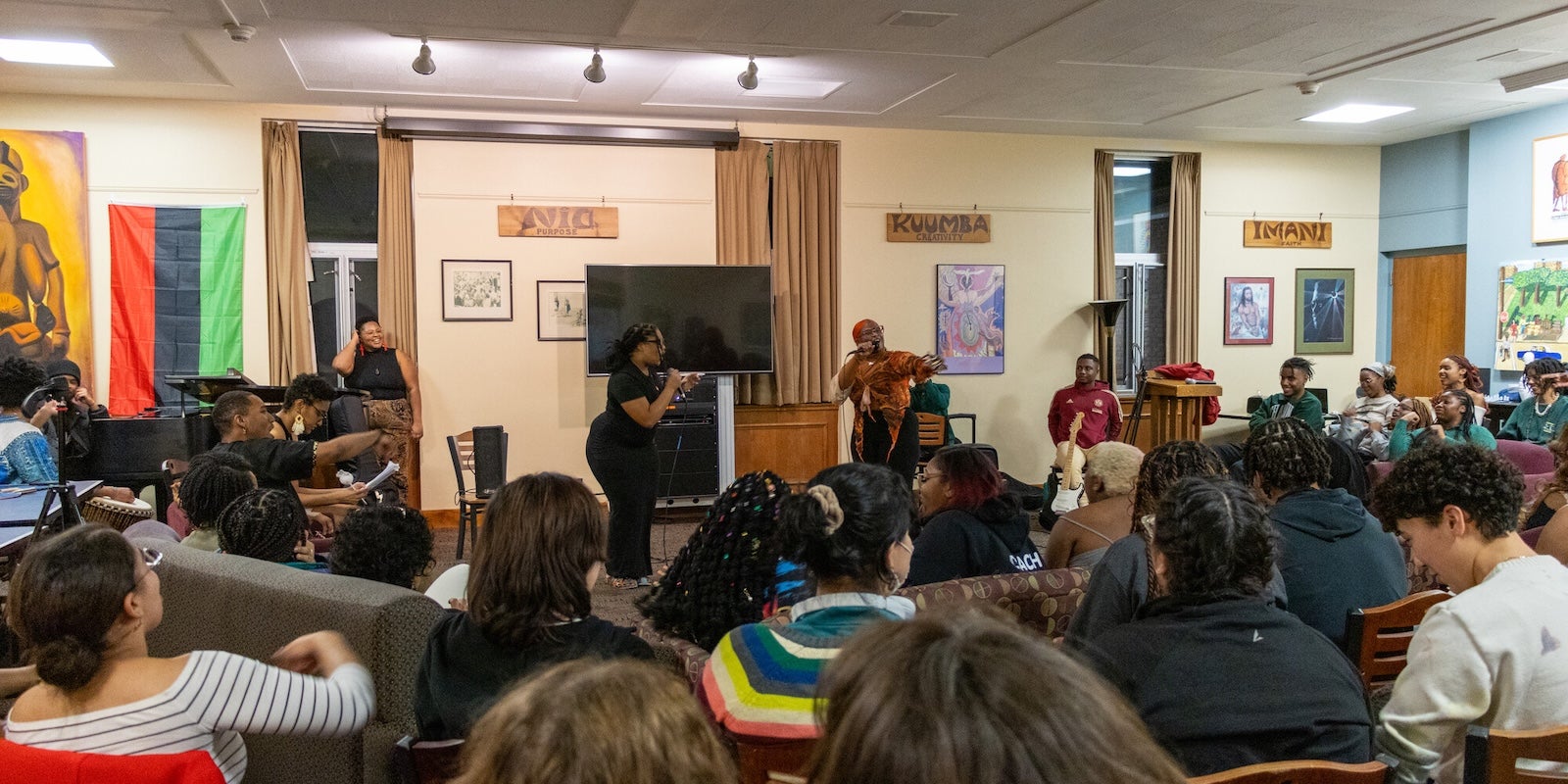
Language-Based Communities
Living Learning Communities that focus on learning and speaking a shared language:
Intercultural Exchange Communities
Living Learning Communities that focus on intercultural exchange:
Student Groups Supporting Multiculturalism
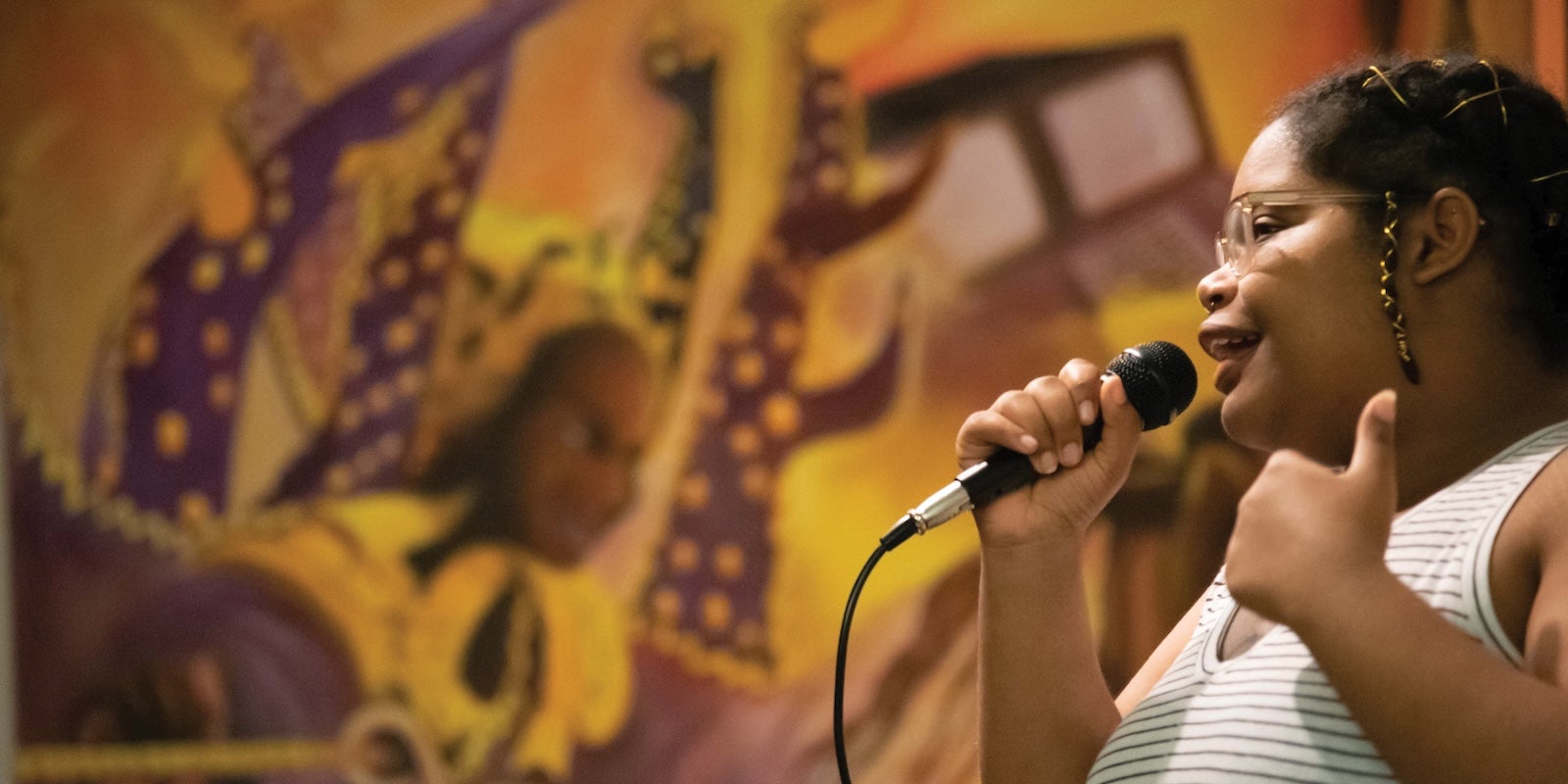
Oberlin supports more than 45 multicultural student groups that host 150-plus events each year. You’ll never have a shortage of opportunities or communities!
- ABUSUA
- African Students Association (ASA)
- And What?! (Hip-hop dance troupe)
- Asexual & Aromantic Group
- Asian American Alliance (AAA)
- Asian Student Athlete Group (ASAG)
- BIPOC Lenses (SOC magazine)
- Black Musicians Guild (BMG)
- Black Scientist Guild (BSG)
- Black Student Athlete Group (BSAG)
- Brazilian Association, Oberlin
- Buddhist Fellowship,
- Oberlin Capoeira Angola
- Chabad Jewish Student Group (CJSG)
- Chinese Student Association
- Christian Chinese Fellowship
- Christian Fellowship, Oberlin (OCF)
- Crimson Collective (Femininity in Black American Music Collective)
- Drag Ball Committee
- Femme Artists Breaking Boundaries (FABB)
- Filipinx American Students Association (FASA)
- FluidiTEA, (BIPOC Gender Diverse Students)
- Gender Inclusivity in Music (SGIM)
- Hillel (HLEL)
- Indigenous Student Council
- International Students’ Organization (ISO)
- Japanese Student Association (JSA)
- Jewish Voices for Peace (JVP)
- La Alianza Latina (LAL)
- Latinx Music Union
- Movimento (Latinx dance group)
- Multiracial Students Association (Multi)
- Muslim Student Association (MSA)
- Newman Catholic Community
- Oberlin Jazz Society
- Oberlin Korean Student Association (OKSA)
- Oberlin Slam Poetry Team (OSLAM)
- Oberlin Steel Pan (OSteel)
- Oberlin Students for Gender Inclusivity in Music
- Obies for Undocumented Inclusion (OUI)
- Obility, Dis/Ability Solidarity
- Pan-Asian Community
- Queer & Formal Reasoning (QFR)
- Queer Student Athletes Group (QSAG)
- Sisters of the Yam (SOY)
- Students of Caribbean Ancestry (SOCA)
- South Asian Students Association (SASA)
- Taiko
- Trans Advocacy Group: Lilac
- Vietnamese Students Association (VSA)
- Voices for Christ (VFC)
- Women and Non-binary Club Volleyball
- Zami
Not all student organizations are listed. For complete list, visit the Clubs & Organizations page.
Oberlin Overnight Program for Diversity & Access
The Oberlin Overnight Program for Diversity & Access is a selective visit program for high-achieving high school seniors interested primarily in the College of Arts & Sciences.
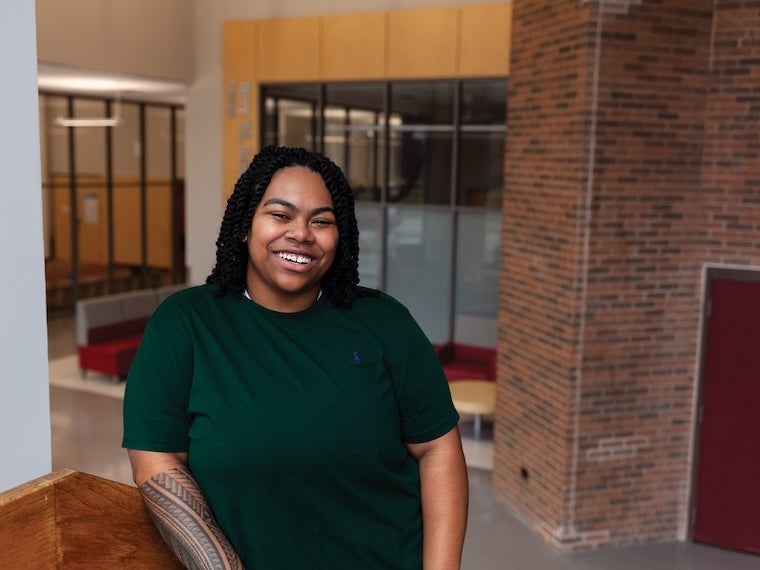
My first and only visit to Oberlin was through the [overnight program]. I knew little about Oberlin but was pleasantly surprised by the campus culture. I got to go to a Noname concert, dine in Afrikan Heritage house, go to classes, and meet people who would later become my closest friends/mentors. At Oberlin, I’ve been given endless opportunities to succeed academically, athletically, and personally. I have found that the people here make it the place where you can truly find community and flourish in all aspects of life.
Welcome to Ohio!
Oberlin students enjoy the best of both worlds: the coziness of a small town plus access to the major city of Cleveland just 35 miles away. Almost everyone stays for the weekends— making it easy to focus on academics, create friendships, and take part in campus life.
Although we mark the founding of our town and college in 1833, the history of the land that Oberlin occupies extends much further than that. Our institution was founded on the traditional homelands of the Erie, Wyandotte, Mingo and other Indigenous Nations.
The only way we can in good conscience celebrate Oberlin’s values is to first acknowledge the indigenous peoples whose stories and role in our land’s history have long been ignored. While this single gesture is not enough, we use this as a step towards bringing visibility and increasing engagement with all of the histories and communities that have led us to the Oberlin community we cherish today.
Obie with Purpose
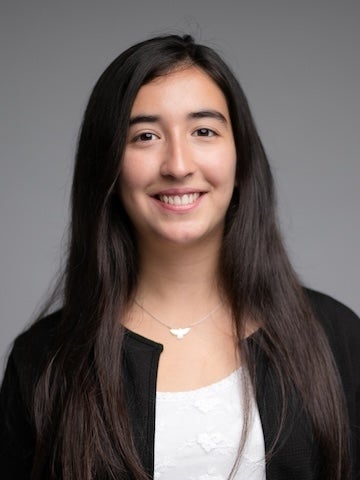
Abby Tejera Rocha ’25
Tejera Rocha majored in physics with a concentration in astrophysics and computer science. Her research focused on analyzing and comparing the metallicities within different galaxies.
Doing research in Professor Jillian Scudder’s physics and astronomy lab has opened doors to more opportunities that have helped me grow as a scientist and researcher. Being a student in the STRONG program has been a very important part of my college experience. Meeting students interested in STEM became one of my first communities when I first arrived at Oberlin.
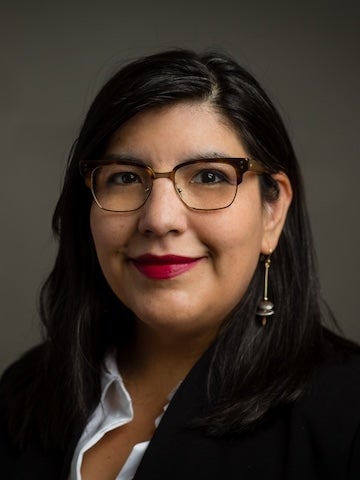
Elizabeth Barajas-Román ’99
Barajas-Román is the president and CEO of the Women’s Funding Network, the largest global alliance of foundations and donors dedicated to gender equity and justice.
Though my passion for social justice comes from my lived experience as a first-generation Latina, my passion for service, lifelong learning, collaborative impact, and a drive for excellence comes from my time at Oberlin. In my 20-year career as a leader in progressive movements, I am never surprised when I find an Obie among my most trusted and effective colleagues. Regardless of the year they graduated, we are instantly connected, not just by fond memories of campus, but by shared values for a better world.
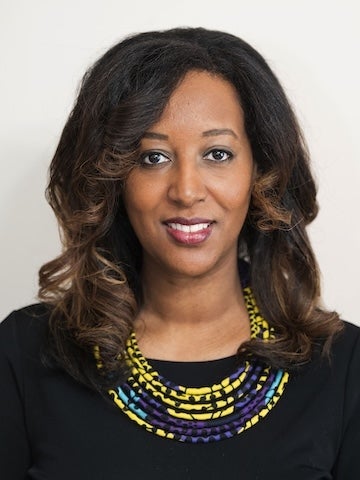
Menna Demessie ’02
Demessie is a Senior Vice President at Universal Music Group (UMG), Executive Director of UMG’s Task Force for Meaningful Change, and recipient of the Black Music Action Coalition Social Impact Award.
[Going to Oberlin] was all about exposure—learning and appreciating different religions and communities. That’s stayed with me. It was a very personal pursuit to situate myself in my culture and history in the world; then it became about joining the fight with other socially progressive folk and marginalized communities who were tied by the common thread of injustice and discrimination.
Affordable Oberlin
Oberlin demonstrates its commitment to access by meeting 100% of demonstrated financial need for all students. And all applicants, regardless of need, are considered for additional merit-based scholarships.
Applying for aid is easy. We require:
- Free Application for Federal Student Aid (FAFSA)
- College Scholarship Service Profile (CSS)
Estimate your need-based financial aid online using:
Supporting Undocumented Students
Undocumented students living in the United States are considered domestic candidates for admission. We meet 100% of demonstrated need for all admitted students.
Our Students
- Mid-Atlantic: 28%
- Midwest: 19%
- Western: 19%
- New England: 10%
- South: 10%
- Southwest: 4%
- Outside of US: 10%
- U.S. Students of Color: 30%
- Native American or Alaskan Native: 1%
- Black/African American: 7%
- Asian American: 14%
- Hispanic/Latinx: 7%
- Hawaiian and Pacific Islander: 1%
- White, non-Hispanic: 62%
- International (representing nearly 50 foreign countries): 10%
Percentages include some students in multiple categories. About 9% of incoming students identify with more than one racial/ethnic category.
Photo Credit: Erik Andrews, William Bradford, Pang Fei Chang ’19, Mike Crupi, Yvonne Gay, Yevhen Gulenko, Michael Hartman, Fadi Kheir, Matthew Lester, Ed Mailiard, Jennifer Manna, Norbrian Ronase, Tanya Rosen-Jones ’97, Chris Schmucki ’22
Get to Know Us!