Office of Energy and Sustainability

Ecolympics

Ecolympics 2026 will run March 2–15, 2026.
This year’s Ecolympics theme is Local Action, Global Reaction.
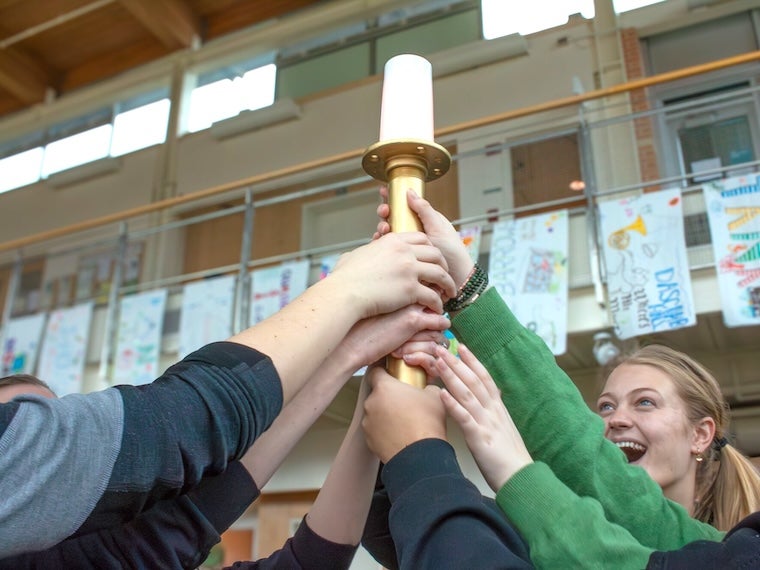
Hands holding up the Ecolympics torch


Ecolympics is an annual competition to minimize water and electricity usage through individual changes in behavior. The goal of the competition is to challenge participants from both the college and the community to strive for environmental sustainability at individual and local levels. The complementary event series initiates larger conversations about sustainability and resource consumption through events, activities, and more. This year we have the city and community-wide goal to reduce 15,000 gallons of water and 20,000 kilowatt hours of electricity.

Ecolympics may seem like just a friendly competition among campus and community buildings but it is actually a vital part of our carbon neutrality goals. The actions we take everyday and the behaviors we change as a result of Ecolympics have a big impact on our resource use and, as a result, our greenhouse gas emissions.

____________________

Check Ecolympics Standings in Real Time!

To track current leaderboards in real time, please visit the Ecolympics Environmental Dashboard for all participants.

____________________

On Oberlin College and Conservatory’s campus there will be a competition between residential buildings along with a friendly rivalry between select administration buildings. The list has expanded this year to include Admissions, Bibbins, Carnegie, Cox Administration Building, Severance, and Wilder Hall, all of which will face-off to find out who can save the most electricity! In the community competition, Oberlin Elementary School, Langston Middle School, and Oberlin High School will be contenders once more. In the competition between municipal buildings, there will be the Prospect Community Center, Oberlin Fire Station, OCSD Board of Education Office, and Oberlin Public Library.

There will again be the opportunity to participate in the “Daily Ecolympics Challenge.” Participants can sign up here and log their sustainable activities to win a variety of eco prizes! Anyone from the college and from the community is welcome to participate in this challenge.

On Campus

Oberlin College and Conservatory monitors the electricity and water usage of the 85 campus buildings through an online system called BuildingOS. This system is connected to the color-changing orbs located in various residence halls and the Science Center. This year the system will be tracking the separate competitions between buildings within the campus, between the City of Oberlin schools, and certain municipal buildings. 

Participants will be able to track the progress of individual buildings using the link below, which contains up-to-date data regarding the competition. This site can also be accessed via QR codes that are posted around campus.

Check Ecolympics Standings in Real Time!

Who is winning?

Beginning on March 2, to track current leaderboards in real time, please visit the Ecolympics Environmental Dashboard for all participants.

Participate in the Daily Ecolympics Challenge

Register for the Daily Ecolympics Challenge and win lots of great prizes! The Daily Ecolympics Challenge will officially begin on Monday, March 2nd. When registering, please indicate you are part of the Oberlin College and Conservatory competition, not the community competition, as the tasks have been tailored to each category of participants. 

During the two weeks of Ecolympics, complete as many challenges as possible to win raffle tickets for sustainability prizes including drying racks, metal beverage cups, dryer balls, plants, and more!

Ecolympics would not be possible without the help of the Green EDGE Fund. With the GEF’s assistance, Ecolympics can make a much more significant impact for the efforts of sustainability than it could have done without the aid.

Allencroft (electricity only)

Asia House (electricity only)

Bailey (both electricity and water)

Baldwin (both electricity and water)

Barnard (both electricity and water)

Barrows (both electricity and water)

Burton (both electricity and water)

Dascomb (both electricity and water)

East (both electricity and water)

Firelands (both electricity and water)

Harkness (both electricity and water)

Harvey (both electricity and water)

Kade (both electricity and water)

Kahn (both electricity and water)

Keep (both electricity and water)

Lord-Saunders (both electricity and water)

Noah (both electricity and water)

North (both electricity and water)

Price (both electricity and water)

South (both electricity and water)

Talcott (both electricity and water)

Tank (both electricity and water)

Union (both electricity and water)

Woodland (both electricity and water)

Zechiel (both electricity and water)

Track the progress of a dorm or campus building

Although we have been diligently repairing meters for the last couple of years, the construction on meters is an ongoing process that takes extensive time and collaboration between a variety of technical experts. 

Because of this, not all buildings may be able to compete individually for water and/or electricity, but Ecolympics is more than just a competition, it’s a community effort to conserve resources and inspire environmental action. With the community-wide goal to reduce 15,000 gallons of water and 20,000 kilowatt hours of electricity, everyone can be a part of the effort to make the broader Oberlin community a more sustainable neighborhood. 

Most Village Housing is unfortunately not metered, but residents can still contribute to sustainable change! If you are a Village Housing resident and would like to see what you can do to help your community save water and electricity, visit the Environmental Dashboard.

Admissions (electricity only)

Alumni (electricity only)

Bibbins  (electricity only)

Carnegie  (electricity only)

Cox  (electricity only)

Severance (electricity only)

Wilder  (electricity only)

Energy Reduction Tips

Washing/drying

  • Wash your clothes with cold water (use up to 90% less energy!)
  • Use wool dryer balls to reduce your drying time
  • Put your dryer on the “low dry” setting
  • Air dry clothing when possible 

Electronics

  • Turn off power strips or unplug chargers or lamps when not in use
  • Turn on sleep settings for devices, sound machines, etc

Kitchen

  • Don’t put hot leftovers directly into the fridge (let them reach room temperature first)
  • Turn the stove off a couple of minutes before your food is done and use the residual heat to finish the cooking

Residence hall/house

  • Open your blinds during the day to take advantage of the natural lighting
  • Close blinds to cool rooms when they are hot
  • Turn off lights, fans, etc. when you leave the room!
  • Close blinds (especially at night) when the heating is on to keep your room warm. If you have control over your heating, set it to a lower temperature!

General

  • Plan your meeting or study sessions in common spaces where you don't need additional electricity
  • Communal activities often use less resources! Make dinner together or hang out to watch a show, listen to music, etc.

Water Reduction Ideas

Washing/Drying

  • Only wash full loads of laundry and only wash when your clothes are actually dirty- combine with a friend if it is urgent! 

Bathroom

  • Turn off the water while brushing teeth, shaving, shampooing, and/or conditioning
  • Take shorter showers- set a timer or make a playlist and stick with it!
  • Use the appropriate setting on dual flush toilets 
  • Report any leaky faucets or toilets that won’t stop flushing - https://oberlin.topdesk.net/ 

Kitchen

  • Turn off the water while washing dishes
  • Collect water while waiting for it to warm up- use it for plants!
  • Pre-soak particularly dirty dishes instead of scrubbing under running water