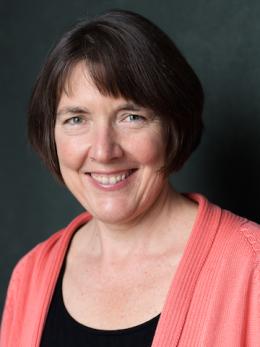
Elizabeth Hamilton

  • Associate Dean of the College of the Arts and Sciences
  • Associate Professor of German
  • Director, First-Year Seminar Program
  • Musical Studies Co-Chair Exoficio
  • Deputy Title IX Coordinator

Education

  • BA, Grove City College, 1987
  • MA, University Delaware, 1991
  • PhD, Ohio State University, 1998

Biography

Areas of special interest

  • Twentieth-century West German literature and film, East German cinema, Postwar narratives of “Vergangenheitsbewältigung,” Disability Studies

Recent publications

  • Fühmann, Franz, Dietmar Riemann, and Elizabeth C Hamilton. 2021. What Kind of Island In What Kind of Sea. E-book, Amherst, Massachusetts: Lever Press. doi.org/10.3998/mpub.12467134

  • Foreword to Disability and World Language Learning: Inclusive Teaching for Diverse Learners. Evans, Wade and Sally Scott. Rowman & Littlefield, Lanham, MD, 2019.
  • Review of Nina Schmidt’s The Wounded Self: Writing Illness in Twenty-First-Century German Literature. Jahrbuch Gegenwartsliteratur 18.
  • Translation, with student Leo R. Kalkbrenner, of “Diagnoses That Matter. My Great-Grandmother's Murder as One Deemed ‘Unworthy of Living’ and Its Impact on Our Family” by Andreas Hechler. Disability Studies Quarterly. 37.2 (Summer 2017). www.dsq-sds.org.
  • “Mariella Mehr’s Voices For Children” in “Es ist seit Rahel uns erlaubt, Gedanken zu haben.” Essays in Honor of Heidi Thomann Tewarson. Ed. Steven R. Huff and Dorothea Kaufmann. Würzburg: Königshausen & Neumann, 2012.
  • Worlds Apart? Disability and Foreign Language Learning. Eds. Tammy Berberi, Elizabeth Hamilton, and Ian Sutherland. New Haven: Yale UP, 2008.
  • “ Teaching German to Students Who are Blind: A Personal Essay on the Process of Inclusion.” In Worlds Apart? Disability and Foreign Language Learning. Eds. Tammy Berberi, Elizabeth Hamilton, and Ian Sutherland. New Haven: Yale UP, 2007. (27 ms. pp.)
  • Edited book: Worlds Apart? Disability and Foreign Language Learning. Eds. Tammy Berberi, Elizabeth Hamilton, and Ian Sutherland. New Haven: Yale UP, 2007.
  • Unsereins muß auf die Bühne: The Tin Drum and the Stage.” To appear in Grass’s The Tin Drum. Approaches to Teaching World Literature. Ed. Monika Shafi. New York: MLA, 2006. (20 ms. pp.)
  • “ The State of the Community: Foreign Language Students with Disabilities and Language Lab Technology.” 37.2 The IALLT Journal of Language Learning Technologies. (fall 2005): 17-33.
  • “ Of Miracles and Pedestals. Helen Keller Through German Eyes.” Disability Studies Quarterly. 26.1 (winter 2006).  www.dsq-sds.org Ulrich Plenzdorf: After Oberlin.” Willkommen und Abschied. Thirty-Five Years of German Writers-in-Residence at Oberlin College. Eds. Dorothea Kaufmann and Heidi Thomann Tewarson. Rochester, NY: Camden House, 2005. 62-66.
  • “ Language Barriers and Barriers to Language: Disability in the Foreign Language Classroom” coauthored with Tammy E. Berberi. Building Pedagogical Curb Cuts: Incorporating Disability in the University Classroom and Curriculum. Eds. Liat Ben-Moshe, Rebecca C. Cory, Mia Feldbaum, and Ken Sagendorf. Syracuse: Graduate School, Syracuse U, 2005. 11-19.
  • Review of The Normal One: Life With a Difficult or Damaged Sibling by Jeanne Safer (New York: Free Press-Simon and Schuster, 2002). Disability Studies Quarterly 25.2 (Spring 2005). www.dsq-sds.org
  • ‘‘No Longer Unreasonable: Disability in German Cinema.” Disability Studies Quarterly 24.3 (Summer 2004). www.dsq-sds.org
  • ‘‘Deafening Sound and Troubling Silence in Volker Schlöndorff’s Die Blechtrommel.’’ Sound Matters: Essays on the Acoustics of German Culture. Eds. Lutz Koepnick and Nora Alter. New York: Berghahn, 2004. 130-142.
  • “Imaginary Bridges: Politics and Film Art in Robert Musil’s Die Verwirrungen des Zöglings Törleß and Volker Schlöndorff’s Der junge Törleß.’’ Colloquia Germanica Volume 1 (Winter 2003): 69-85.
  • ‘‘Read the Book or Watch the Movie? Der Richter und sein Henker at the Intermediate Level.’’ Die Unterrichtspraxis 35.2 (2002): 141-148.
  • ‘‘From Social Welfare to Civil Rights: The Representation of Disability in Twentieth-Century German Literature.” The Body and Physical Difference: Discourses of Disability. Ed. David Mitchell and Sharon Snyder. Ann Arbor: U of Michigan P, 1997. 223-239.
  • Translation of ‘‘Embarking for New Shores” by Heinz-Uwe Haus. Rocky Mountain Review 45 (1991): 237-246.

  • First Year Seminar:  Disability
  • The Seventies, the Germanies, the Cinema
  • East German Cinema
  • New German Cinema
  • History of German Cinema
  • The Deviant Body in German Literature and Film
  • Elementary and Intermediate German Language courses
  • Member of Oberlin's Interdisciplinary Cinema Studies Committee

Notes

Elizabeth Hamilton publishes a translation and literary-Historical Interpretation

Associate Dean of Arts and Sciences and Associate Professor of German Elizabeth Hamilton published a translation and literary-historical interpretation of Franz Fühmann and Dietmar Riemann's Was für eine Insel in was für einem Meer in an open-access digital edition with Lever Press: What Kind of Island in What Kind of Sea. First published in East Germany in 1986, the original work depicts residents of the Samariteranstalten, a church-run institution for people with cognitive disabilities, in astonishing black-and-white photographs by Riemann and in probing, poignant writing by Fühmann.

Hamilton's book was reviewed by Michele Ricci-Bell in Reading in Translation, a journal edited by Stiliana Milkova, Associate Professor of Comparative Literature. The review appears here.


News

Two Receive German Study Award

Alex Baker ’17 and Muci Yu ’18 each received a Max Kade Summer German Study Award to help support their plans to study in Berlin, Germany, this summer.