
Oberlin and Penn Launch Partnership for 4+1 Accelerated Master's in Engineering
New program gives students a five-year pathway to earn an Oberlin bachelor’s degree and a Penn Engineering master’s degree.
November 9, 2026
Emily Gold Boutilier
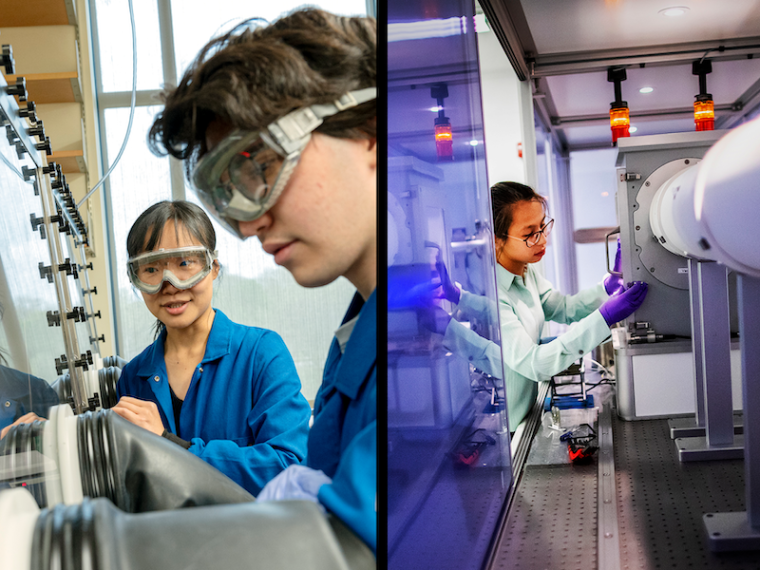
Oberlin College has launched a new partnership with the University of Pennsylvania School of Engineering and Applied Science (Penn Engineering) that gives students an accelerated pathway to earn both an Oberlin bachelor's degree and a Penn Engineering master's degree in just five years.
Beginning in fall 2027, the Oberlin-Penn Engineering 4+1 Partnership combines the breadth of a liberal arts education with graduate study in high-demand engineering fields such as biotechnology, energy and sustainability, materials science, scientific computing, and systems engineering.
“Oberlin students are known for their drive to create practical solutions to real-world problems—and a desire to apply their education to tangibly benefit society and improve lives,” says Dean of the College of Arts and Sciences David Kamitsuka. “Oberlin chose Penn as its partner because its world-class engineering school perfectly complements our academic programs and values.”
“Addressing complex challenges requires engineers who can bring together technical expertise, creative thinking, and an understanding of the broader world,” says Vijay Kumar, Nemirovsky Family Dean of Penn Engineering. “Through this partnership with Oberlin, we’re expanding access to a Penn graduate-level education, giving students the opportunity to build on the breadth of a liberal arts education while developing the advanced engineering skills needed to turn their ideas into solutions.”
How the 4+1 Program Works
Students in the 4+1 program spend four years at Oberlin, building a strong foundation in the natural sciences, mathematics, and computing while exploring the arts, humanities, and social and behavioral sciences.
Through pre-approved pathways, students can apply select Oberlin coursework toward the requirements of Penn Engineering’s master’s programs. The partnership initially offers five pathways: biotechnology, energy and sustainability, materials science, scientific computing, and systems engineering, with the potential to expand programming in the future. Students apply during their fourth year and complete the remaining degree requirements as full-time Penn Engineering students.
Several Oberlin majors align naturally with these pathways. Biology majors can pursue biotechnology, while students majoring in environmental science, environmental studies, geosciences, physics, or chemistry are well positioned for the energy and sustainability path.
The program also leaves room for Oberlin students to take non-STEM courses and carry double majors or minors.
“Students can come to Oberlin and specialize in individual sciences; cultivate their critical thinking, leadership, and creativity skills; then apply those strengths to building solutions with engineering tools,” says Oberlin’s David H. and Margaret W. Barker Associate Professor of Computer Science Adam Eck, who teaches data science courses that are foundational in some 4+1 programs.
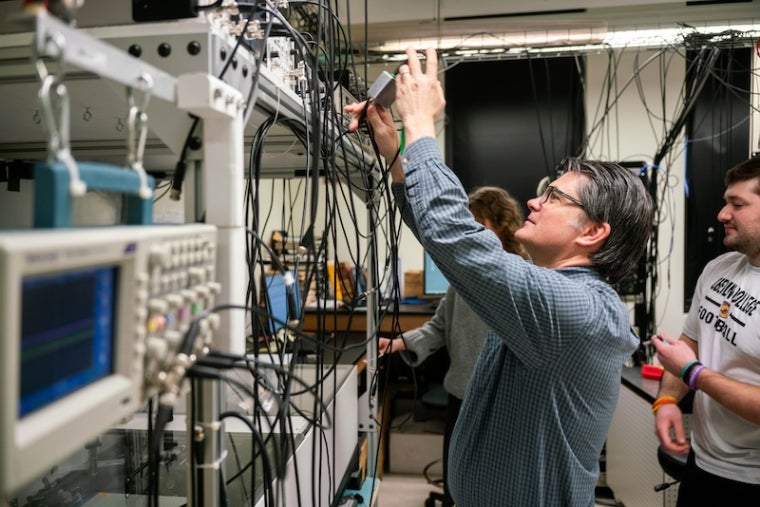
Students in the lab of Oberlin Professor of Physics Jason Stalnaker
Why Liberal Arts and Engineering Belong Together
For Oberlin faculty, the partnership reflects a shared belief that today’s biggest challenges require both technical expertise and a broad perspective.
“At Oberlin, we pride ourselves on giving students broad exposure to different fields and different ways of thinking,” says Donald R. Longman ’32 Professor of Physics Jason Stalnaker, who teaches foundational engineering courses such as Physics 111: Electricity, Magnetism, and Thermodynamics. At Penn, students will apply these concepts to groundbreaking engineering problems and projects.
Oberlin and Penn Engineering faculty worked closely to design the pathways connecting the institutions, including the specific Oberlin courses that best prepare Oberlin students to be successful candidates.
Eck says Penn’s energy and sustainability program is an excellent fit for environmental science and environmental studies majors interested in addressing pressing climate challenges, as well as chemistry, physics, computer science, and data science students who want to develop new technologies.
“It’s also great for students who want to solve pressing problems, from the resource consumption of AI data centers to developing better batteries and more efficient computing,” Eck notes. “Penn’s values align closely with those of Oberlin and fit nicely with the societal issues that Obies want to solve.”
Laura Baudot, senior associate dean of the College of Arts and Sciences at Oberlin, emphasizes “the serious investment of our Penn colleagues in building a solid curricular foundation for the partnership” and their evident commitment to educating future engineers with both technical knowledge and an understanding of the bigger picture.
“Oberlin and Penn Engineering faculty share a sense of excitement about the possibilities that teaching and mentoring open up for faculty and students alike," she says.
Lorena Grundy, director of the master’s program in energy and sustainability engineering at Penn, calls Oberlin students “perfect candidates” for the program.
“Engineering in general, but especially energy and sustainability, is highly interdisciplinary,” she says. “Successful leaders need not only engineering skills but also a broad understanding of environmental, social, and economic systems, along with a willingness to jump into wicked problems.
“Oberlin students’ liberal arts training will prepare them to understand the human aspects of energy and sustainability systems, and their research and extracurricular experiences at Oberlin make them eager to get their hands on impactful, real-world projects,” Grundy adds. “With the engineering skills they’ll learn at Penn, these graduates will have everything they need to become lifelong climate leaders.”
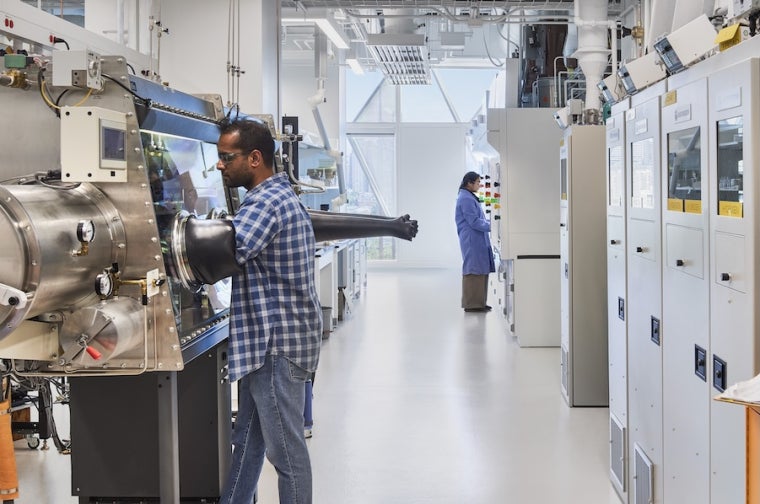
Lab work at Penn’s Vagelos Laboratory for Energy Science and Technology
A Flexible and Affordable Pathway
The 4+1 is Oberlin’s second engineering pathway, alongside the 3+2 engineering program. While the 3+2 program requires five years across two institutions to earn an engineering bachelor's degree, the 4+1 program lets students earn a master’s degree on an accelerated timeline while offering greater flexibility to double major, participate in athletics for four years, and explore interests beyond STEM.
The 4+1 program also offers academic and financial advantages. Accepted students can apply up to three approved Oberlin courses toward Penn Engineering’s 10-course master’s degree, creating a more efficient pathway to completing their graduate studies while reducing the overall cost of the degree.
Both programs support Oberlin’s broader efforts to serve the growing number of students who want to study STEM in a liberal arts setting. Last year, the college launched a bachelor of science degree, giving students in 15 majors the choice of graduating with a BA or BS.
“Oberlin is a phenomenal place to build the foundation for a STEM career,” says Elliot Sommer, Oberlin’s interim director of the 4+1 program. “This partnership gives our students another powerful pathway to apply that foundation to solving real-world problems.”
You may also like…
Oberlin Launches Critical AI Studies Minor in Fall 2026
With a solid foundation in both science and the humanities, this minor ensures students to understand and be able to analyze the ethical, cultural, environmental, political, economic, technological, and labor effects of AI.
Research Roundup
Every day, Oberlin’s faculty and students produce scholarly work that uncovers new insights into how we understand the world, particularly in the areas of sustainability and the environment.
Three Things with Jillian Scudder
Oberlin’s astrophysicist-author shines a light on our dark universe.
