News
From Ninde Tutor to Future Pediatrician
By Kate Martin ’26
Through hands-on service, nonprofit leadership, and undergraduate research, Ellie Pollock-Ballard ’26 is building a future in pediatric medicine rooted in community care.

From “The Oberlin Review” to HarperCollins
Office of Communications
Communication studies major Travis O’Daniel ’26 shares how his experience as managing editor of The Oberlin Review prepared him for a high-impact editorial and administrative internship at HarperCollins Publishers in New York.
Oberlin Law and Society Students Attend West Point Conference
Sasha Kolb ’29
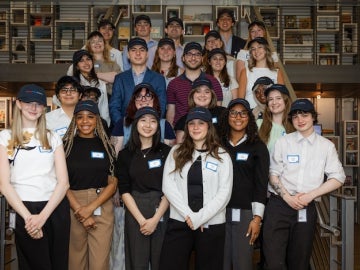
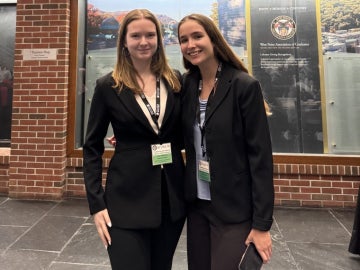
Kash Radocha ’26 and Charlotte Patrick-Dooling ’25 represented Oberlin at the Student Conference on United States Affairs (SCUSA), a policy debate conference at West Point.
Bridging Art, Environment, and Public Service Through CELA
By Kate Martin ’26
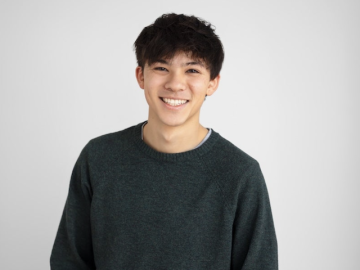
Through an arts apprenticeship, climate communication, and a Udall Scholarship, Nathaniel Liu ’26 connects experiential learning with a career in environmental public service.
From the Great Lakes to the East Coast: Connecting Research and Service
By Kate Martin ’26
Nyrobi Whitfield ’26 blends marine ecology research and community engagement through CELA to shape a path toward climate change research.
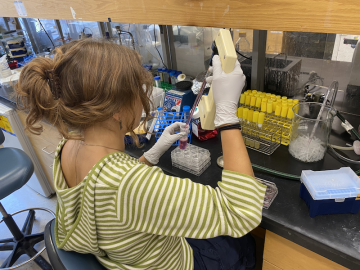
Rethinking Antibiotics
Office of Communications
Through a summer internship at Mass General Brigham, Caitlin Kluger ’26 explored new ways to fight infection.
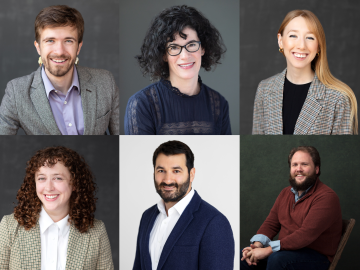
Oberlin Faculty Earn Ohio Arts Council Excellence Awards
Office of Communications
Highly competitive program awards $5,000 grants recognizing outstanding artistic achievement.
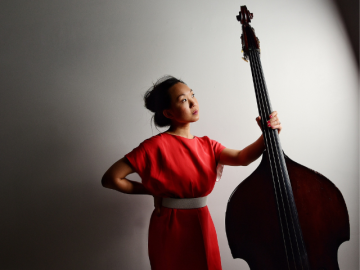
Provocateur and Unifier: Linda May Han Oh Brings Jazz to Oberlin
Zach Terrillion ’24
The Grammy-winning bassist and composer brings her quintet to Finney Chapel, exploring connection, resilience, and the power of improvisation to unite audiences.
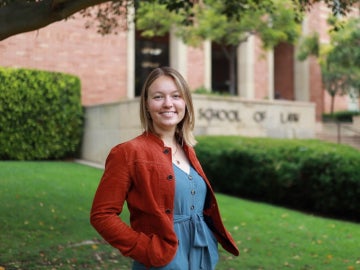
Wielding Power for Good
Stephanie Manning ’23
As a public interest lawyer, Annika Krafcik ’20 improves the lives of people in her southeast Alaska community. And her journey to get there started at Oberlin.
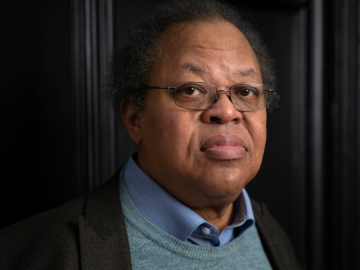
George Lewis Visits Oberlin as Part of International Contemporary Ensemble Residency
Stephanie Manning ’23
The ensemble’s artistic director will lead a guest lecture and panel discussion, and the Oberlin Sinfonietta will present a concert of music by and for him.