Connecting Science Across Disciplines and Environments
CELA aids Luke De Carlo-McCann ’26 in integrating research, communication, and fieldwork toward a career in natural resource management.
April 28, 2026
Nyrobi Whitfield ’26
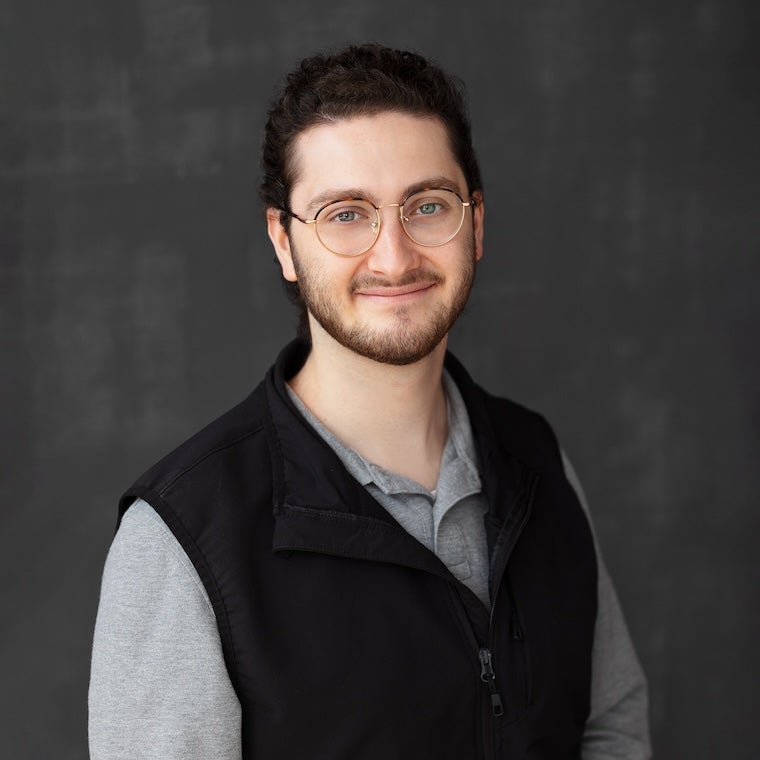
The Center for Engaged Liberal Arts (CELA) has shaped Luke De Carlo-McCann’s scientific perspective and postgraduate plans, providing sustained opportunities for interdisciplinary research, experiential learning, and professional development.
During summer 2025, De Carlo-McCann, a geosciences major, participated in the Oberlin Summer Research Institute (OSRI) with support from Career Exploration and Development’s (CED) Internship+ program. Over 10 weeks, he conducted research on shellfish ecology and environmental conditions in marine systems, building on work from previous summers. The program offered him a rare opportunity to engage deeply with his research while reflecting on how his coursework informs his scientific questions.
“OSRI gave me sustained time to focus on my research and to think critically about how the ideas I encounter in the classroom shape the questions I ask as a scientist,” he says.
Through this experience, De Carlo-McCann developed a stronger appreciation for the interdisciplinary nature of his work. His geosciences coursework, including Paleontology and Evolution of the Earth, provided a foundation for understanding long-term environmental change, while his studies in chemistry and biology informed his understanding of the chemical and biological processes influencing shellfish growth and survival.
“During OSRI, I began to see how these fields are not separate, but deeply intertwined,” he says. “The questions I pursue require drawing from each of them and bringing those ideas together.”
OSRI also emphasized the importance of communicating research beyond academic settings. De Carlo-McCann participated in community-facing programming such as Research Radio and informal research share-outs, where he practiced presenting complex scientific ideas to interdisciplinary audiences. These experiences strengthened his ability to communicate his work clearly and effectively. At the end of the summer, he presented his research to the full OSRI cohort, helping him synthesize his findings and build confidence in public speaking. This preparation supported his upcoming presentation at the Geological Society of America conference in Loreto, Baja California Sur, Mexico.
After Oberlin, De Carlo-McCann will join the U.S. Fish and Wildlife Service in Homer, Alaska, as a biological science technician. In this role, he will conduct field-based ecological monitoring and collaborate with scientists and land managers, gaining hands-on experience in the stewardship of public lands.
“I’m excited to immerse myself in the daily realities of field-based science and to learn directly from those working in these ecosystems,” he says.
His experiences through CELA have shaped not only his career path but also his understanding of science as both an intellectual and human endeavor.
“The most meaningful learning often happens outside the classroom,” he says, pointing to fieldwork, collaboration, and navigating uncertainty as critical components of his growth.
Looking ahead, De Carlo-McCann plans to pursue a graduate degree in natural resource management, with a focus on Arctic and sub-Arctic ecosystems. He views his upcoming work in Alaska as an opportunity to continue developing as a scientist while deepening his understanding of northern environments.
“This next chapter is as much about exploration as it is about preparation,” he says.
De Carlo-McCann is a nominee for the CELA Award, recognizing his commitment to connecting academic inquiry with experiential learning and his contributions to interdisciplinary research.
To learn more about student support available to you, check out the Center for Engaged Liberal Arts for research, internship, and career resources.
You may also like…
Oberlin Uses Co-Designed Tech to Bridge Adult Education Gaps Amid AI-Driven Change
That message came through clearly at the Association of Independent Colleges & Universities of Ohio (AICUO) Collaborative Conference held June 4 at Otterbein University, where Oberlin faculty and...
Simon Korotzer-Mariani ’26 Builds a Future in Neuroscience
Hands-on lab work, health care internships and fellowship support shape a path toward medicine.
Mufalo Mufalo ’26 Bridges Art and Community Through CELA
The Bonner scholar and artist-in-residence uses experiential learning to shape creative practice and global engagement.