Oberlin Opera Theater Presents “Later the Same Evening and Bastianello”
Spring production features two one-act operas with music by John Musto and librettos by Mark Campbell.
February 19, 2026
Kailey Pritchard ’26
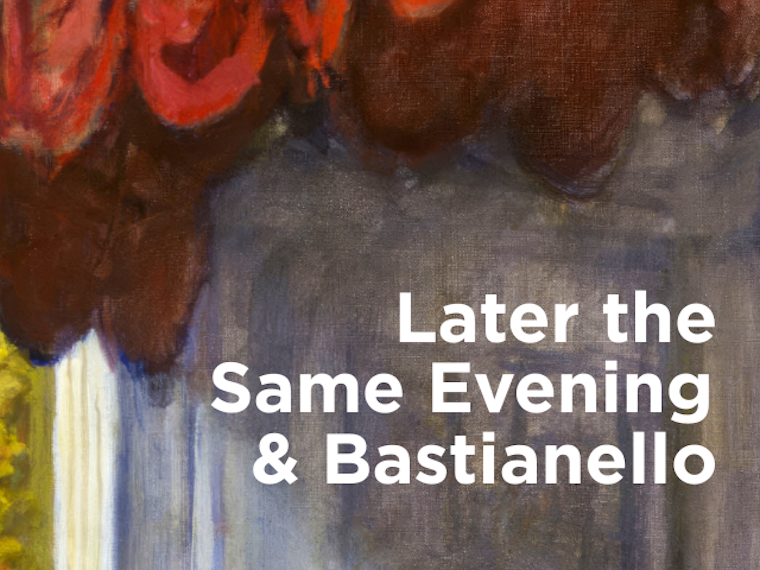
From March 5 through 7, Oberlin Opera Theater will transform paintings and folktale into living drama in Later the Same Evening and Bastianello, with music by John Musto and libretti by Mark Campbell. The double bill, performed by Oberlin opera students, offers a rare opportunity for students to work directly with Musto and gain firsthand insight into the music.
Built around five paintings by Edward Hopper, Later the Same Evening is a one-act opera that follows the individual and intertwined romantic journeys of characters inspired by Room in New York, Hotel Window, Hotel Room, Two on the Aisle, and Automat. While Hopper’s paintings illustrate stillness and solitude, the opera imagines lives that unfold beyond the frame. Set in New York City, the characters’ individual stories intersect when they all find themselves in the same Broadway theater watching the same fictional show.
That scene is particularly striking, explains composer Musto, because “no one sings at all.” Yet earlier scenes include “allusions to tunes that are in this fictional show.” One of these fictional tunes, “Where is the Man in Manhattan?," is so convincing that, according to Musto, “somebody called the opera office and wanted to know where they could find the music to that old song.” The humor, he notes, is that “there wasn’t any song”—it exists only in the fictional musical Tell Me Tomorrow. While the show tunes may be imagined, the world of Later the Same Evening paints a very real human experience of love in all its stages.
Later the Same Evening is uniquely balanced by Bastianello, an absurd one-act opera by the same composer and librettist. Based on an Italian folktale often compared to “The Three Sillies,” the opera follows Luciano, a husband who—after declaring his wife, father-in-law, and even his own mother to be stupid—sets out to find six people “more foolish, more idiotic, truly stupider, and more without a clue.” Along the way, he encounters a series of absurd characters with equally absurd problems, which Luciano helps to solve.
Composer Musto praises Campbell’s “genius,” noting that while Bastianello "originally read… very, very comedic,” Campbell "turned it very serious at the end,” a shift that really turned it into an opera… because of that last scene.” Due to Campbell’s expert storytelling and skillful balance of humor and seriousness, Bastienello is full of delightful absurdity and laughter while also exploring deeper, more human themes.
This double bill is expertly led and put together by Guest Stage Director Scott Skiba ’03 and Conductor Timothy Weiss, professor of conducting and director of the Contemporary Music Ensemble and Oberlin Sinfonietta.
Although Skiba has maintained a relationship with Oberlin since his graduation in 2003—returning for Oberlin in Italy and several Winter Term operas—he is excited to be back, directing in the room where, in 1997, he discovered that he wanted to “work with singing-actors and help them on their journey to become more compelling, more believable, more dynamic.” He emphasizes that working on newer operas is “an especially good vehicle for talented students to learn,” because there’s no definitive performance of Later the Same Evening or Bastianello.” “It’s a blank canvas, more or less,” he says.
Skiba hopes the production will draw new audiences to the opera, pointing to the “beautiful moments of melodic writing and poignant, inspiring words” from both composer Musto and librettist Campbell. “You will laugh, you will cry, you get to see a lot of talented students,” he says, highlighting the unique balance between the two stories and the energy and work brought by the students of Oberlin Opera Theater.
Conductor Weiss, who frequently works with contemporary music, highlights the unique challenge of performing newer works such as Later the Same Evening and Bastianello. “There’s not a lot of performance history to go on,” he explains, so even though Oberlin Opera Theater “is not the first to do it, there’s an element of making the wheel, inventing the wheel, or at least remaking a wheel that was just made.” Weiss emphasizes that when working on newer compositions, “it’s always best to do it in consultation—or with—the composer,” which was an experience offered to both staff and students by the John Musto residency.
Weiss says there are many reasons to see these operas: “Comedy—there's ridiculous slapstick comedy. There’s uncontrollable, laugh-out-loud, belly-laugh funny moments, but there are also some incredibly tender, emotional scenes.” And in true Oberlin fashion, he adds, “It's cold outside…the weather has been miserable, and this is a way to come together and just bask in the glow.”
Performances will be held in Hall Auditorium from March 5 through 7 at 8 p.m., and March 8 at 2 p.m. Tickets are now available online at the Oberlin College Artsguide. Reserved seating is $15, while discounted tickets for students, faculty, alumni, and senior citizens are available for $10.
Kailey Pritchard ’26 is a fourth-year voice major and a student communications assistant for the Office of Conservatory Communications. She is a member of the cast of this spring’s opera production.
You may also like…
An Obie’s Guide to the Juilliard String Quartet
“The most important American quartet in history,” now celebrating its 80th year, opens the Artist Recital Series at Oberlin on September 26.
When Stars Align
The Oberlin Contemporary Music Ensemble shines on Jennifer Koh ’97’s "The American Concerto, Volume One."
Telling Stories Through Sound: The Verona Quartet and Mendelssohn's String Quartets
Storytelling has always been at the heart of the Verona Quartet. With its latest release, the ensemble turns to a composer who knew something about transforming stories into music: Felix Mendelssohn.