Oberlin Conservatory Debuts New Space
Conservatory East Studios houses programs in Music Theater and Recording Arts and Production.
October 6, 2025
Stephanie Manning ’23
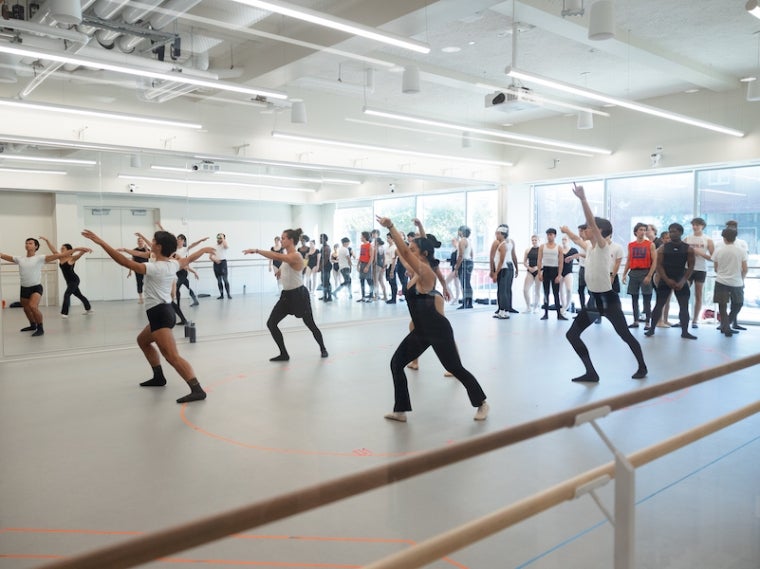
Music Theater students participate in a dance class in one of Conservatory East's two multipurpose studios, each with clear views onto East College Street.
Photo credit: Tanya Rosen-Jones '97
Oberlin Conservatory has expanded its footprint along with its curriculum this fall. The arrival of Conservatory East Studios, located on East College Street in downtown Oberlin, coincides with the launch of the conservatory’s Music Theater program, which shares the new space with Recording Arts and Production.
The 8,600-square-foot space, situated next to the Hotel at Oberlin on the ground floor of the Peter B. Lewis Gateway Center, is centrally located between the main conservatory complex and the college’s theater and dance facilities.
Designed by J. Kurtz Architects of Cleveland, Conservatory East features two multipurpose studios, a recording control room, and offices for faculty and staff. The space features floor-to-ceiling windows along its south-facing walls, including both studios and a seating area at the main entrance. It’s a deliberate move intended to emphasize the vital connection to the outside world.
“ So often on college campuses, the teaching and learning is hidden from public view,” says Dean of the Conservatory William Quillen. “Our idea here was to place our artistic processes front and center.”
A Space Built for Creativity
Conservatory East’s multipurpose studios can be used as classrooms, rehearsal spaces, or dance studios. Both are outfitted with ballet barres, sprung floors, mirrors, and self-record audiovisual systems. In addition to housing core classes for Music Theater, they can be reserved by any faculty member or student in the conservatory.
Adjoining the two studios is a central recording control room used for Recording Arts and Production classes. This soundproofed listening environment allows students to mix, master, and edit audio in real time. From here, they can also deploy segmented curtain systems, which can be arranged in various ways to create a host of sound environments in the studios.
Walking into those beautiful studios with the sun’s first rays streaming through the windows is absolutely magical—all of us can feel it.”
—Professor of Music Theater Victoria Bussert
Throughout the construction process, acoustic isolation was a top priority to prevent noise transmission between Conservatory East and hotel guestrooms above. A technique called “box-in-box” construction—which calls for six layers of drywall between each room, among other reinforcements—ensures that no room touches another directly. The acoustically-rated glass that faces College Street is four layers thick, keeping sound transference to a minimum.
Conservatory East’s four practice rooms and 10 faculty and staff offices for Music Theater are also customized with sound-dampening measures.
A centrally-located lounge, featuring couches and modular furniture, connects the rooms and serves as a gathering space. Another seating area, with a countertop bar and stools situated at the expansive windows just inside the building’s main entrance, offers an unobstructed view of downtown Oberlin.
Two banks of lockers assigned to Music Theater students allow for convenient storage. (See photos of various Conservatory East spaces below.)
Conservatory East features direct access to the Birenbaum Innovation and Performance Space, a sleek and intimate subterranean concert venue christened in 2016. Development of the new conservatory complex provided an opportunity to simultaneously update the Birenbaum with new stage lighting and rigging, acoustic treatments, and an upgraded control system. The Birenbaum will be a hub for Music Theater, which plans to use the venue for recitals, cabaret-style events, and other performances.
Conservatory East was an ambitious undertaking executed in a compressed timetable to accommodate the arrival of Oberlin’s new Music Theater program. By late August, construction crews worked around the clock to ensure that the space was ready for students from Day 1 of classes.
“Walking into those beautiful studios with the sun’s first rays streaming through the windows is absolutely magical—all of us can feel it,” says Professor of Music Theater Victoria Bussert. “The creativity is truly running wild throughout the spaces from morning to night every single day.”
A few final touches are in store in the coming weeks: Exterior and interior signage, additional acoustic paneling, and more equipment for the recording control room will be added during fall semester.
Quillen expects the highly visible addition to campus to become a bustling hub of activity.
“ The space has been built to facilitate interaction between the students, between the faculty, and between the public,” he says. “The whole idea of the space is to foster togetherness and facilitate the kind of artistic magic that happens when creative people come together.”
Stephanie Manning is a freelance writer based in Cleveland. She studied bassoon performance, arts administration, and journalism at Oberlin.
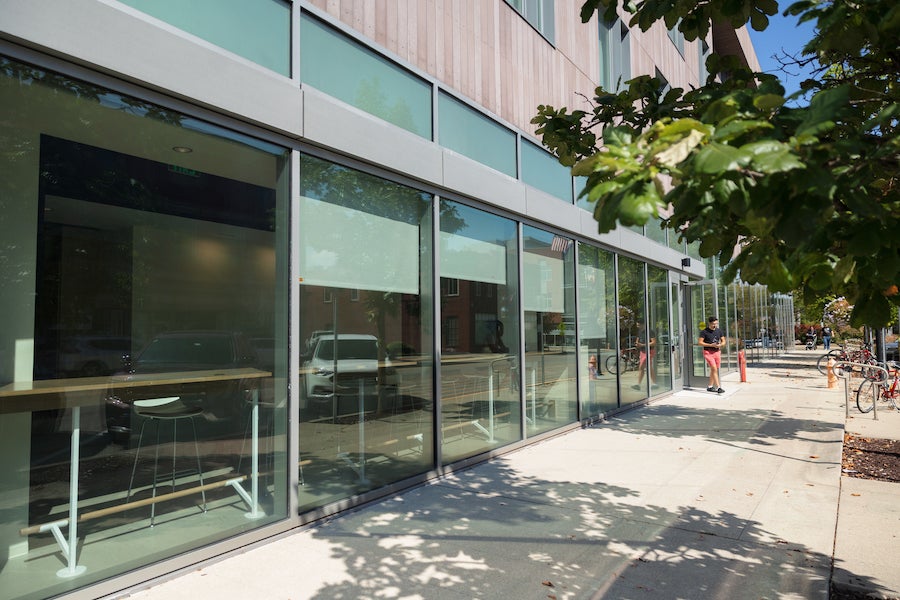
Conservatory East Studios leans into its proximity to downtown Oberlin, with floor-to-ceiling windows that offer clear views of College Street—and into the studios from outside.
Photo credit: Tanya Rosen-Jones '97
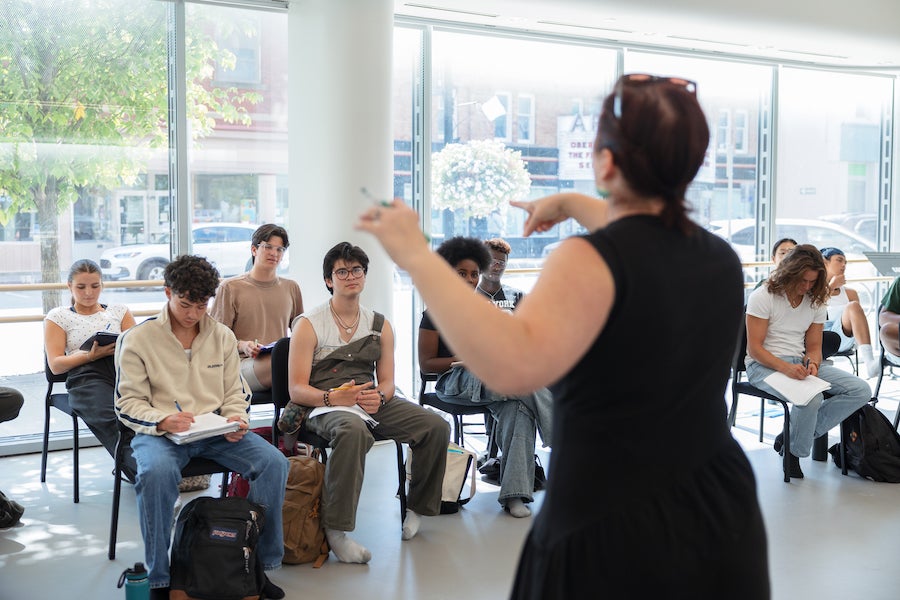
Conservatory East's multipurpose studios seamlessly transition to classroom space.
Photo credit: Tanya Rosen-Jones '97
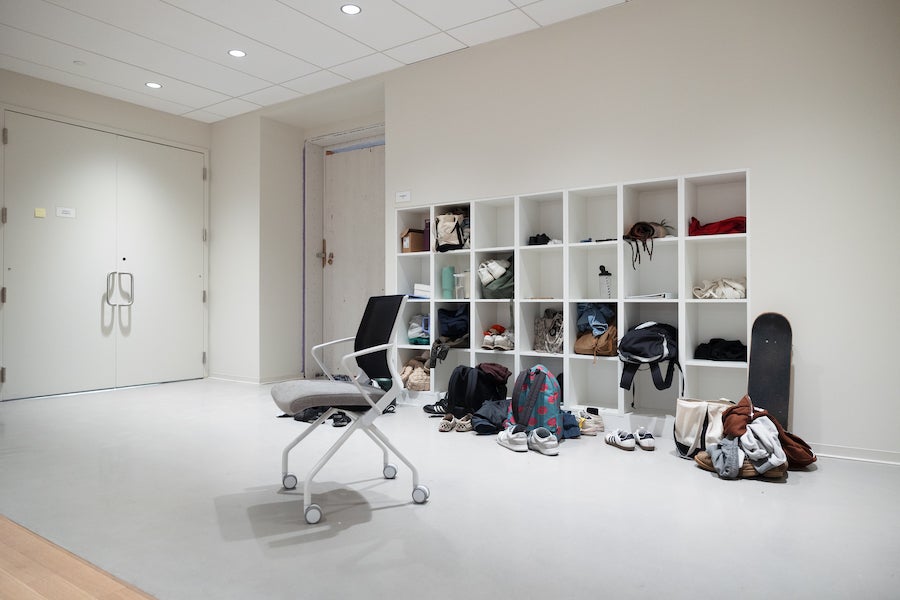
Plentiful cubby spaces and lockers provide ample room for student storage.
Photo credit: Tanya Rosen-Jones '97
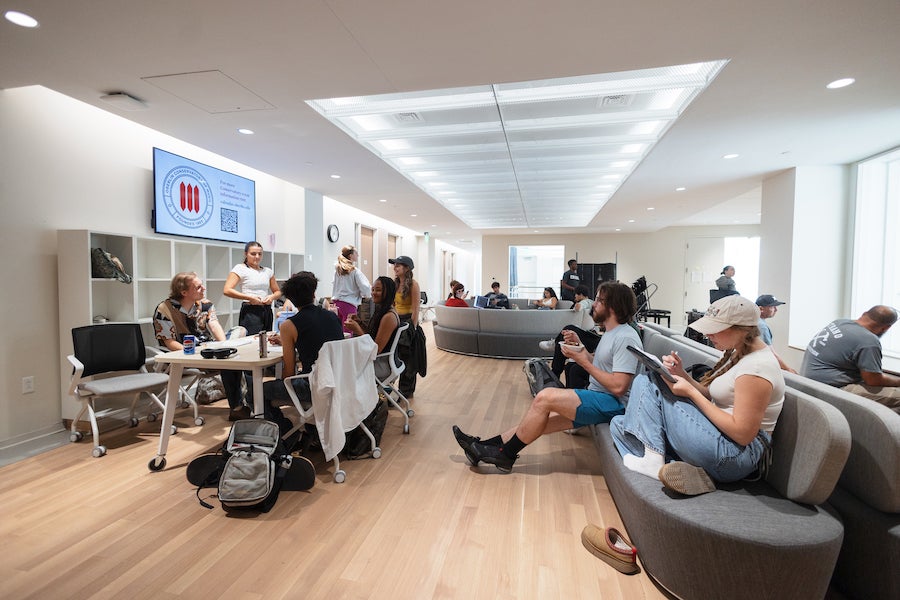
Areas for socializing and relaxing abound, including this central lounge next to the multipurpose rooms and teacher studios.
Photo credit: Tanya Rosen-Jones '97
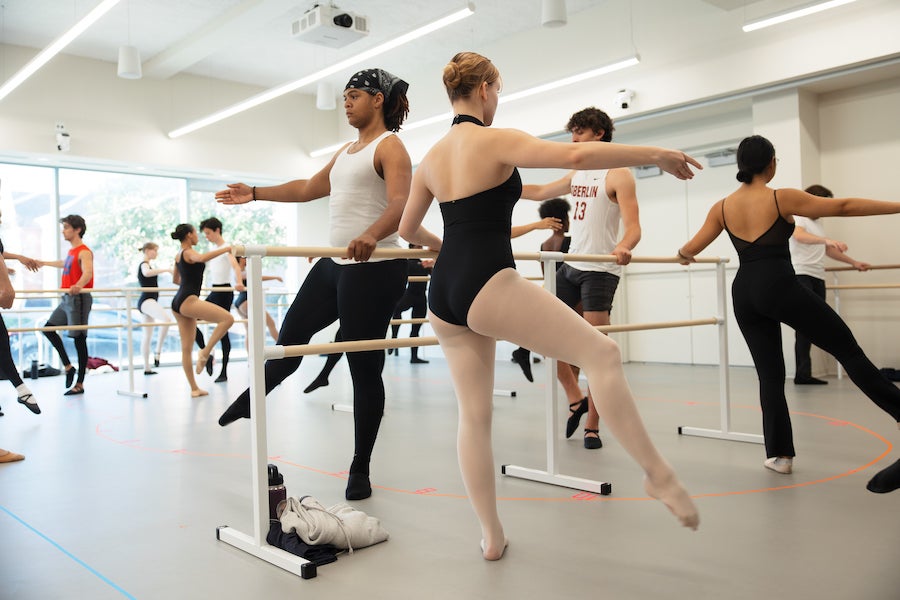
Conservatory East's multipurpose rooms are fully equipped for a wide range of uses and can be reserved by any conservatory student or faculty member.
Photo credit: Tanya Rosen-Jones '97
You may also like…
An Obie’s Guide to the Juilliard String Quartet
“The most important American quartet in history,” now celebrating its 80th year, opens the Artist Recital Series at Oberlin on September 26.
When Stars Align
The Oberlin Contemporary Music Ensemble shines on Jennifer Koh ’97’s "The American Concerto, Volume One."
Telling Stories Through Sound: The Verona Quartet and Mendelssohn's String Quartets
Storytelling has always been at the heart of the Verona Quartet. With its latest release, the ensemble turns to a composer who knew something about transforming stories into music: Felix Mendelssohn.