
Student Project Profile
The roads to success: an exploration of different international development lending frameworks
Project Title
The roads to success: an exploration of different international development lending frameworks
Faculty Mentor(s)
Project Description

Sofia Muñoz reading in Terrell Main Library.
The growing international presence of the Chinese Belt and Road Initiative (BRI) has fundamentally altered how development lending works and whom it works for. Selecting case studies with current outstanding loans, this research examines the conditions motivating Central Asian and Latin American countries' decisions when choosing an international development financier. We compare the conditions countries experienced before and after taking BRI loans to conditions when they took IMF or World Bank loans. Moreover, we analyze the wording of the Memorandums of Understanding and Letters of Intent—signed to establish an agreement between borrower and lender—in order to infer the relationship and conditions of the respective loans. In doing so, we uncover a changing world order that increasingly favors strategic agendas and individual interests over ally-ship or charity.
Why is your research important?
Borrower agency is an understudied factor in the international development financing market. My research is important because it emphasizes how borrower countries are able to indirectly shape the loans they ultimately take on, revealing the critical role they play in expressing state interest, struggle, and dissent.
What does the process of doing your research look like?
The process of developing my research is centered on close textual analysis of domestic, bilateral, and multilateral documents. Alongside this, I compare loan agreements and policy documents across lenders to identify patterns in borrower decision-making and the conditions attached to different forms of development finance.
What knowledge has your research contributed to your field?
By understanding the role borrower agency plays in international development lending, our research better explains how countries in Latin America and Central Asia choose their lenders, why some stray from traditional Western financing, and which countries are most likely to do so. This, in turn, provides greater insight into development lenders themselves, their priorities, their geopolitical ambitions, and their diplomatic strategies. By making the movements in the market more visible, our research helps us better define the ecosystem of international development finance and, more broadly, the dynamics of global politics.
In what ways have you showcased your research thus far?
Thus far, I have showcased my research through a two-minute OSRI Lightning Talk, in which I explained what first drew me to the topic and presented my hypothesis. Additionally, I have presented my work at the Oberlin Summer Research Institute Symposium, where I delivered an eight-minute presentation outlining my research process and findings.
How did you get involved in research? What drove you to seek out research experiences in college?
Research is one of the most personal ways to learn something, and it is thus a fantastic way to truly internalize information. I sought out research experiences in college because I have a pressing curiosity to understand systems that are simultaneously vast and structural, yet profoundly personal in the way they shape individual lives and outcomes.
What is your favorite aspect of the research process?
Novelty is incredibly exciting for me, so my favorite aspect of the research process is reading through new articles and listening to freshly released reports. It allows me to track what has changed in my field, feed my curiosity, and continually reflect what I must shift about my own perspective. It makes me see that we are all unknown to each other, and wonder about all the things I have yet to explore about my work, motivating me and driving my passion.
How has working with your mentor impacted the development of your research project? How has it impacted you as a researcher?
Working with Professor Amanda Zadorian has allowed me to approach my research in a kaleidoscopic manner. She has given me the freedom, and big responsibility, of guiding the development of the project while also pointing me towards avenues most likely to bear colorful insights: a balance that has made me, as a researcher, feel much more precise and thoughtful, and my work less daunting or nerve-inducing.
How has the research you’ve conducted contributed to your professional or academic development?
The research I’ve conducted has allowed me to understand the international sphere much better: knowledge I will undoubtedly bring into future International Politics courses. Moreover, it has also broadened my understanding of political theory by introducing me to different schools of thought in global politics, strengthening my ability to connect real-world case studies with broader historical movements, political philosophies, and theoretical frameworks.
What advice would you give to a younger student wanting to get involved in research in your field?
Use Google Scholar, read as much as you can, and if reading isn’t your cup of tea when learning then listen to podcasts and professional analyses instead. Whichever approach you prefer, make sure to keep an eye on the news. Politics is an ever-changing field, and understanding what is happening today is just as important as understanding what has already been written.
Students
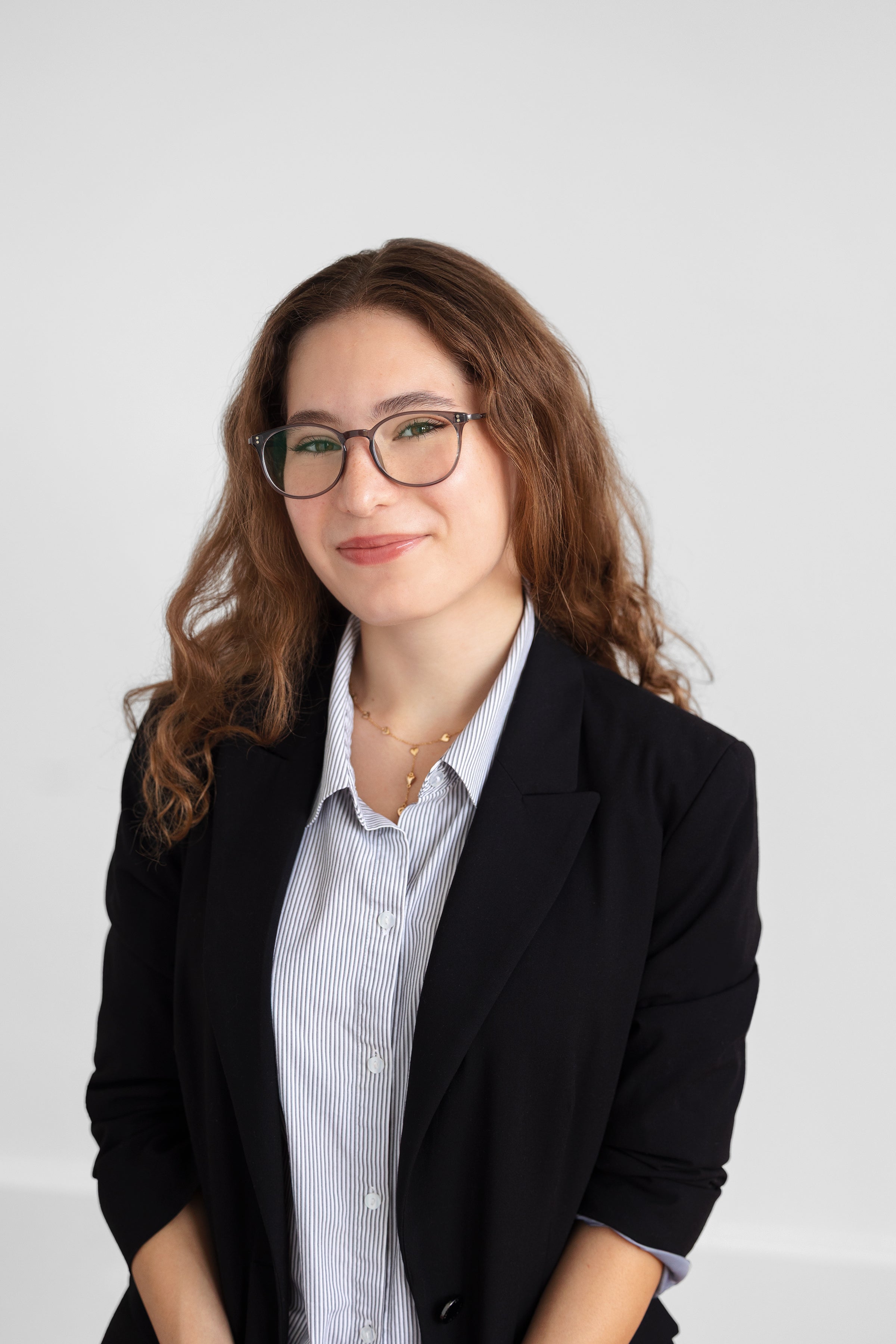
Sofia Muñoz ’29
- Major(s):
- Economics, Politics