
Student Project Profile
‘I didn’t have much choice but to demonstrate’: Reconsidering Women’s Political Agency and Public Legitimacy during the Northern Irish Troubles
Project Title
‘I didn’t have much choice but to demonstrate’: Reconsidering Women’s Political Agency and Public Legitimacy during the Northern Irish Troubles
Faculty Mentor(s)
Project Description
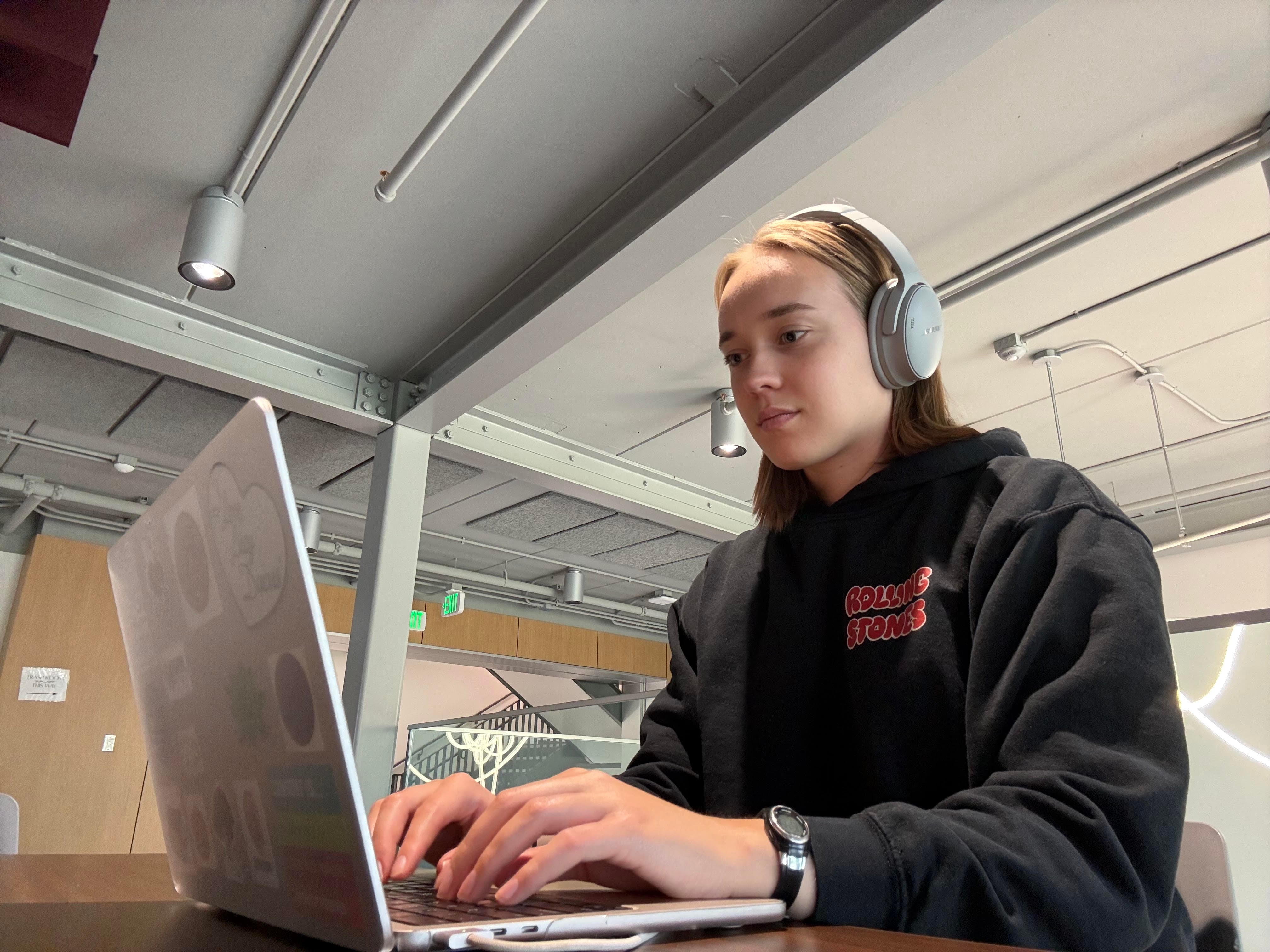
Sparrow Fuller reviewing records of womens' experiences during the Troubles.
In many interviews, women who participated in sociopolitical work during the Northern Irish Troubles describe feeling they had no choice but to participate. Yet, while they described their position in these terms, these women did not lack agency. They created a new space for themselves by establishing women’s centres and organizing protests, harnessing the independence and female solidarity they experienced while their husbands and sons were interned. Drawing primarily from interviews, newspapers, and historical and ethnographic works, this project seeks to understand this discrepancy between the rhetoric and actions of Northern Irish women engaged in community development and activism. It argues that by framing their work through the lens of maternalist moral responsibility and blending the public and private spheres, these women effectively secured a legitimate platform for advocacy.
Why is your research important?
My research is important because it draws attention to the ways maternalism and traditional gender roles can allow women to participate in public activism. We tend to think about gender roles as limiting women’s opportunities to enact change, which they largely do, but only thinking about them in this way ignores how, paradoxically, women have often been forced to remain in these roles for their social and political work to be taken seriously.
What does the process of doing your research look like?
My research involves a lot of reading. I’ve spent a lot of time looking through secondary sources about women’s experiences during the Troubles to gain a contextual understanding of the topic. I’ve also read and watched many interviews of women discussing their lives during the Troubles, so I can better understand their experiences first-hand, and get a sense of how they talk about their work.
What knowledge has your research contributed to your field?
My research looks at the ways women discuss their political and social work during the Troubles, which had largely not been done before. This analysis of their rhetoric adds an important level of nuance and understanding to the current conversation about Northern Irish women as activists, which considers the ways traditional conceptions of womanhood and politics affected the visibility of women’s work during the Troubles.
In what ways have you showcased your research thus far?
This summer, I presented my research at the Oberlin Summer Research Symposium. I am also currently writing a paper on this topic which I hope to eventually publish.
How did you get involved in research? What drove you to seek out research experiences in college?
I fell in love with historical research while working at my local historical society last summer. That experience pushed me to get involved in historical research at college, where I’ve since had the opportunity to conduct research on a much wider range of topics.
What is your favorite aspect of the research process?
My favorite aspect of the research process is writing. I find it very rewarding to synthesize everything I’ve learned in that way.
How has working with your mentor impacted the development of your research project? How has it impacted you as a researcher?
Professor Sammartino has been a great mentor, and is incredibly knowledgeable of historical research and writing. She has helped me a lot in developing my research questions to be both interesting and answerable.
How has the research you’ve conducted contributed to your professional or academic development?
This project has greatly deepened my interest in conducting research, which I would like to continue doing in the future. It has also helped me feel more comfortable in a research setting, and allowed me to grow my skills in textual analysis and public speaking.
What advice would you give to a younger student wanting to get involved in research in your field?
There are so many resources available at Oberlin to help you get started! Ask your professors, make a research appointment through the library, and follow what interests you. Be proactive! Don’t be intimidated!
Students

Sparrow Fuller ’28
- Major(s):
- History