
Student Project Profile
The Search for Non-Interacting Particles Experiment (SNIPE)
Project Title
The Search for Non-Interacting Particles Experiment (SNIPE)
Faculty Mentor(s)
Project Description
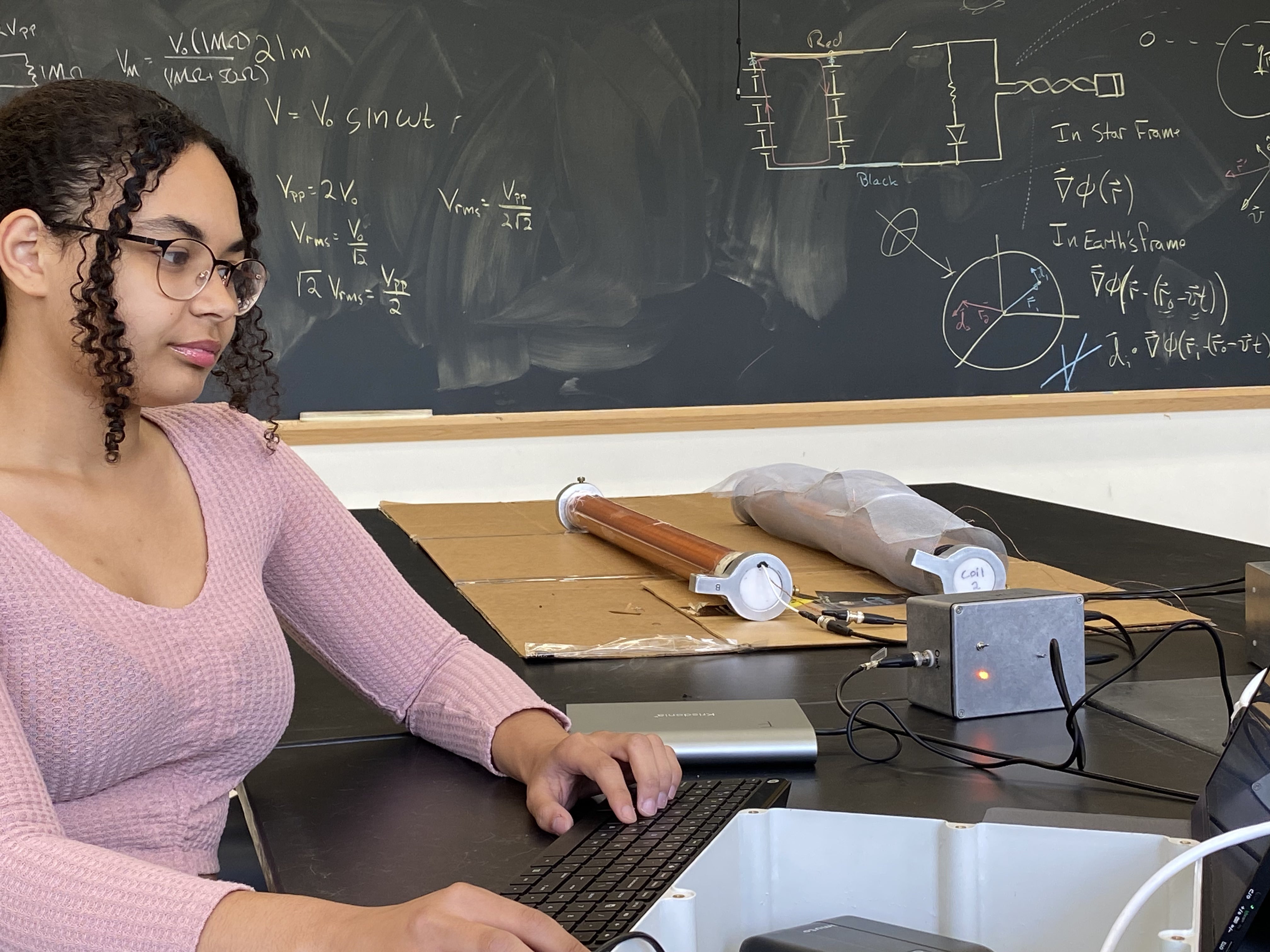
Dark matter has long eluded scientists. We know that dark matter exists based on astrophysical evidence and we know that it’s not made up of particles like electrons that make up the matter we interact with every day. There are many different hypothetical particles that could make up dark matter. We are trying to detect two hypothetical particles, the axion and the hidden photon using magnetic fields. The particles theoretically have a weak interaction with the magnetic field of the Earth. This interaction would be able to be detected using an induction coil magnetometer and then by amplifying the signal. To efficiently conclude that we have detected dark matter, we need to find this signal in more than one place. We are a part of a collaboration where we all take data at once to see if our results overlap. If they do, then that’s good evidence for dark matter. However, our magnetometers detect any sort of magnetic field, not just the ones associated with dark matter, so we have to get away from human-made magnetic fields. We do this by going camping in the wilderness over the summer and comparing our results with our collaboration.
Why is your research important?
We live in a vast universe filled with black holes, quasars, supernovas, and so much more. Yet, 82% of the matter in the entire universe is dark matter and the only thing we know about it is that it exists. By detecting dark matter, we will fill in lots of details about our universe.
What does the process of doing your research look like?
My research involved a lot of different things. We use software systems like Mathematica for modeling, we make electronics such as amplifiers, and so many other things. Everyday I’m doing something different and learning new skills.
What knowledge has your research contributed to your field?
So far our research program has set significant constraints on the properties of the hidden photons and axions.
In what ways have you showcased your research thus far?
I showcased my research at the end of Winter Term SNIPE research presentations.
How did you get involved in research? What drove you to seek out research experiences in college?
I got involved in my research through the STRONG program. STRONG has been an amazing support system through settling into college my first year and becoming confident in my research skills. Especially as someone who doesn’t look like the stereotypical image of a physicist.
What is your favorite aspect of the research process?
My favorite part about my research is that I’m constantly doing different things. One day, I’m a computer scientist jumping through code errors, the next I’m an electrical engineer spending hours soldering a board together.
How has working with your mentor impacted the development of your research project? How has it impacted you as a researcher?
Working with my mentor has been a crucial part of my undergraduate research. Not only does he help me understand the physics we do, but he’s also been an integral part of my experience at Oberlin. He gives me a plethora of advice, from actual physics advice, to thinking about my steps after Oberlin, and even to finding the best music.
How has the research you’ve conducted contributed to your professional or academic development?
My research supports my academic development since the concepts I learn in class have direct applicability to my research. My research heavily involved magnetic fields so when I took Electricity, Magnetism, and Thermodynamics, I saw how the lectures explained real phenomena which helped motivate me and made the class that much cooler.
What advice would you give to a younger student wanting to get involved in research in your field?
Talk to professors. Even if you haven't had them in a class, even if you haven’t declared a major in their department, even if you don’t fully understand their research. If you’re interested in what they do, just talk to them! Whether it be in an email or in person. Just ask to talk about their research and see where that takes you. You’re not annoying them, they signed up for this.
Students
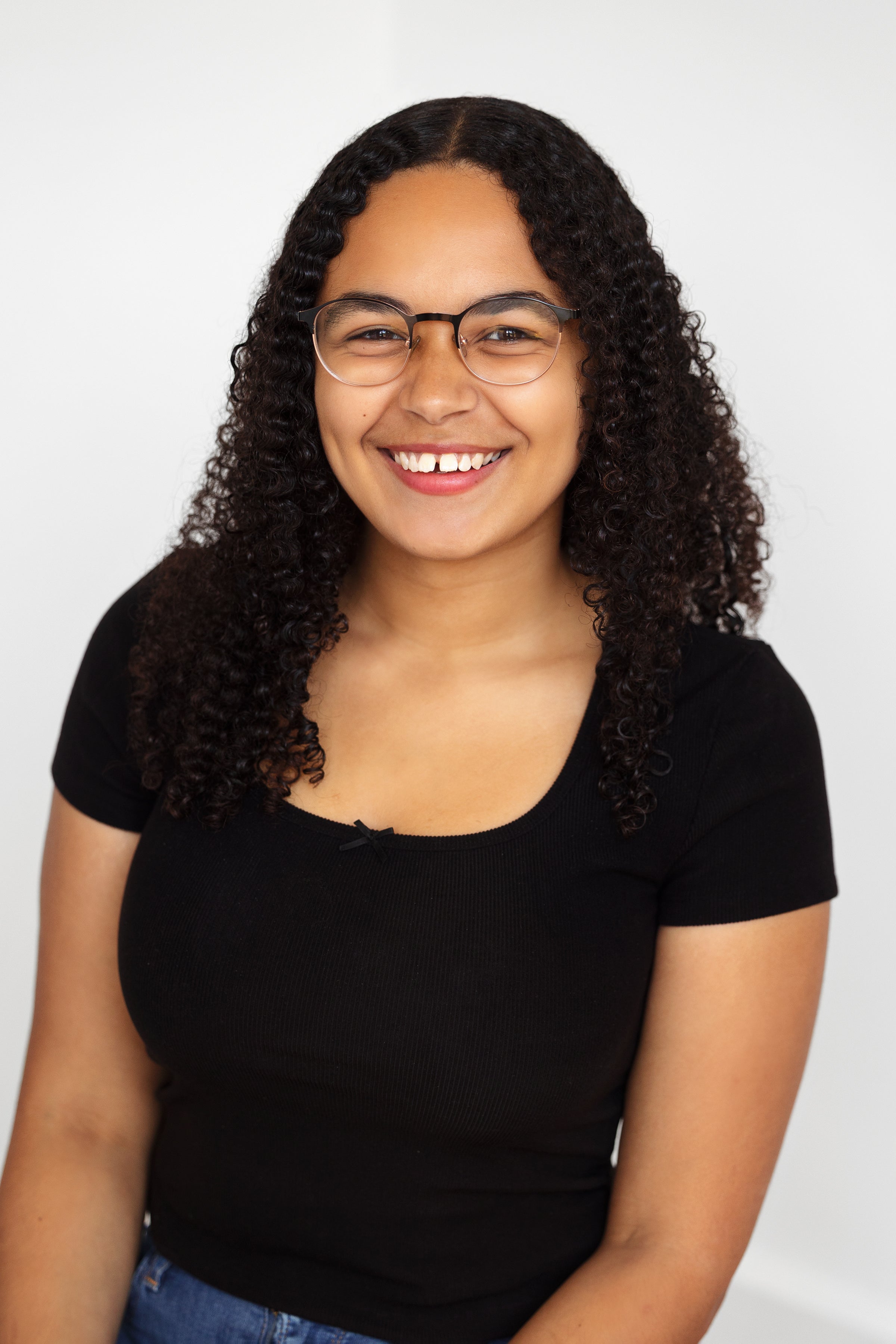
Brooke Padgett ’28
second-year- Major(s):
- Physics & Astronomy