
Student Project Profile
Integrating Survival Analysis & Machine Learning to Predict Breast Cancer Outcomes in Young Women
Project Title
Integrating Survival Analysis & Machine Learning to Predict Breast Cancer Outcomes in Young Women
Faculty Mentor(s)
Project Description
This project investigates survival trends and risk factors in breast cancer among women under the age of 40—an often underrepresented group in cancer research. Using data from the SEER (Surveillance, Epidemiology, and End Results) program, I apply both classical statistical techniques (like Kaplan-Meier and Cox Proportional Hazards models) and machine learning methods (such as Random Survival Forests and Causal Inference) to identify the demographic, clinical, and tumor-related factors that most influence patient outcomes. The goal is to better understand the unique challenges faced by young women with breast cancer and provide insights that can inform earlier detection, personalized treatment, and more inclusive public health strategies. By combining data science with public health, this research aims to bridge gaps in cancer care and support efforts to reduce age-related disparities in survival outcomes.
Why is your research important?
This research is important because without data, even the best treatments can fall short—we wouldn’t know who to reach, where to focus, or how to help those most at risk. By analyzing survival trends and risk factors in breast cancer, we aim to uncover insights that guide smarter, more equitable public health interventions.
What does the process of doing your research look like?
The process begins with cleaning and preparing a large dataset from the SEER cancer registry. I then perform exploratory analysis and use statistical tools like Kaplan-Meier curves and Cox regression to study survival patterns. Throughout, I interpret results, adjust for confounding factors, and connect findings to real-world public health implications.
What knowledge has your research contributed to your field?
My research highlights the distinct survival patterns and risk factors in breast cancer patients under 40, a group often overlooked in broader studies. By applying both classical and machine learning techniques, it contributes new insights into predictive modeling and emphasizes the need for age-specific approaches in cancer research and care.
In what ways have you showcased your research thus far?
I’ve showcased my research through lab presentations, where I’ve received valuable feedback from faculty and peers. Currently, I’m working with my mentor to prepare the study for publication, and we plan to submit it to a journal focused on cancer epidemiology or public health.
How did you get involved in research? What drove you to seek out research experiences in college?
I first got involved in research during high school while working at Dhaka Shishu Hospital, where I assisted in diagnosing infectious diseases and saw firsthand how lack of data delayed treatment. That experience made me realize that research—especially data-driven research—was essential to improving healthcare outcomes. In college, I was drawn to research opportunities that combined biostatistics and global health, so I could develop the tools to address real-world disparities, particularly in under-resourced settings like Bangladesh.
What is your favorite aspect of the research process?
My favorite part of the research process is uncovering patterns in complex data and transforming numbers into meaningful insights that can inform real-world healthcare decisions. But more than that, I remind myself that each data point represents a real person. Even though the data is de-identified, I like to think that what I’m doing might help change the life of someone it represents—by improving how we detect, treat, or understand their illness.
How has working with your mentor impacted the development of your research project? How has it impacted you as a researcher?
Working with my mentor has been instrumental not only in shaping my research—through guidance on methodology, analysis, and interpretation—but also in helping me navigate my academic and career goals. Her support has pushed me to think more critically as a researcher and given me clarity and confidence about the path I want to pursue in global health and biostatistics.
How has the research you’ve conducted contributed to your professional or academic development?
This research has deepened my interest in biostatistics and public health and made my commitment to the field much stronger. I came in with almost no experience, but with the support of my mentor and lab mate, I not only learned technical skills but also began to truly love the work. It also taught me how to collaborate effectively, ask questions without fear, and grow through shared learning.
What advice would you give to a younger student wanting to get involved in research in your field?
Don’t be afraid to start without knowing everything, curiosity and willingness to learn matter more than expertise. Ask questions, seek out mentors, and take initiative even if it feels intimidating.
Students
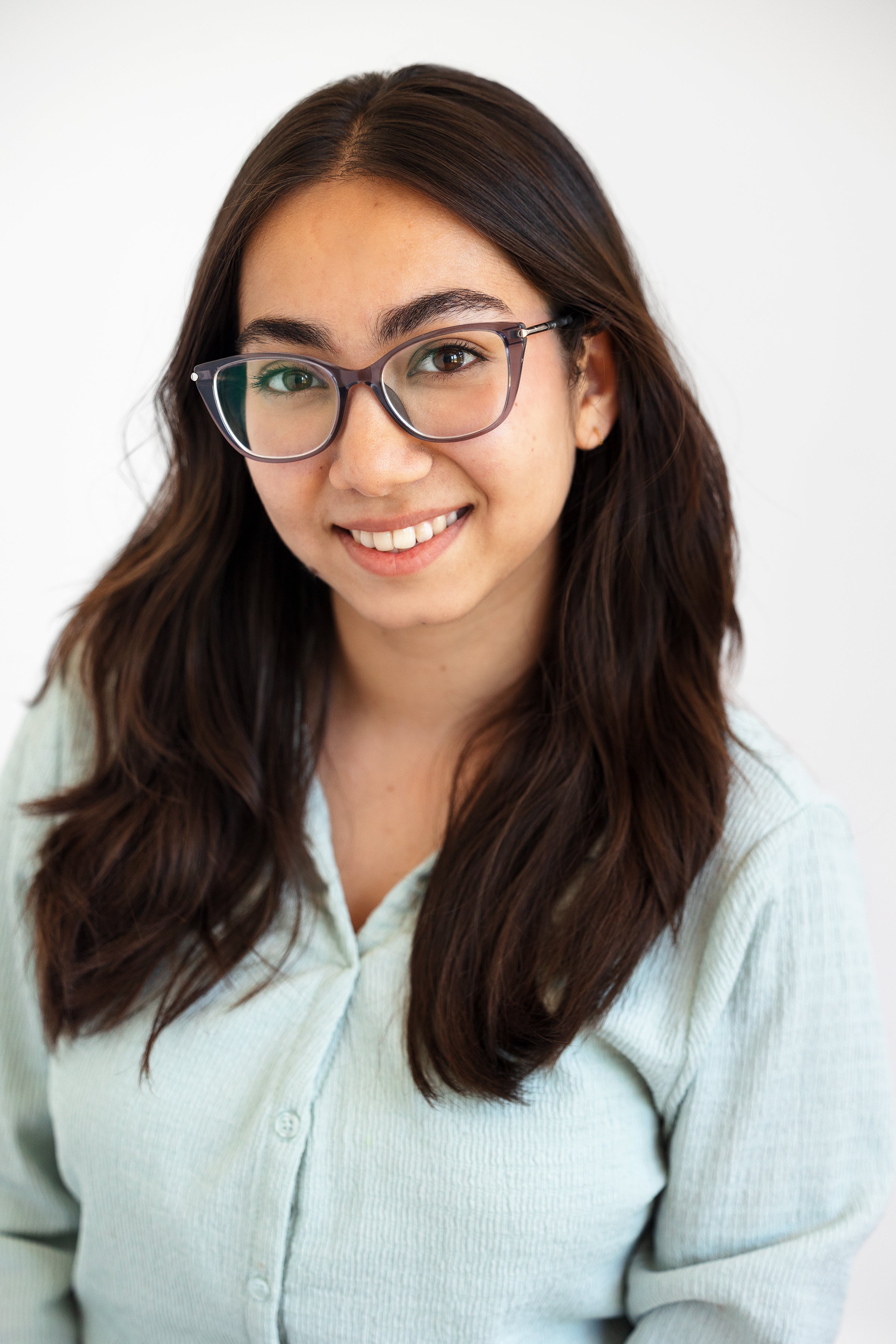
Maria M Mozumdar ’28
second-year- Major(s):
- Economics, Mathematics