Just Jewels
January 9, 2026
Stephanie Manning '23
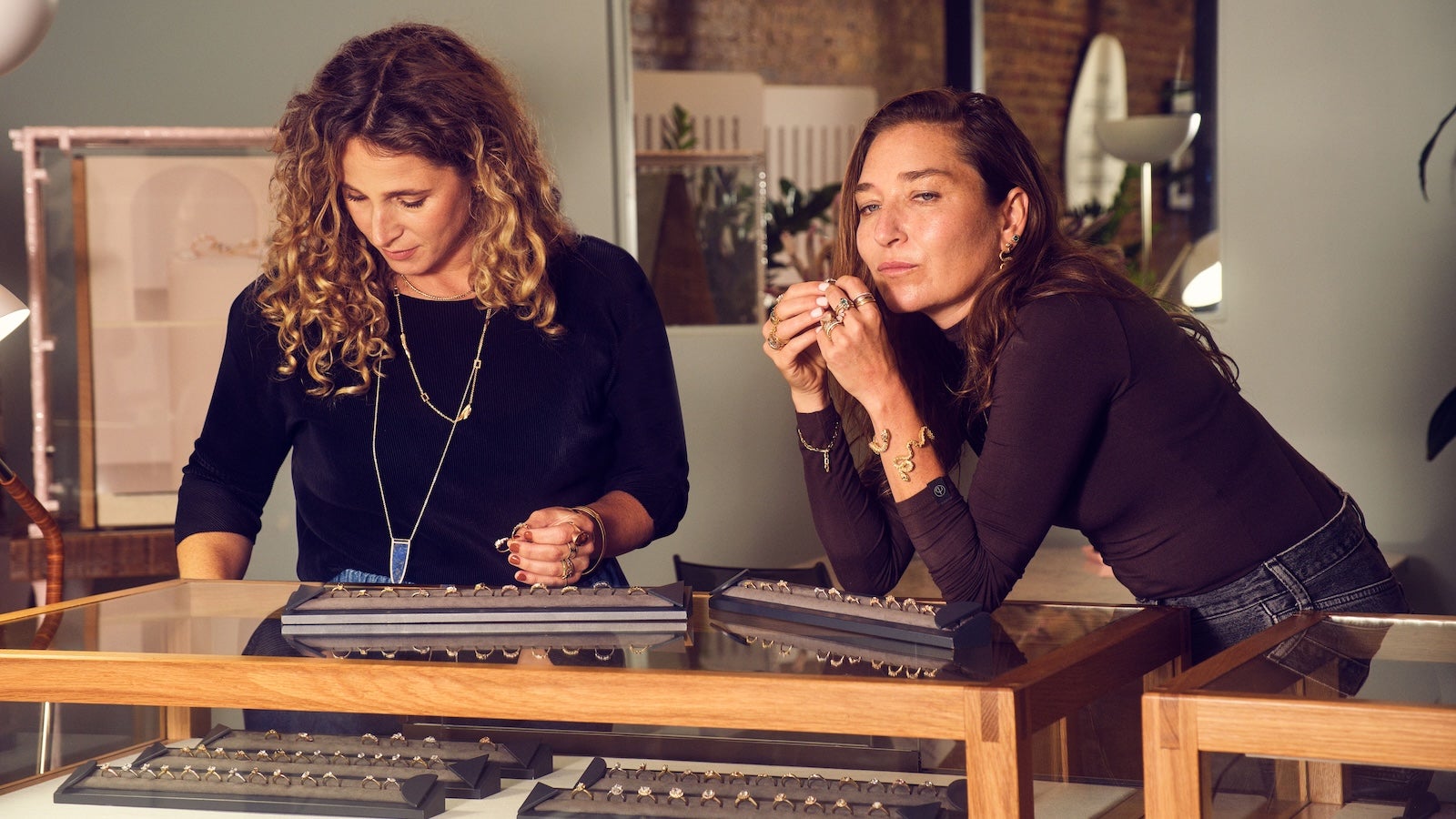
Header photo: Founded in 2008, the jewelry company Bario Neal has been featured in Vogue, the New York Times, and the Wall Street Journal.
Header photo credit: Tyler Henry
Anna Bario ’03 and Page Neal ’04 started making jewelry at separate times and places. But while handling precious metals up close, they found themselves drawn to the same question: Where did these materials come from?
Given that the pair had both studied environmentalism in college, not knowing the answer “felt like a big disconnect,” Neal says. “Particularly knowing that the jewelry industry has been historically damaging to people and the environment.”
After the Oberlin alums reconnected at the wedding of a mutual friend, Kathryn Jezer-Morton ’04, their shared passion for sustainable jewelry became the company Bario Neal, which was founded in 2008 with locations in Philadelphia and New York City and has been featured in Vogue, the New York Times, and the Wall Street Journal.
“We wanted to have this creative brand that was very design-forward but with a purpose built around sustainability, responsible material sourcing, and the social impacts of these materials at their site of origin,” Bario says. “We really do think of it as crafting future heirlooms.”
The company offers engagement rings, wedding bands, and custom and permanent jewelry. Some pieces play with texture, like a rippled metal pattern, while others feature precious gemstones like diamonds, sapphires, and emeralds. Bario says customers also ask the company to work with existing heirlooms, whether that be a treasured family piece or the memento of a marriage that has now ended. “We take those materials and redesign them, working with that client to make a piece that both reflects that history and carries it forward.”
Bario, who came to Oberlin with an environmental science background, studied the psychology of climate change and did an off-campus apprenticeship that introduced her to jewelry-making. Neal, who majored in visual art with a concentration in sculpture, took a jewelry class after graduation and fell in love with the small-scale work and the ability of her creations to connect with people.
Before beginning production, the duo spent years doing research, going to conferences, and building relationships with the NGOs and artisanal miners who would help form their supply chain. They also developed the Bario Neal standard, an internal metric that evaluates suppliers to ensure the ethical sourcing of diamonds, metals, and gemstones. The company pairs this focus on fair labor practices and environmental responsibility with the Fairmined Standard and the United Nations Sustainable Development Goals.
Making their products in their Philadelphia workshop also helps reduce their environmental impact while supporting the local community. Neal notes that they intentionally partner with other small businesses within their supply chain—because even though some overseas corporations now produce jewelry with traceable materials, “the way they are shipping and manufacturing them still has a significant energy cost.”
Conversations about sustainable and ethical jewelry have come a long way since the company was founded. “When we first started, we got a lot of stares in response to a lot of the questions we were asking and engaging with,” Bario says. Neal credits Oberlin with teaching its students how to take initiative and carve their own paths. “The focus at Oberlin was really about the learning, not the end result, which is a powerful life lesson.”
This article originally appeared in the Fall 2025 Oberlin Alumni Magazine within the feature "Rooted In Purpose."
You may also like…
Jane Wickline ’21 Finds Community in Comedy
A Q&A with the Saturday Night Live cast member and Dukes cofounder

When Stars Align
The Oberlin Contemporary Music Ensemble shines on Jennifer Koh ’97’s "The American Concerto, Volume One."

Wright On, Sister
Would the Wright brothers have invented their airplane without the support of their sister, Katharine Wright Class of 1898? Probably. But they might not have been the first.