Oberlin Alumni Magazine
A Love of Languages
Thanks to intensive support from Oberlin, Edith Clowes '73 was inspired to study and teach Russian.
October 15, 2025
Annie Zaleski
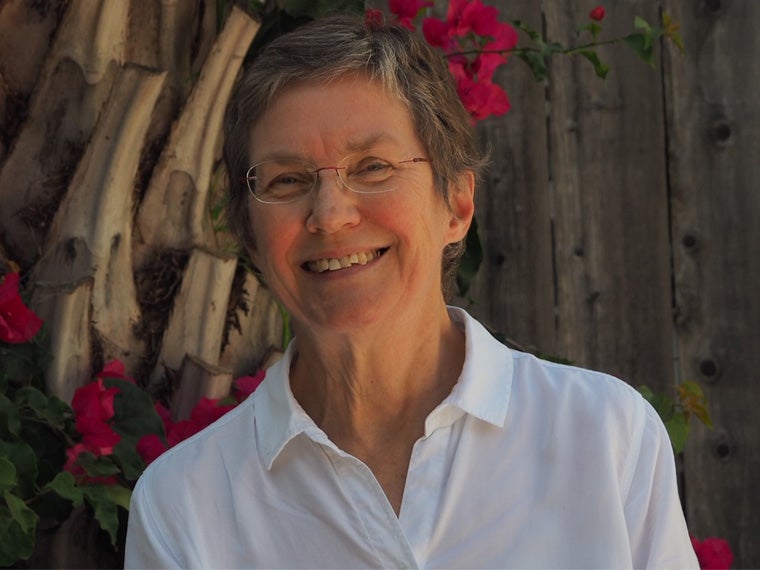
Edith Clowes ’73
Photo credit: Courtesy of Edith Clowes
From a very young age, Edith Clowes ’73 was good at languages. “I was always imitating people without knowing what they were saying,” she says. “And my mother was a language wiz. She just adored learning languages.”
Clowes followed in her mother’s footsteps, first learning French and later German. Upon arriving at Oberlin, she packed a whole first-year Russian course (and part of the second-year course) into a “very intensive” fall semester and Winter Term. She continued immersing herself in the language, even visiting a “funky, quaint farm community” in New Jersey for a few weeks to practice Russian with native speakers.
Opportunities kept coming her way. “Faculty pulled me along on summer programs in Europe,” she recalls. “I stayed in touch with literally every faculty member I knew and made lifelong friendships with them and other students. It was incredibly enriching.”
Clowes later earned a doctorate at Yale, writing a dissertation on the impact of Friedrich Nietzsche’s philosophy on Russian culture and writing. While conducting this research in the Soviet Union, she struggled to obtain the materials she needed—for example, evidence that the socialist philosopher Maxim Gorky was influenced by Nietzsche—because of Nietzsche’s problematic reputation at the time.
However, she found plenty of people willing to share their knowledge. “There were so many people in the intellectual underground who really wanted to have free speech,” she says. “It was heartening to see so many intellectuals, librarians, and archivists who would come and talk to me or invite me for tea in their apartments and say, ‘Here, take these. This is important for you.’”
Clowes went on to teach Russian language, literature, and culture at the college level, eventually becoming the Brown-Forman Chair in the Humanities in the Slavic languages and literatures department at the University of Virginia before retiring this year. She also wrote (or co-wrote), edited, and translated several books and articles on global studies and post-Soviet Russian identity. In recognition of her esteemed career, Clowes received the 2025 Distinguished Contributions Award from the Association for Slavic, East European, and Eurasian Studies.
Along the way, Clowes gave back to Oberlin. In 1998, she helped start the Oberlin Center for Russian, East European, and Central Asian Studies (OCREECAS). This led to her funding a scholarship to support Oberlin students studying Russian language, and, as of fall 2025, the Edith W. Clowes Endowed Professorship in Russian.
In other words, going forward, future students will have the opportunity to study Russian at Oberlin, just like Clowes did. “[Language training is] a very intensive process, but also extremely exciting,” she says. “It changes a person for the better in terms of expanding their understanding of themselves and their opportunities in life.”
You may also like…
Jane Wickline ’21 Finds Community in Comedy
A Q&A with the Saturday Night Live cast member and Dukes cofounder
When Stars Align
The Oberlin Contemporary Music Ensemble shines on Jennifer Koh ’97’s "The American Concerto, Volume One."
Wright On, Sister
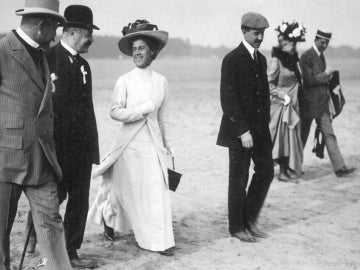
Would the Wright brothers have invented their airplane without the support of their sister, Katharine Wright Class of 1898? Probably. But they might not have been the first.