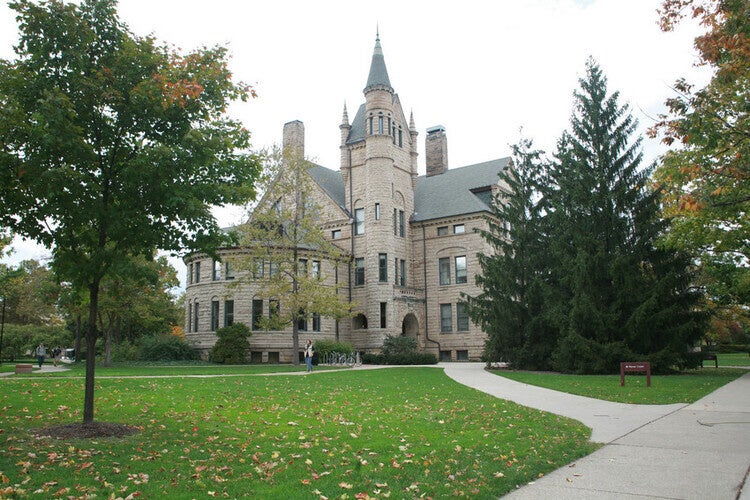
Join us for a conversation about ancient languages, musicology, and life during and after Oberlin with Tom Payne '80.
Prof. Payne
It is somewhat of a commonplace that the musical works of Johann Sebastian Bach often demonstrate an obsession with numerical symbolism. Although this assertion may sometimes be taken to extremes, there are ample cases, both in his vocal and instrumental works, where such numerical correspondences are undeniable. This talk addresses the various ways that numbers can play out in one of the composer’s best-known works, the Brandenburg Concerto no. 3. Here Bach uses numbers not only as a scaffolding to form and shape the various movements of this work, but – in a manner also frequently encountered in his oeuvre – finds a way to insert himself in the composition, essentially “signing” the work as his own. The results show two different sides to Bach: the composer at his most playful, as well as his most serious.
Open to all members of the Oberlin campus community