
Student Project Profile
Researching Native mosquito microbiota
Project Title
Researching Native mosquito microbiota
Faculty Mentor(s)
Project Description
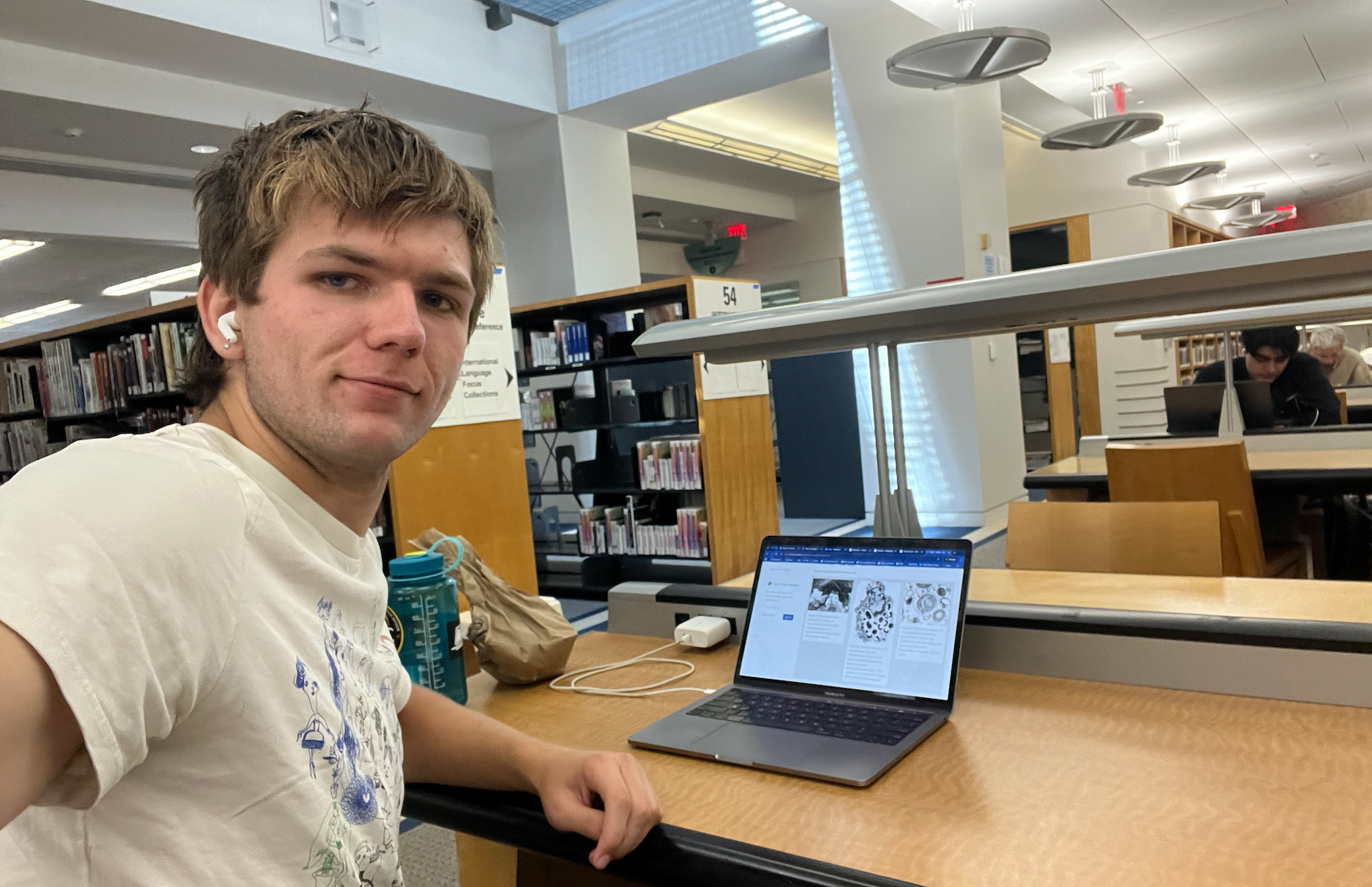
Thayer Jacobs '28 working at his laptop in the Science Library.
Ohio has around 73 different species of mosquito. While we know more or less about the mosquitoes themselves, we don’t have a solid understanding of how different kinds of mosquito microbiota affect their lifecycle. This project aims to understand the role these different kinds of microbes play in the mosquito life cycle from larva to adult.
Why is your research important?
Mosquitoes are famously vectors for diseases like malaria and yellow fever. Learning more about mosquito microbiota can tell us more about how mosquitoes act as vectors, and could lead to a way to end these deadly diseases.
What does the process of doing your research look like?
When mosquitoes are flying, the main goal is to trap larval, pupal, and adult samples. From there, we extract their DNA, amplify it with PCR, and send it off to sequencing which tells us the species of mosquito and species of microbiota. With that, we can start to build small, self-contained ecosystems called microcosms where we can raise mosquitoes and study how the presence or absence of different kinds of microbes affect their life cycle.
What knowledge has your research contributed to your field?
While this project is still in the early stages, we have already gathered a swath of information regarding which species of mosquitoes are active during different seasons in Oberlin. Ultimately, this project will contribute a breadth of knowledge about mosquito-microbe interactions within their microbiomes.
In what ways have you showcased your research thus far?
I have spoken to people in my life about it, I have it in my resume, and I have written about it in applications for Research Experiences for Undergraduates with the NSF.
How did you get involved in research? What drove you to seek out research experiences in college?
I first heard about this project from my Chem 101 hoot in the fall of my freshman year. I remained curious about it, and decided that I would ask Professor Pike to join his lab for Winter Term 2026. As a science major, research is a very real post-grad pathway. I find it tremendously satisfying and fascinating to pursue research even as an undergraduate.
What is your favorite aspect of the research process?
I really enjoy field work and identifying sampled mosquitoes. Being outside and interacting with the actual mosquitoes themselves is so much fun. It’s also very fun learning about the different species of mosquitoes we have in Oberlin.
How has working with your mentor impacted the development of your research project? How has it impacted you as a researcher?
This experience has given me a sense for how expansive research can be. Growing up I watched a lot of Star Trek where they will research something and come to a conclusion in a matter of hours. Working with Professor Pike has shown me that real research takes years so as to have a complete understanding of the topic.
How has the research you’ve conducted contributed to your professional or academic development?
My research has taught me a lot about different ways of field sampling, how to conduct different assays, how to perform genetic analysis, and so much more. It also gave me a sense for what kind of research I might want to pursue in the future.
What advice would you give to a younger student wanting to get involved in research in your field?
Do it! There is so much to learn about and so much to research. Public health and disease ecology are ever-growing fields.
Students
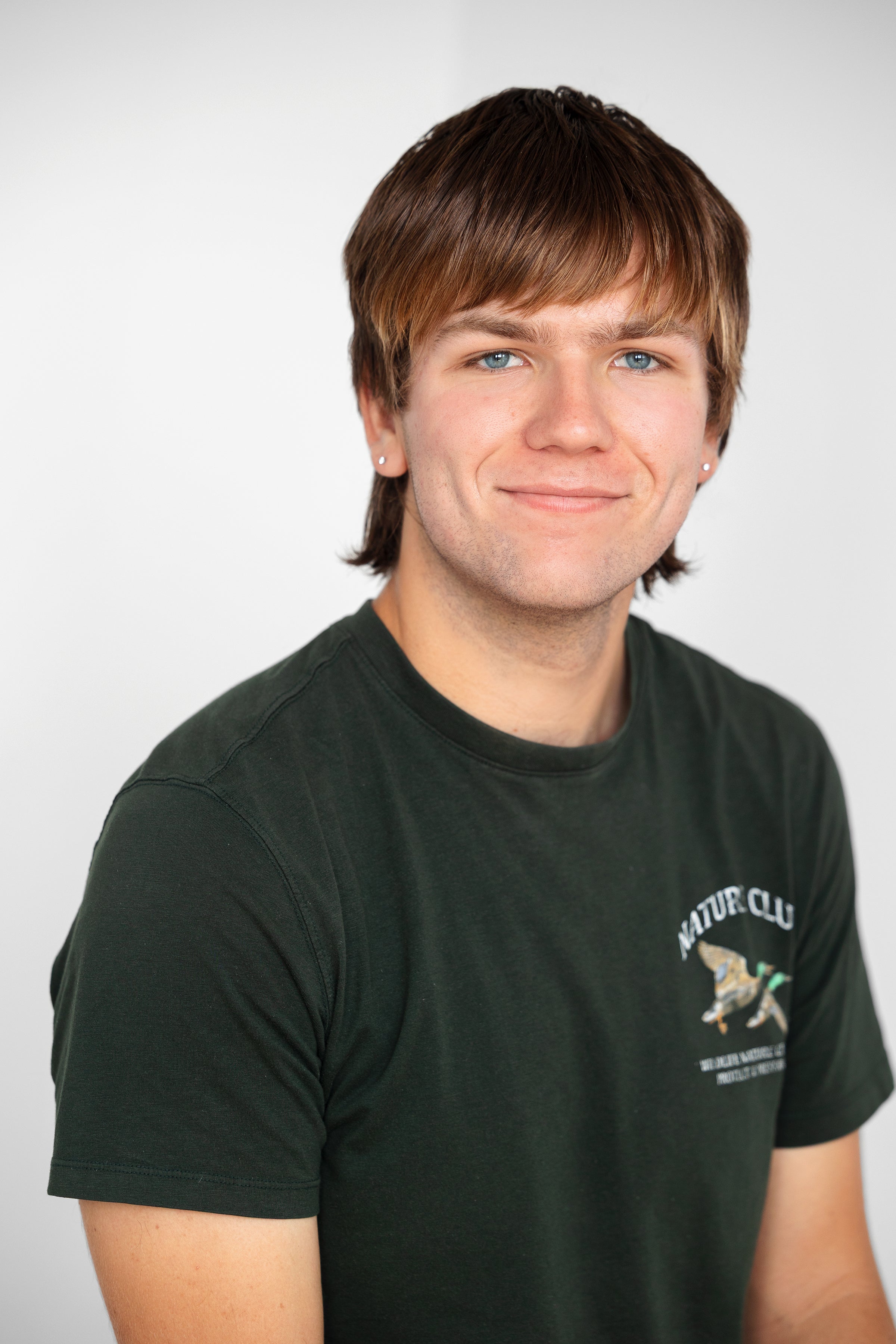
Thayer Jacobs
fourth-year- Major(s):
- Biology, Piano Performance