
Student Project Profile
Pacific Pasts, Pacific Futures: Mapping Coloniality and Conservation in the Oberlin College Ethnographic Collection
Project Title
Pacific Pasts, Pacific Futures: Mapping Coloniality and Conservation in the Oberlin College Ethnographic Collection
Faculty Mentor(s)
Project Description
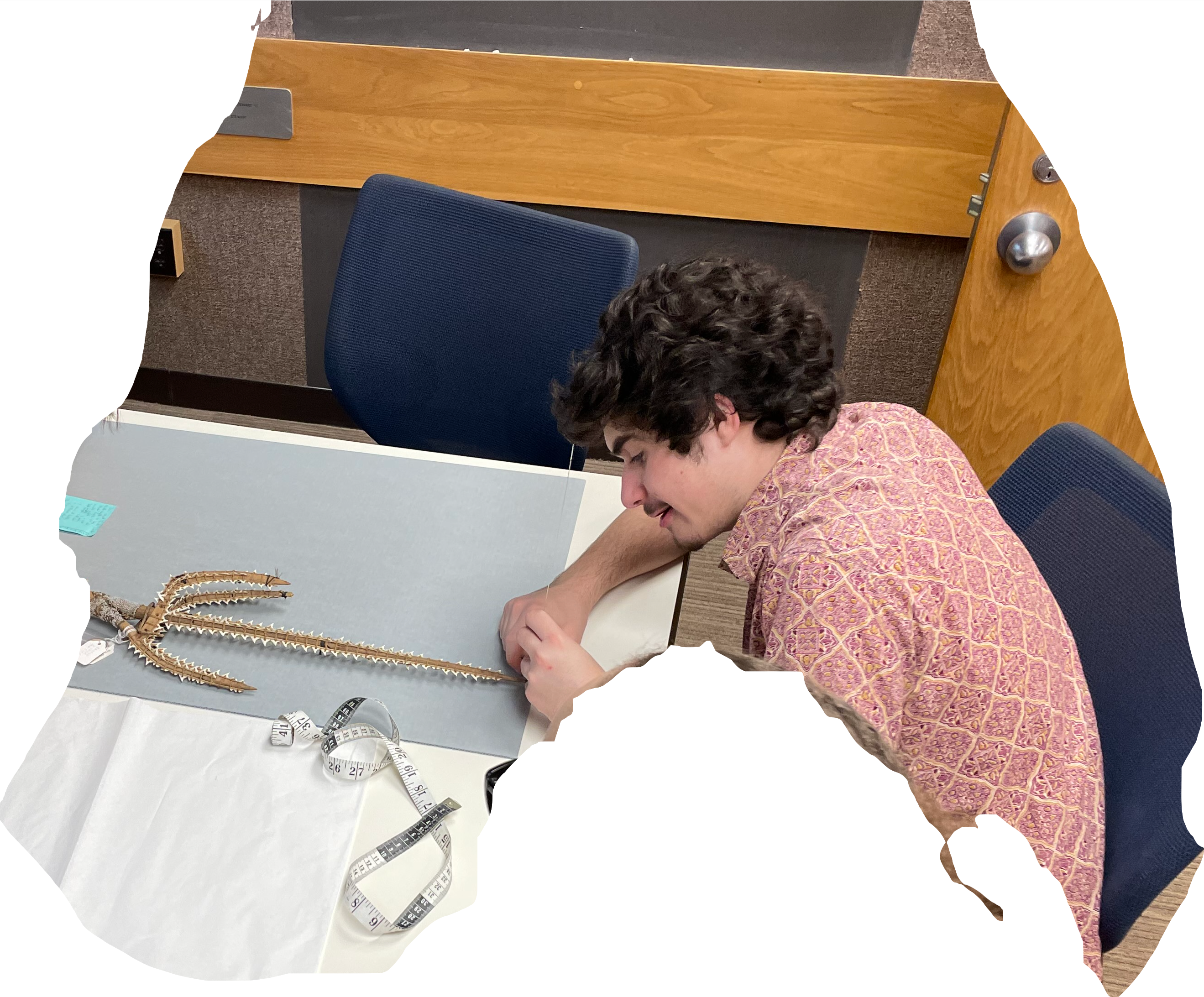
I spent last Winter Term researching an artifact chosen from the Oberlin College Ethnographic Collection, a repository of cultural objects from around the world that wound up in the College’s coffers by way of Oberlin alumni, missionaries, and scientists. Under Professor Margaris, I produced a report evaluating my object’s condition, the materials and techniques likely employed in its creation, and the sociocultural context surrounding it. I also wrote a more holistic blog piece on the item, which also touched on the circumstances of its acquisition and eventual path to the Collection.
I was drawn to artifacts from the Pacific Islands, where digital archivism is increasingly relevant in the face of existential sea-level rise — most poignantly in the country of Tuvalu, which is developing a "digital nation" to preserve its sovereignty if/when the ocean swallows its islands.
I then stumbled upon Alice Little, an Oberlin alum who, upon graduating in 1888, promptly embarked on a five-year mission to Micronesia — and brought back artifacts including a model house. Choosing to research it, I found it resembled architecture that had been effectively extinct >115 years, replaced by a plainer “new style” propagated by western missionaries like Little. The transformation has been so complete that a 2020 I-Kiribati expert consultation found the model architecture to be unlike anything they had seen.
In the spring, I adopted a more hands-on approach, rehousing the Collection’s most fragile artifacts in a private reading.
This summer, I sought to use the house as a jumping-off point to chart the broader legacy of Little and her peers in Micronesia. In addition to better characterizing Little’s mission, I also seek to explore her role in WWII — a half-century after her mission, a 93-year-old Little was contacted by U.S. intelligence, who solicited her personal journals, maps, and samples; these proved pivotal to U.S. strategy in the Pacific Theater. Moreover, I also am exploring the environmental ramifications of the “new style” architecture — the shift set a precedent of externally-imposed infrastructure that often is climatologically resilient than indigenous structures (there is a century-old account of native vs. missionary sea walls that illustrates this).
What does the process of doing your research look like?
Lots of painstaking file-digging and scrutinizing 150-year-old cursive! I’ve spent countless hours in the Archives, whether looking at old missionary board logs, long-defunct local newspaper entries, or the catalogue for the objects (including the Collection) formerly housed in the long-gone Oberlin natural history museum. I’ve also read several books, analyzed WWII garrison data and battle tactics in the Pacific, and more.
What knowledge has your research contributed to your field?
I’ve learned that Alice Little’s five-year mission coincided almost exactly with a major theological schism in the national missionary board she worked under, which culminated in a precipitous drop in funding and volunteers the year of her departure — raising an intriguing explanation of her journey’s brevity. I’ve also identified the architectural style the model house is likely based on, as mentioned previously. Additionally, I’ve uncovered more about the timeline of the Collection and its constituent artifacts before they made their way to their current home. I’ve also gleaned insight into Alice Little’s contributions to WWII, and indirect role in the creation of the Navy SEALs in the wake of a brutal battle informed by her intel. Lastly, I’ve woven a portrait of how Christian missions became a proxy for imperial jockeying: Spain, Germany, the U.S., and Japan all tried to remake the region’s religious character in a Christianity aligned with their own interests; missions became an effective geopolitical ping-pong between rivals.
In what ways have you showcased your research thus far?
I’ve made a blog post, condition report, presentation about object rehousing, and have presented during the Winter Term fair. I also worked on an annotated bibliography, more blog posts, and a symposium presentation through the Oberlin Summer Research Institute.
What is your favorite aspect of the research process?
Seeing the proximity of the macro and the mundane. Seeing how missionaries can be instrumentalized as political pawns, and how Little’s personal travel journal ended up in the hands of top strategists of the U.S. Pacific Theater campaign. Digging through old Oberlin newspapers to see a poll of locals’ opinions on the recent nuclear bombing of Hiroshima and Nagasaki on one page, followed by a cartoonish ad for extravagant feathered hats the next.
What advice would you give to a younger student wanting to get involved in research in your field?
Dispel the mythos — prior to diving in it can feel like “doing research” is such an alien and intimidating prospect, but lots of that is socially conditioned — you can ease yourself into it; you’re often able to moderate your own pace as you progress and familiarize yourself with it.
Students
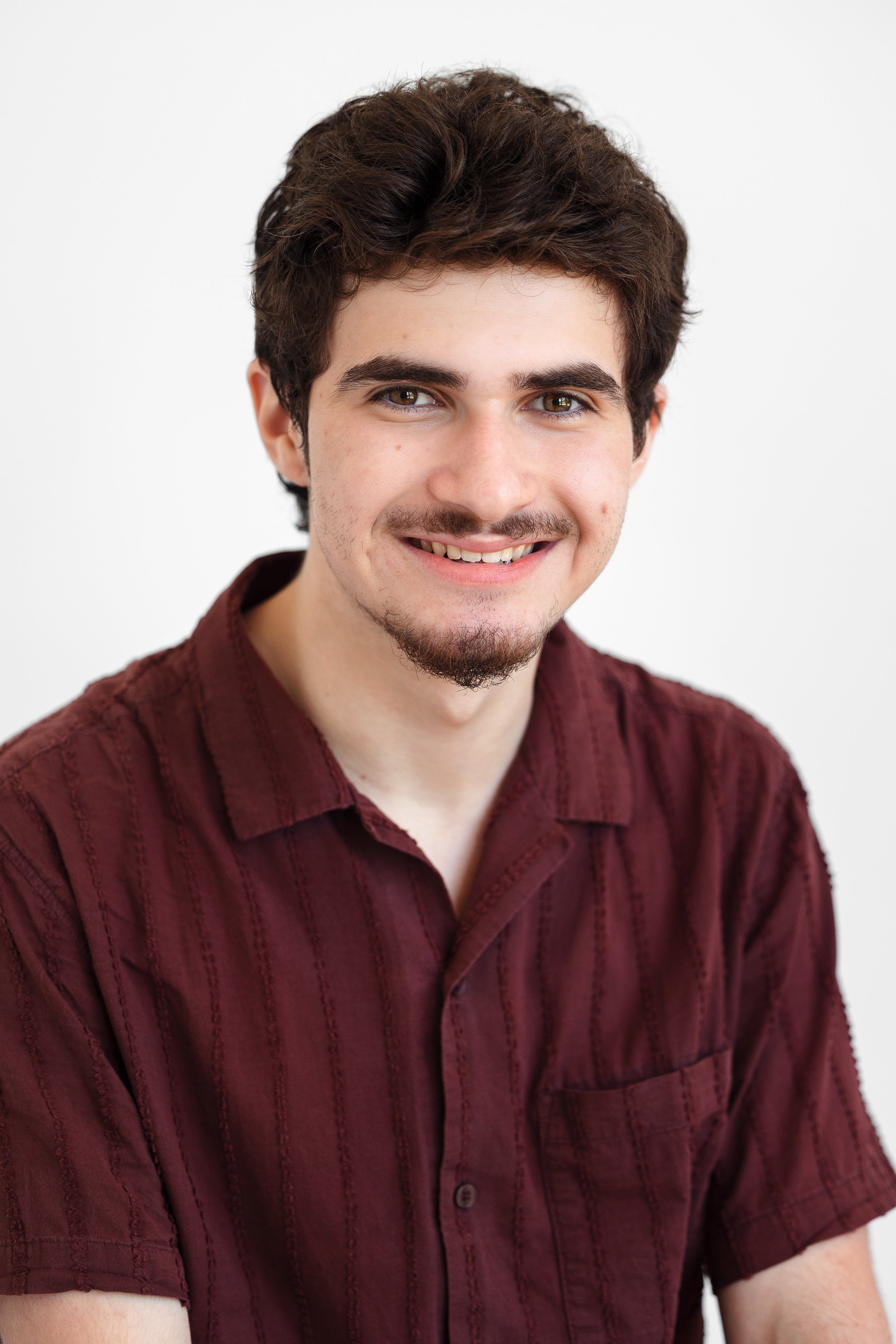
Judah Firestone-Morrill ’28
second-year- Major(s):
- Undecided