
Student Project Profile
It Ain’t Just Slang: A Historical and Stylistic Examination of African American Vernacular English and Its Role in Educational Justice
Project Title
It Ain’t Just Slang: A Historical and Stylistic Examination of African American Vernacular English and Its Role in Educational Justice
Faculty Mentor(s)
Project Description
My project, which explores African American Vernacular English (AAVE) as both a linguistically legitimate dialect and richly expressive literary style, advocates for curricular inclusion as a foundational element of educational equity and literary diversity– especially when viewed through the intricate lens of poetry. Drawing on research of notable scholars and the literary strategies of influential Black poets, this essay illustrates how AAVE challenges dominant linguistic norms while offering rhetorical precision, emotional resonance, and rhythmic ingenuity. In essay format, my intent is to critically engage with both scholarly discourse and my personal lived experience within three main sections. In doing so, I examine how AAVE operates not merely as a communicative tool but as a mode of cultural permanence, creativity, and resistance. Through embracing this deeply historic and rhythmic linguistic form, I ultimately reveal that it is possible for higher education to create an inclusive literary canon that fosters a more equitable exchange of knowledge, thus redefining the preferential concept of “standard” education.
Why is your research important?
As this is a time where Diversity, Equity, and Inclusion (DEI) is facing immense censorship and surveillance, it is particularly important for higher education to create an educational environment that acknowledges and addresses systemic inequities. My project poses as the start to a deeper discussion of the lack of diversity within not just literature, but academic spaces altogether, and provides insight into the validity of these enriching multiplicities that society often denies.
What does the process of doing your research look like?
I have been reading SO much! For the better part of this summer, I have been constantly absorbing books, articles, movies etc., and taking copious notes on my findings. I then have been taking what I learn and drafting ideas of my paper, section by section. I make sure to do this gradually, as well as consistently making sure I am going back and improving my work as it progresses.
What knowledge has your research contributed to your field?
My research is unique because rather than simply expressing the history and theorizations surrounding AAVE, it attempts to go a step further in using the dialects’ historical background to inform its structural and stylistic features through a specific literary form. Especially because research on AAVE has slowed down since the late 20th century-early 21st century, it is important that my research exists to show the languages’ continuity, its ability to transcend modern academia, and how its very existence has informed some of the practices/traits of its employers.
In what ways have you showcased your research thus far?
This process has been fundamental in helping me develop my ability to both effectively digest multiple readings across time and synthesize several texts in a concise yet in depth manner; I feel that this growth in my work is showcased in the essay that I have completed. In addition to this, I show how the information that I am learning connects to ideas that I might have already gained further understanding in previous educational pursuits.
How did you get involved in research? What drove you to seek out research experiences in college?
After I expressed interest in a particular subject that I wanted to further investigate beyond one of my courses, a colleague of mine recommended that I look into summer research opportunities. They expressed that after doing research here for two summers, it prepared them for completing their honors project as well as pursuing graduate opportunities. As I am someone who wishes to pursue graduate studies in the future, this insight has made me feel more accomplished in my experiences and ready to tackle more academic research opportunities.
What is your favorite aspect of the research process?
My favorite aspect of research has truly been in learning new aspects of my main topic that I had yet to discover, or stumbling upon fascinating facts For example, in one of the main books that I am using to foreground my research, the author revealed evidence of AAVE being uttered by an enslaved person during the Salem witch trial of 1692!
How has working with your mentor impacted the development of your research project? How has it impacted you as a researcher?
My research honestly would probably not be as nearly informative, creative and expansive as it is if not for Mrs. Caroline. She helped me also be able to find a balance between articulating myself as an experienced researcher rather than simply a curious student. Additionally, Her extensive research in my particular field proved to be a helpful guide in the conception of my project and through the bumps in the road that might have evolved throughout.
How has the research you’ve conducted contributed to your professional or academic development?
Before this experience, I had yet to really experience researching as a humanities student, and I wasn’t aware that there were so many opportunities for students (outside of stem disciplines) like myself to expand on the knowledge that is developed in classes. Conducting research this summer has allowed me to understand the research process and be able to adapt my learning into a longer project that can be used across many different fields. It also helped further my ability to not just create a project, but be able to present it in a way that makes it easily digestible to those unfamiliar with the topic and spread awareness in a precise, scholarly way.
What advice would you give to a younger student wanting to get involved in research in your field?
Some advice that I would offer to a younger student that would be interested in getting into research would be to be patient with yourself and embrace instances of change rather than fear it. In my experience, as you are developing your research, you might run into issues or discoveries that might prompt you to alter your current framework. While this can be inconvenient or stressful, it presents new opportunities to expose you to the fluid nature of independent research.
Students
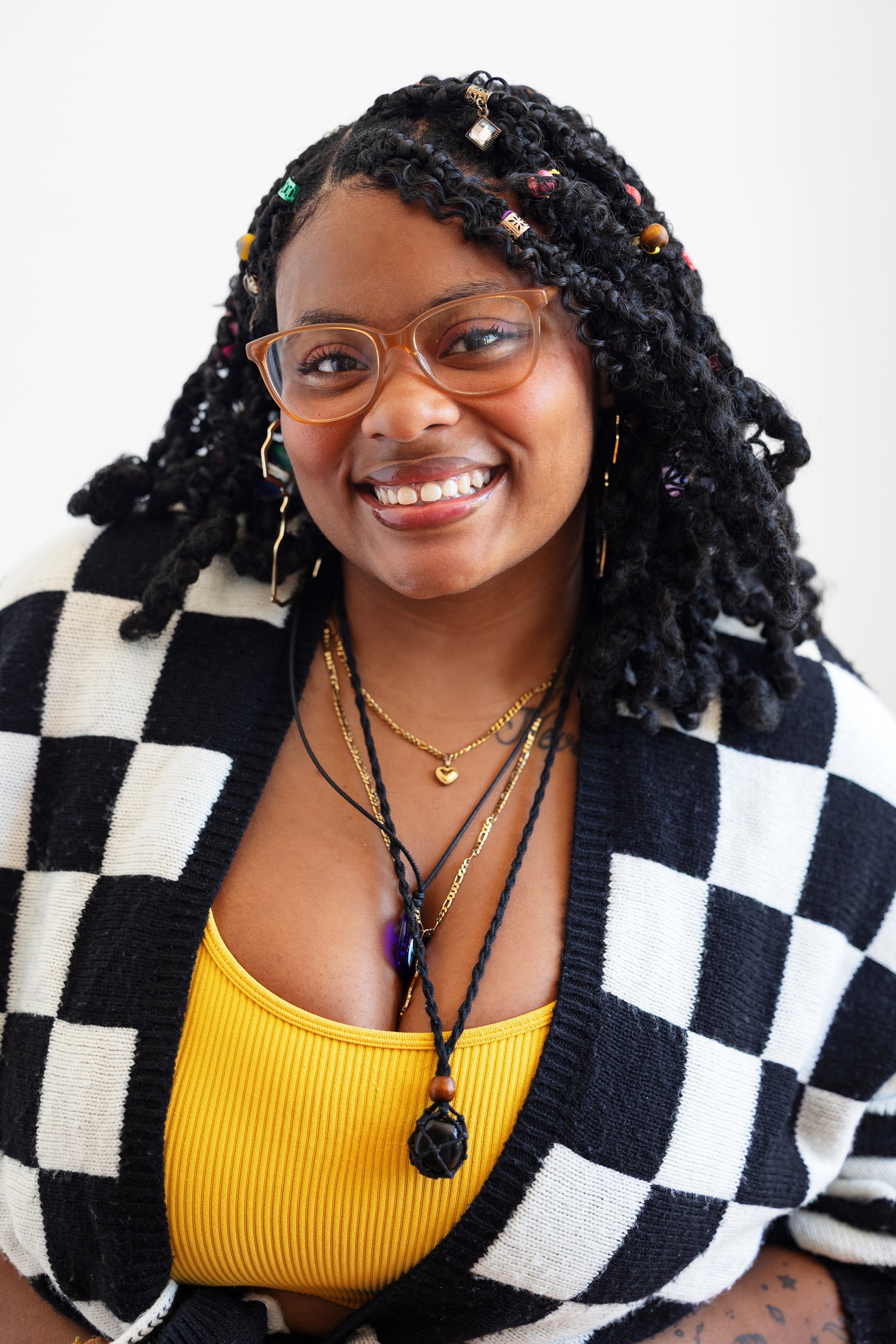
Mia Knox ’26
fourth-year- Major(s):
- Africana Studies, Theater