Rollins Riffs
In 2017, the sax master reflected on his life in music and his connection to Oberlin.
May 26, 2026
Office of Communications
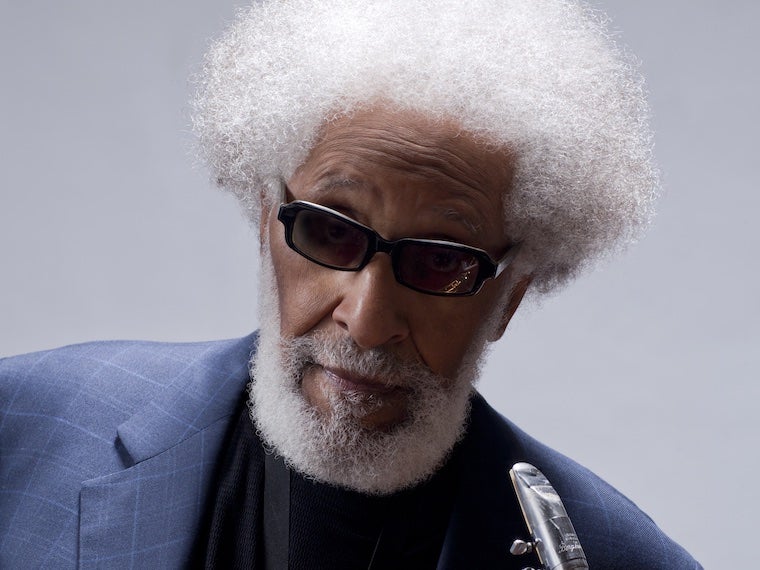
Sonny Rollins, photographed for the 2018 Oberlin Conservatory magazine
Photo credit: John Abbott
When Sonny Rollins gave a generous gift to Oberlin College in 2017 to establish the Oberlin Conservatory of Music Sonny Rollins Jazz Ensemble Fund, the jazz legend spoke to the college about the gift and the importance of service.
"It’s an honor and a privilege to be involved in any way with Oberlin," said Rollins, who performed at the college many times in his storied career.
Today, the Oberlin Sonny Rollins Jazz Ensemble proudly carries forth Rollins' legacy both on and off campus.
On May 25, 2026, Rollins died at his home at the age of 95. To honor his storied life and commitment to nurturing the next generation of jazz musicians, we are republishing his conversation with Oberlin, which ran in the 2018 Oberlin Conservatory Magazine.
(This interview has been condensed for clarity.)
With this gift, you’re also giving each student a command to live a life of service. How did the importance of service develop in you?
I didn’t have much schooling. I didn’t go to university. I graduated from high school, and that was it. It was the university of the streets, as they say. After that, of course, I was very fortunate: I was talented. I had a musical gift. And I became associated with a lot of great artists who enhanced my playing. One thing that I realized was that, especially today, it’s not enough to be a gifted musician and to be able to play. It wouldn’t be enough when I was growing up, and it’s definitely not enough now. My life has shown me that you have to have something else in order to live. And a successful life is not just having a great talent. Life is about giving, not taking.
James McBride '79 was instrumental in my realizing that we could put this into the curriculum. The students have to do some kind of community service, and that’s all to understand that a successful life is about giving back. That way you’re honoring this great gift that you have.
You played with many of jazz’s all-time greatest musicians. What would you want future generations to know about them?
It’s been a learning process, and I am still learning, of course, which is what makes it all so beautiful. One of the things that I’d like to try to get the students to understand is that the great people that I’ve been fortunate to play with...they were all beautiful people. Each one of them. They were all good people.
So if these students want to think about some guys that they know ... whether it be Miles Davis or Coltrane or Thelonious Monk or Bud Powell, Charlie Parker ... They were good people in very hard situations, and they exemplified what I would like to see these students try to emulate, as well as emulating their music. Like [Oberlin Jazz Studies founder] Wendell Logan. I didn’t even know Wendell Logan, but I knew of him. And that’s the type of spirit that these students should have. Oberlin is the perfect place to try to preach that to them.
Your gift to Oberlin will have a resounding impact on young musicians for many years to come. How does that make you feel?
Well, it’s beyond words. I don’t know. It’s too much to conceive of. I just hope that it helps the big picture along. I hope it’s a positive help in the world and in the society that we live in. I just hope that these talented people coming out of a great institution— the greatest, Oberlin—that they really shed light wherever they go, wherever they play, wherever they sing, wherever it is they do what they do. Shed light and realize that life is about the golden rule.
You may also like…
An Obie’s Guide to the Juilliard String Quartet
“The most important American quartet in history,” now celebrating its 80th year, opens the Artist Recital Series at Oberlin on September 26.
When Stars Align
The Oberlin Contemporary Music Ensemble shines on Jennifer Koh ’97’s "The American Concerto, Volume One."
Telling Stories Through Sound: The Verona Quartet and Mendelssohn's String Quartets
Storytelling has always been at the heart of the Verona Quartet. With its latest release, the ensemble turns to a composer who knew something about transforming stories into music: Felix Mendelssohn.