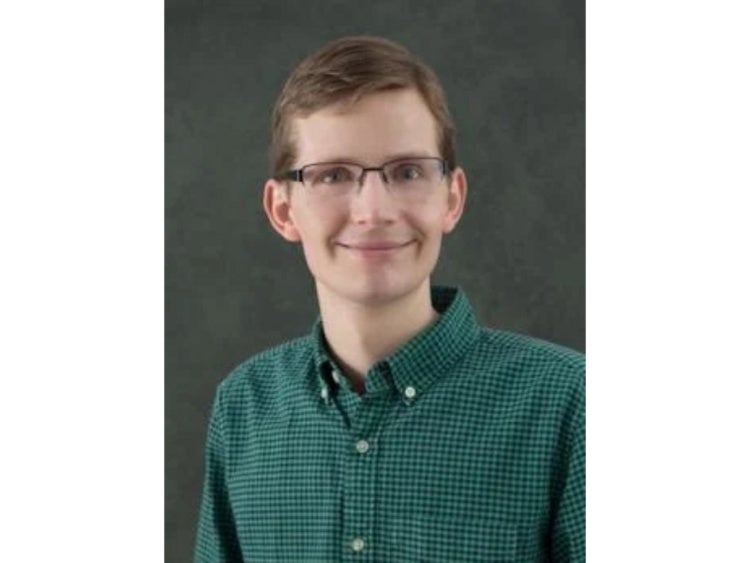
As part of the Department of Chemistry & Biochemistry Seminar Series, Oberlin's own Associate Professor of Chemistry and Biochemistry William Parsons will present on the topic "Development and Application of Activity-Based Probes for the Human Rhomboid Intramembrane Proteases."
This seminar will be preceded by a light reception at 4:30 p.m. in the David Love Lounge.
Sponorsed by the Luke E. Steiner Lecture Fund.
--
Abstract:
Hydrolases represent one of the largest classes of enzymes in the body and play essential roles in physiological processes ranging from inflammation to nervous system signaling. Despite the prevalence and importance of this enzyme class, the biological functions of many hydrolases have yet to be determined. Among these less characterized members are rhomboid intramembrane proteases, which have nevertheless generated significant interest due to their membrane-embedded active sites and association with several health disorders. Mutation and dysregulation of these enzymes in neurodegenerative diseases and multiple types of cancer motivates the development of an enhanced understanding of their physiological functions as well as an investigation of their potential to serve as therapeutic targets. Suitable methods to conduct these studies, however, are currently lacking. Our lab is currently employing activity-based protein profiling (ABPP) technology to develop chemical probes to study the human rhomboid proteases. In this talk, I will describe our development of ABPP assays for two human rhomboid proteases, RHBDL4 and PARL, and the use of these assays for characterization of their active proteoforms and inhibitor discovery. I will also discuss our ongoing efforts to establish ABPP assays for the remaining three human rhomboid proteases (RHBDL1, RHBDL2, and RHBDL3). We envision that the chemical tools developed through this work will facilitate characterization of these enzymes and provide valuable lead compounds for selectively modulating their functions.
Open to all members of the public