Gran Turismo: Racing for the Bar Line
Oberlin's Contemporary Music Ensemble redlines a work by Andrew Norman.
February 12, 2016
Julie Gulenko '15
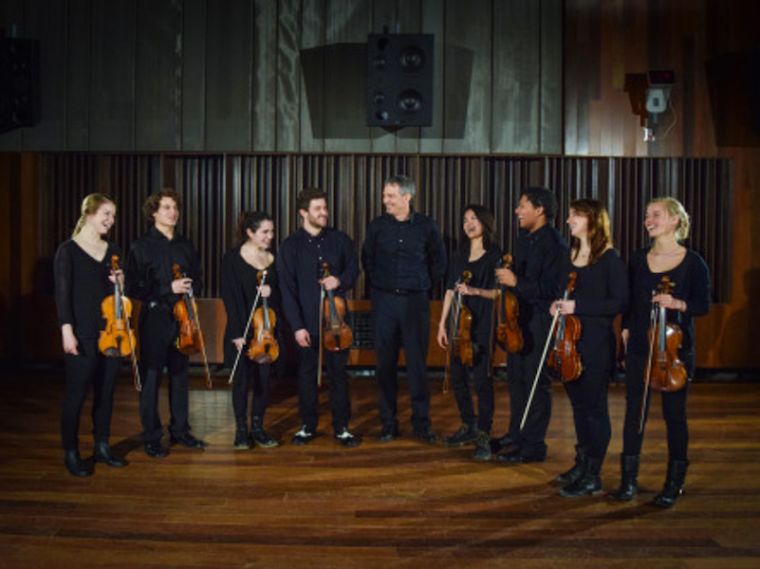
Photo credit: Julie Gulenko '15
The baton steadily rose, and with one swift cue they were off. A cacophony of dissonant sounds tore through the hall as all eight violinists raced ferociously for the double bar line.
Andrew Norman's Gran Turismo was named after and conceived from a video game from the late 1990s. “Rewind my life a bit and you might find a particular week in 2003 when I was researching the art of Italian Futurist Giacomo Balla for a term paper, watching my roommates play a car racing video game called Gran Turismo, and thinking about the legacy of Baroque string virtuosity as a point of departure for my next project," he wrote. "It didn’t take long before I felt the resonances between these different activities, and it was out of their unexpected convergence that this piece was born.”
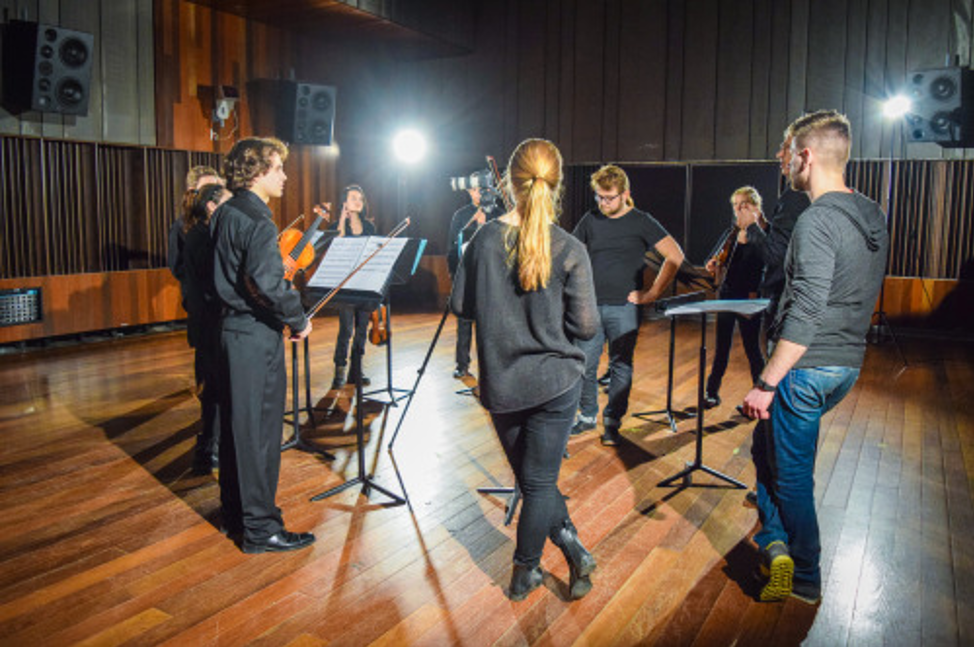
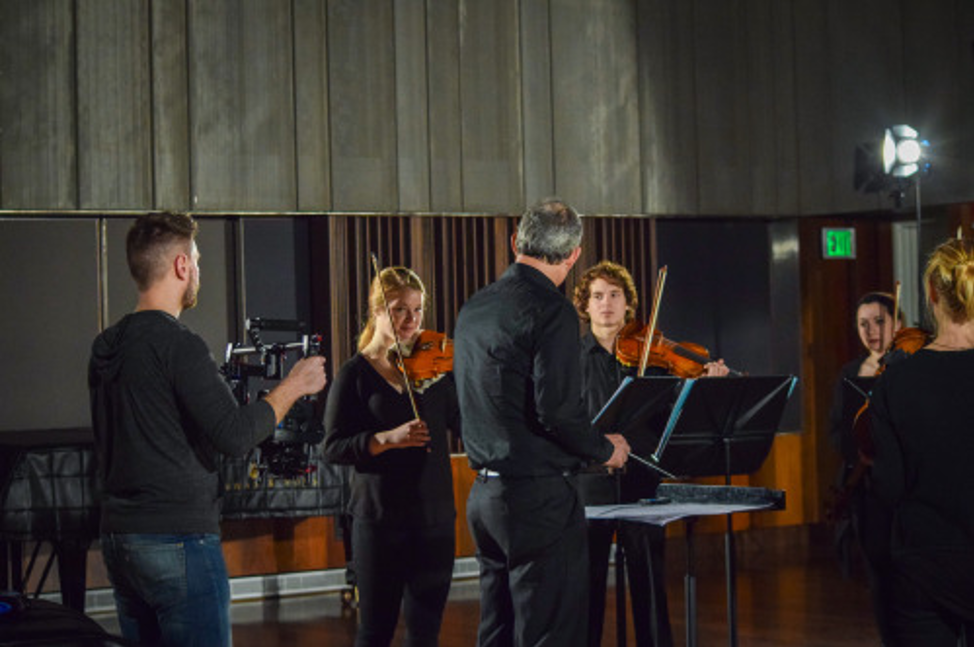
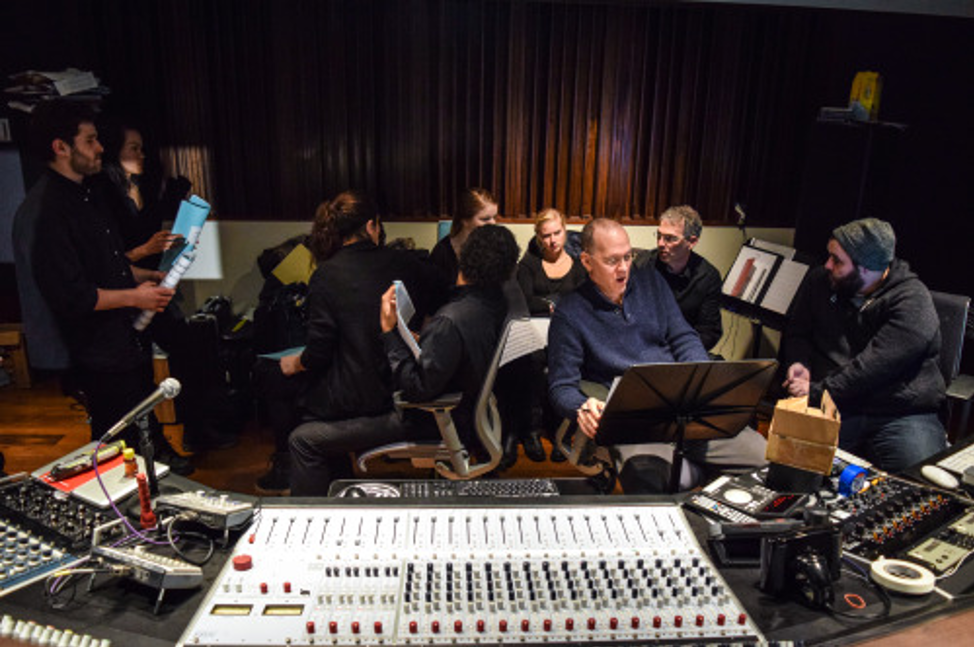
On January 24, 2016, conductor Timothy Weiss and eight virtuosic violinists of Oberlin’s Contemporary Music Ensemble stood in a circle at the center of Clonick Hall for a video recording session of Norman’s Gran Turismo. Just five days later, they would give two back-to-back performances of the piece onstage at Chicago’s Ganz Hall at Roosevelt University.
When Oberlin students Sophia Bernitz '16, Gregory Gennaro '17, Sophie Davis '17, Kah Yan Lee '16, Henry Jenkins '16, Thomas Cooper '17, Dana Johnson '17, and Francesca Fetten '16 first performed the piece in Oberlin’s Warner Concert Hall in November 2015, the audience was astounded by the mechanical precision, agile playing, and laser focus of the talented musicians onstage. The idea to capture a video recording of the race was born.

You may also like…
An Obie’s Guide to the Juilliard String Quartet
“The most important American quartet in history,” now celebrating its 80th year, opens the Artist Recital Series at Oberlin on September 26.
When Stars Align
The Oberlin Contemporary Music Ensemble shines on Jennifer Koh ’97’s "The American Concerto, Volume One."
Telling Stories Through Sound: The Verona Quartet and Mendelssohn's String Quartets
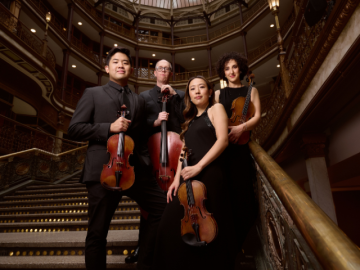
Storytelling has always been at the heart of the Verona Quartet. With its latest release, the ensemble turns to a composer who knew something about transforming stories into music: Felix Mendelssohn.