
Asian Night Market: Food, Identity, and Cultural Traditions
December 14, 2018
Phoebe Pan ’20

Vietnamese Student Association at Asian Night Market
Photo credit: Pang Fei Chiang '19
At Asian Night Market, food serves not only as an opportunity to share a good meal, but as an entrypoint into broader discussions about culture and identity.
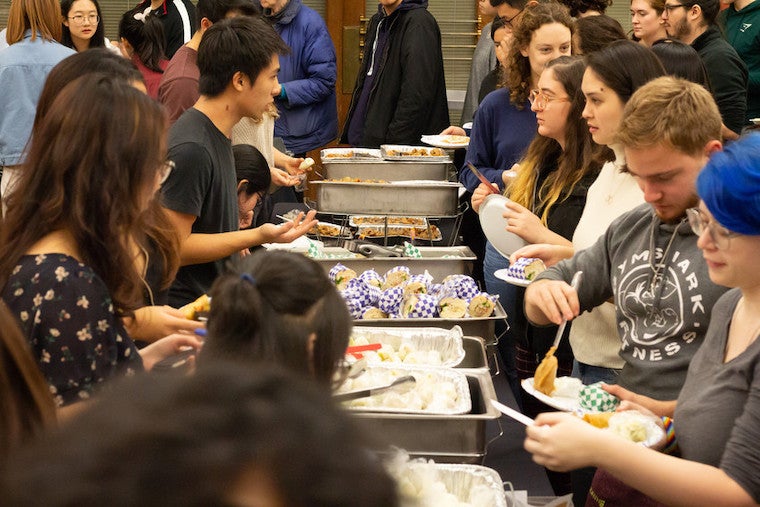
Photo by Pang Fei Chiang '19
Now in its eighth year, Asian Night Market is a crucial representation of how food is enmeshed with cultural traditions, personal identity, and a sense of community. This year’s event, which offered both a dining experience and a performance showcase, included a smorgasbord of dishes and culinary samplings from participating student organizations. Such groups included the Asian American Alliance (AAA), Chinese Student Association (CSA), Filipinx American Student Association (FASA), Japanese Student Association (JSA), Oberlin Korean Student Association (OKSA), Pan Asian Committee (PAC), Southeast Asian Student Association (SASA), and the Vietnamese Student Association (VSA).
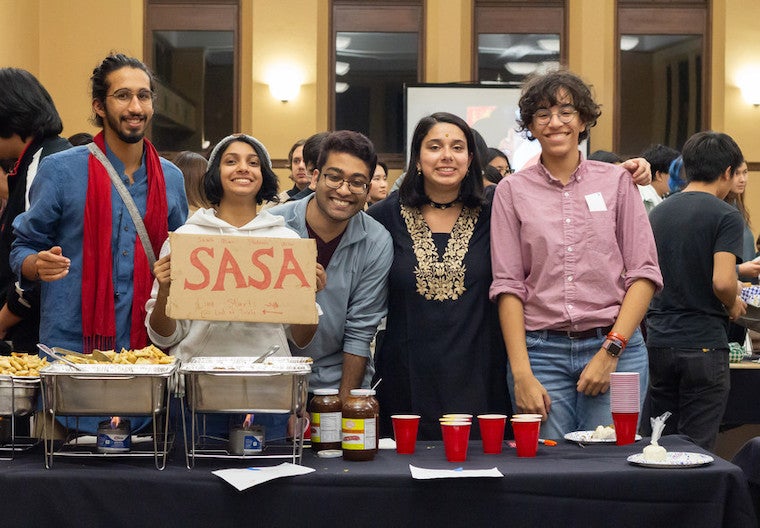
Photo by Pang Fei Chiang ’19
Mackenzie Lew ’19, Indrani Kharbanda ’20, Marisa Kim ’22, and Ryo Adachi ’22 were among the main organizers of the event for this year. Lew, who was also involved in organizing Asian Night Market in 2016 and 2017, points out the importance of hosting an event like this annually.
“The original goal for ANM is to replicate the types of night markets that happen in Asia,” she says. “It’s important for us because it is the only event on campus that brings all of these Asian and Asian American organizations together in one visible event.” Lew also hopes that people acknowledge ANM as not just an event at which to eat Asian food, but also as a space to recognize people’s complicated and diverse connections to food.
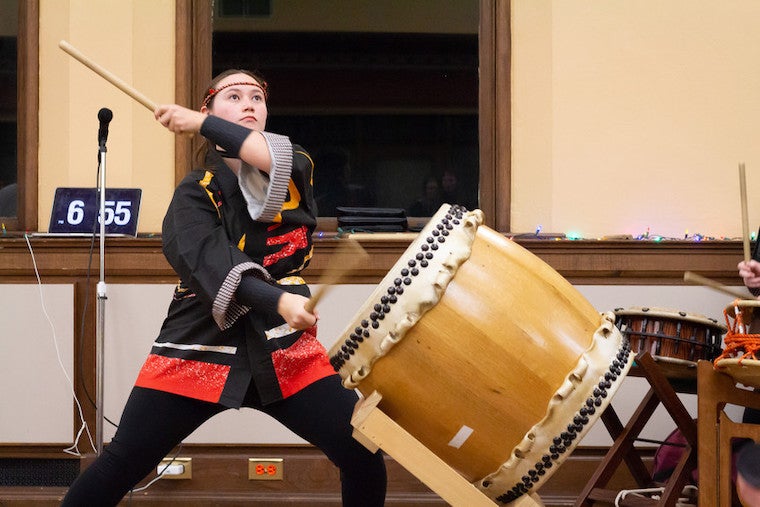
Photo by Pang Fei Chiang ’19
For Kim, a first-year, her favorite part of Asian Night Market is the student performances, which feature groups such as OC Taiko and #AsiaBand. “It's an opportunity for members of the small Asian community on campus to shine and celebrate their heritage,” she says.
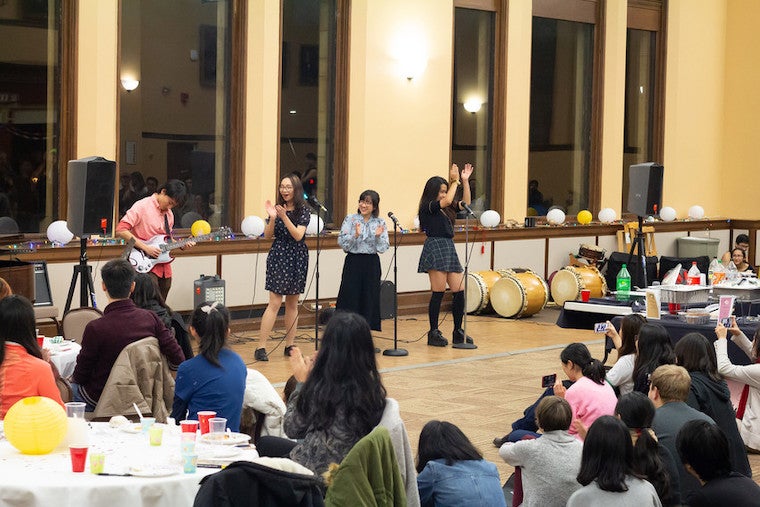
Photo by Pang Fei Chiang ’19
In addition to preparing for the actual event, the organizers hosted a panel during the “food for thought” week leading up to Asian Night Market. The discussion was titled, “What’s in Your Lunchbox: Junk Food and Comfort Food Across Asia,” and students covered topics ranging from their favorite comfort foods to their reactions toward people who lump Asian dishes under a single category. As one panelist pointed out, “Korean gimbap is not Japanese sushi.”
At this year’s event, Asian Night Market also began to engage more with issues outside of campus that affect underrepresented populations. “This year, we tried to encourage people to submit comments against the Public Charge rule, which would impact immigrant communities,” says Lew. “Besides giving critical context to the food we eat, Night Market provides a space for folks to build community with one another, and we also share that space with people who don’t identify as Asian or Asian American.”
You may also like…
From Oberlin College to Goldman Sachs
Anna Silverman ’22 has made a remarkable leap, from Oberlin to the investment banking firm Goldman Sachs.

Oberlin College & Conservatory Celebrates Black History Month
Throughout February 2024 (and a little into March), Oberlin commemorated Black History Month around the theme Ode to Home.

Illuminating the Intangible
The Allen Memorial Art Museum’s latest exhibit, Picturing the Intangible: Oberlin Looks at Dawoud Bey’s Night Coming Tenderly, Black, is part of a series exploring the Underground Railroad.
