
Running to the Noise, Episode 28
Billion-Dollar Giving: Cecilia Conrad on Changing How Philanthropy Funds Big Ideas
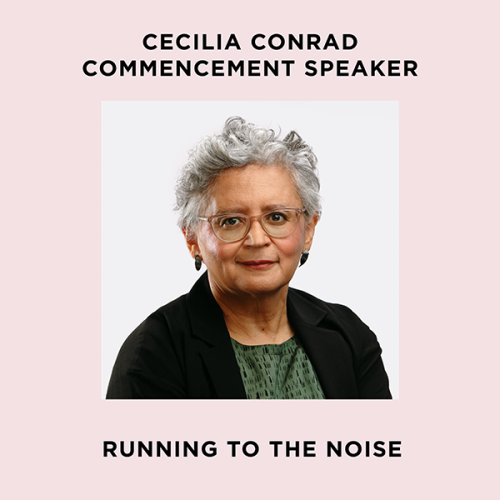
People closest to the world’s biggest problems often have the best solutions. They just don’t always have access to the dollars needed to bring them to life. That belief is at the center of Cecilia Conrad’s work to rethink how philanthropists find and fund big ideas.
In this episode of Running to the Noise, Oberlin College President Carmen Twillie Ambar speaks with Conrad, founding CEO of Lever for Change, the nonprofit that has helped direct more than $2.5 billion toward high-impact organizations around the world.
Before entering philanthropy, Conrad spent years in academia as an economist and professor focused on equity, access, and opportunity. A Stanford-trained economist and former managing director at the MacArthur Foundation, she now helps donors identify and support innovative organizations whose ideas might otherwise go overlooked.
Ambar and Conrad discuss how traditional philanthropy often relies on invitation-only networks that can miss promising ideas and organizations. The conversation centers on how efforts like Lever for Change and MacArthur’s 100&Change are opening those doors wider, helping philanthropists discover solutions they might never have otherwise encountered.
The episode also explores Oberlin’s tradition of bold, unconventional thinking, including its distinction as the nation’s leading liberal arts college producer of MacArthur “genius grant” fellows. From there, the discussion turns to the evolving role of philanthropy, the responsibilities that come with concentrated wealth, and how major donors decide which ideas and organizations to support.
Finally, the conversation closes with Cecilia’s thoughtful advice for Oberlin graduates and anyone stepping into the workforce who is interested in nonprofit work, philanthropy, and finding a meaningful way to leave their mark on their career and community.
What We Cover in this Episode
- Cecilia Conrad’s path from academia to philanthropy
- How Lever for Change has helped move more than $2.5 billion to organizations around the world
- Why traditional philanthropy can overlook innovative organizations and ideas
- The origins of MacArthur’s 100&Change competition and open-call philanthropy
- How billionaires and major donors think about risk, trust, and impact
- What Conrad learned from leading the MacArthur Fellows Program
- Why creativity and innovation often emerge from interdisciplinary thinking
- The importance of mentorship, friendship, and “diffusers” in sustaining leadership
- Oberlin’s culture of creativity, innovation, and public purpose
- What it means to “run to the noise” in philanthropy and leadership
Listen Now
Carmen Twillie Ambar: I'm Carmen Twillie Ambar, president of Oberlin College and Conservatory. Welcome to Running to the Noise, where I speak with all sorts of folks who are tackling our toughest problems and working to spark positive change around the world. Because here at Oberlin, we don't shy away from the challenging situations that threaten to divide us, we run towards them.
Cecilia Conrad has built her career around connecting big ideas with the resources they need to grow. She's the founding CEO of Lever for Change, a nonprofit that has helped move more than two point five billion to high-impact efforts around the world, many of which might never have been on a donor's radar screen otherwise.
Here at home, Lever for Change has unlocked seven million dollars in funding for four Cleveland and Ohio-based organizations. Her work is grounded in a powerful belief: the people closest to the problems often have the best solutions. They just don't always have the access to the philanthropic dollars needed to bring those solutions to life. Before that, Cecilia led the MacArthur Fellows Program, known as the Genius Grants, helping identify and elevate some of the most original thinkers of our time.
That work connects directly to Oberlin. The college has produced 15 MacArthur Fellows, more than any other liberal arts college in the country, reflecting a deep commitment to bold, unconventional thinking. A Stanford-trained economist and former professor, Cecilia brings that same spirit of innovation to philanthropy, changing how it works and who it reaches.
And this May, Cecilia will deliver Oberlin's 2026 commencement address. Cecilia, welcome to Running to the Noise.
Cecilia Conrad: Thank you. I'm delighted to be here.
Carmen: Well, we always get people of deep wisdom here at Oberlin, so I'm glad that you are in that tradition.
Cecilia: It also turns out I have amazing number of friends who went to Oberlin.
Carmen: Oh, do you?
Cecilia: I keep hearing from them. Yeah, I, people I didn't know, yes.
Carmen: Oh, that's great, so they sent you a note, "Oh, you're gonna be at Oberlin." Yeah, that's, that's totally an Obie thing to do. Well, we're so excited that you're gonna be speaking to our graduates, and I guess I wanted to start the conversation out in a way that sometimes people talk to me when they talk about my time at Oberlin, and I happen to be the first Black president of Oberlin.
You come from a family of firsts, and I'm wondering if you could tell our audience a little bit about your parents, and maybe after that, sort of how they have influenced your work.
Cecilia: So I am the child of two people who really believed in having a deep responsibility to community and to making the world better.
So my dad grew up in Baton Rouge, Louisiana. He finished Stanford, went to Meharry Medical School, then went to, uh, work at a hospital in Illinois. My mom, on the other hand, grew up in Champaign Urbana, Illinois, went to the University of Illinois, got her master's in home economics, ended up teaching at Morris Brown.
They met in St. Louis and ultimately moved to Texas and got very involved in the civil rights movement there in Dallas, where I was. And then my father became the first Black elected to a citywide office in Dallas, elected to the school board, and my mom was his campaign manager.
Then later, he served on the State Board of Education.
She was on the Coordinating Board for Higher Education in Texas. She was also the first woman and the first African American who was elected to the forewoman of the grand jury in Dallas.
Carmen: Wow.
Cecilia: So yeah, so they were, they were a hard act
Carmen: To follow.
Cecilia: So, you know, because I'm an only child, I went to everything with them.
Carmen: Did you? So you were seeing these images of these, these Black folks doing these firsts, these things that people hadn't imagined before.
Cecilia: And there was a dedicated group of people. You know, my parents were just among a cohort that was working hard. I had a wonderful experience recently. There's a, a touring exhibit from the National Women's Hall of Fame.
Carmen: Okay.
Cecilia: And they have these photographs, and one of, of heroes, and as I was looking at it. Wow. I spotted this woman named Juanita Craft, Mrs. Juanita Craft, who is from Dallas, and she's one of the people that I remember of, as, as a source of inspiration. Oh, wow. The way she sort of occupied a room. When she was in a space, you knew she was there.
Those were my role models, and they're also people who I feel I'm still trying to impress.
Carmen: Interesting. Oh, I love that feeling because, you know, I think when you're of a certain generation, and you and I are similar in this regard, you know, you're, you're still trying to impress your parents.
Cecilia: Yes. You don't stop.
Carmen: You don't stop. You're still trying to impress your parents, I think because, you know, like you, I come from these family of firsts, these people who did these incredible things under very difficult circumstances.
Cecilia: Mm-hmm. Mm-hmm. I think that's what people don't necessarily realize, what they had to go through in those contexts.
Carmen: Sometimes those of us from a certain generation kind of get a, a window seat into the distance that they traveled.
Cecilia: Yes.
Carmen: So some people have heard me talk about my dad picking cotton when he was six years old and growing up all of his formative years picking cotton.
Cecilia: Now, where did he grow up?
Carmen: He grew up in Arkansas.
Cecilia: Arkansas, okay. Right next door. Okay.
Carmen: Right next door. And you watch them travel these incredible distances, and I think you're right, their children watch them and are still trying to impress them.
Cecilia: Still trying to impress them. I don't know that I will ever completely do it, but it's okay.
Carmen: Well, when, when people hear about your career, I, I think that I would say you, you're measuring up, my friend.
You're measuring up. You, you talked a little bit about your mom being the first woman as a foreperson, and I'm wondering a little bit, too, you and I have this in common in the sense that you graduated from Wellesley.
Cecilia: Yes.
Carmen: I've been both dean and president of two women's colleges, and I'm wondering if you can talk a little bit about Women, women's colleges, what role you think they play in society, and anything you think we should know about women in leadership, because I think that's been a little bit of a thread through your career, and I'm wondering what you attribute Wellesley to in terms of your own successes.
Cecilia: Going back to my mother for a moment, she had her heart set on me going to a women's college.
Carmen: Really?
Cecilia: And I think it's partly because when she was in high school in Champaign-Urbana, she heard about Bryn Mawr. Now, it turns out Bryn Mawr was not accepting Black students at that time, but, but it wasn't even on her radar as a place to possibly go.
Carmen: Right.
Cecilia: But it got her interested in the historical Seven Sisters. Um, and so there was a way in which she was always very good at, at instilling ideas and making me think they were mine. So I'm pretty sure she was very good at that. Very
Carmen: Good at that. I love
Cecilia: That. Very good at that. So when I started looking at college, I, I, I knew that I wanted to leave the South.
I particularly wanted to leave Texas. I wanted to get myself immersed in a world beyond the one that I had grown up in. So I had focused on-
Carmen: Cecilia, before you go on. Yes, like what was that about? The nature of the South at the time? Was it about some other inspiration that you had in your mind? Like, why was it important for you to leave the South?
Cecilia: It was important for me, in part, there were lots of things. One is what we were talking about earlier. I wanted to be separated from my parents.
Carmen: Mm.
Cecilia: I love my parents dearly, you know, but-
Carmen: You wanted to forge your own thing.
Cecilia: Wanted to forge my own thing. I wanted to feel like I could maybe, you know, go to a party-
And not hear, have it come back home. Yes, right. I mean, I just I wanted to be able to define myself.
Carmen: Yeah.
Cecilia: So that was part of the inspiration, uh, for leaving. And I also was just conscious that there was a whole world beyond the world that I was growing up in. My parents, we traveled quite a bit, so I got to see some of the world that way, and I also leaned towards a women's college versus some of the other schools that were opening up at the time to women, included Princeton and those kinds of places.
Carmen: Yes.
Cecilia: But I thought that there would be a little bit of an easier move in if the only thing that kind of set me apart was race, and not race and gender.
Carmen: Interesting.
Cecilia: So I could see that this would be a place where I would still be in the minority because I was a Black woman, but I wouldn't be in the minority because I was a woman, and that might create a different kind of smoother path.
And there was some truth to that, I think, in terms of the kind of filtering that you do when you occupy these spaces. You get reactions from people. You're always filtering: is it that they're giving me this reaction because I'm a woman, or are they giving me this reaction because I'm Black?
I also had to run into the Southern accent that I had at the time. All of these filters. It was just left out one filter. I could drop some of those filters, and that was appealing.
And it was, in a way, a great place because there were women in leadership roles. I went to an economics department where the majority of the faculty were women. I was kind of clueless as to how male-dominated my field was till I got to graduate school, and there were just two women in my class. It was like, "What happened? What's going on here?"
It helped to instill a certain self-confidence. And we talk about the world of stereotype threat. I kind of dealt with that and overcame it so that I didn't really have it when I got to graduate school.
Carmen: Yeah, I love it. You know, I've been a big proponent of women's colleges, but in part because I think we all need images to look to to know that what we want to achieve is possible.
And when you see those images, you and I have this in common in that I was an economics major as well. I'm at Georgetown in the late '80s, and I'm still the only woman and the only Black person in my classes.
Cecilia: Wow.
Carmen: So I'm there, you know, in '86, '87, '88, '89. That's part of the reason why I was so attracted to women's colleges and these mission-centered organizations that are really clear about what they're trying to achieve.
And, you know, I think in this world, and I'll have to get your view on this, Cecilia, in this world where people are sort of abandoning commitments to DEI and saying that this stuff doesn't matter anymore, you know, I think we may have missed it. But I'm happy to hear your perspective on that.
Cecilia: I'm someone who, part of who I am today, part of where I am, goes back, well, first we can go back to Brown versus Board of Education.
Carmen: Yeah.
Cecilia: Right? In the sense that when I managed to come along, Dallas was one of those places that was desegregating with deliberate speed.
Carmen: Yeah.
Cecilia: And they were doing it one grade at a time.
But I ended up, you know, in high school spending half my day at a new school that was created actually to kind of create diversity and had special programs. So that was a great opportunity. I ended up going to Wellesley. And in 1972, there was a historic agreement with the Equal Employment Opportunity Commission and AT&T that led ultimately to the creation of the fellowship that funded my education in graduate school.
So there were lots of ways in which I know I directly benefited from these programs. And then some of my research has been on the efforts of these programs. And I think what sometimes gets lost in this discussion is people are frequently, and this is a problem in economics generally, there's so much of a discussion about that there's somehow an efficiency-equity trade-off.
It's mislabeled here because you're not going to find the best ideas, you're not going to find the best people unless you have opened the doors to everyone. And that's a through line actually even in the work I'm doing now at Lever for Change. It's just this is about productivity. This is about growth. This is about efficiency.
Carmen: Right. And as you are aptly saying it, you can't find it if you don't open the doors to all types of people from all types of perspectives.
Just to kind of make sure that our audience appreciates what you've been doing, you've been at Lever for Change transferring billions of dollars to organizations that people might not have ever seen before.
And one of the things you mentioned is that sometimes philanthropists have trouble finding the very people who may need the resources. And I'm wondering, what convinced you that the system itself needed redesigning? What was the thing that you said, "This system is messed up"?
Cecilia: So when I came into philanthropy to run the MacArthur Fellows Program, the Fellows Program is kind of unique in terms of how it goes about trying to find people. We're notoriously highly secretive, but we actually cast a really broad and wide net in looking for nominations.
Carmen: Yeah.
Cecilia: But what I learned from being inside of an institution, a legacy foundation, is that the vast majority of the grant-making happened as a form of invitation-only grant-making.
Carmen: Mm-hmm.
Cecilia: And that the organizations would hire people who were experts in a field. Those people would sit around the table and have rigorous discussions—
Carmen: Right.
Cecilia: But they would decide on a strategy, and then find people who would implement that strategy. So if someone had an idea that was different, or if somebody wasn't already known to the people around the table, they may not ever get seen or heard.
Carmen: Mm-hmm.
Cecilia: And there are reasons why that process is in place. It's because it can be overwhelming to process huge amounts of information. And when you do an open call, I can tell you, you get huge numbers of applications.
Carmen: Right.
Cecilia: And you want to process them respectfully. You don't want to just say no and leave it at that.
It was a recognition that there was an information asymmetry problem.
Carmen: Okay.
Cecilia: And then how do you go about solving it? Can we create a new way of solving it?
So a group of us at MacArthur spent some time thinking about this, partly prompted by Julia Stasch, who was the president at the time. She said, "What if we gave away, say, $100 million to a program or a project that we didn't choose ourselves?"
Carmen: Hmm.
Cecilia: That we got other people to help us choose it.
Carmen: Okay.
Cecilia: And it was that dilemma, that framing, that was a wonderful opportunity to try to be creative.
And so it's another example, too, where creativity happens in diverse groups. We had people from not only the program areas of the foundation, we had people from the business, we had people from grants management, from IT.
We had a mixed group of people sit around and brainstorm, and the result was this thing called 100&Change, which is a big MacArthur program. We're repeating it. We just had one this past year.
And I did not fully appreciate it because I was brand new to philanthropy then, but people started calling me a disruptor.
Carmen: Hmm.
Cecilia: And I was like, "Who? Am I?"
Carmen: Could you be talking about me? What?
Cecilia: But really it was something that was outside the box in terms of what had happened in philanthropy before, both in terms of the openness of it. We were open to applications from anywhere in the world. Any problem that people wanted to propose solving, we were open to.
We were transparent. We had pictures of all of the people who served on our evaluation panels. We also established a tradition there of sharing information, which is also not a practice that was common in philanthropy.
So we got many, many wonderful projects submitted to that. But in the end, we were only going to give out one $100 million grant.
What do you do with these other ideas?
We shared them with other funders.
Carmen: Excellent.
Cecilia: And we continue to do that every time we run one. So it was a way of kind of demonstrating, here's how we might be able to address some of this information asymmetry.
Carmen: One of the interesting conversations that the students and I had when we were talking about this potential conversation with you was this sort of sense of feeling overwhelmed, all of these incredible ideas, the obligation that you feel to help.
And I remember them asking sort of, you know, how do you find your focus when you are dealing with this kind of onslaught of incredible ideas in a world where you know lots of people need help, lots of things need to be solved?
Maybe you can walk us through the process of how you, as an organization, found that focus.
Cecilia: You know, the past year or so has been one of the more difficult in that regard. I think this was part of the impetus, in fact, for what became the work that we call our secondary market work, right?
Carmen: Okay.
Cecilia: We found these great ideas. We found these people who have dedicated their lives to these projects and these ideas.
What can we do to support them? And what can we do to treat them with dignity, to treat their applications with dignity?
The first was this insistence that we give feedback to every single proposal that gets through our eligibility screen gets feedback, so that's something that organizations tell us is incredibly valuable.
So we feel like, okay, we're doing that. Well, what else can we do to kind of help?
And so this work that we do with at least the top-scoring applicants and getting them to other funders is also something that can make you feel like, okay, I'm continuing to push, I'm continuing to help.
It still never feels like quite enough.
Carmen: Mm-hmm.
Cecilia: And so there is an element of just trying in terms of not only monetary support, but also finding ways you can give non-monetary support.
There are organizations, there's nonprofits out there now that are dedicated to helping reduce burnout in nonprofit leaders and so on.
So some of that is also just building in the time that's kind of the things that you know will refresh you.
Carmen: Hmm.
Cecilia: And for me, that's friendships.
This is something I think it's going to be important for graduates to know, for the seniors.
Carmen: Oh, I'm so glad you say this, because I do think there's this issue. Our students are feeling overwhelmed. They want to do good in the world. Our Obies are definitely in that space.
But they want to be able to continue to do it and not feel like they can't do it because they're just overwhelmed by the challenge of it all and the stress of it all as they're out there trying to do this work.
Cecilia: So...
Carmen: So you're getting ready to give them friendships was the first one.
Cecilia: Okay, friendships. And the important part about friendships is that when you leave college, they're not around you all the time.
Carmen: Mm.
Cecilia: You have to consciously build those networks and keep those refreshed, make sure you're doing stuff together.
I have a group of people, every Sunday morning we have a brunch, but it's all virtual. I mean, those kinds of things.
So friendships are really important, your support network.
You need, I call them people who help diffuse me.
Carmen: Mm.
Cecilia: Sometimes, you know, I get very upset about things I see in the world, and sometimes I am guilty of collectivizing my upset with one person to an entire group of people.
Carmen: Okay.
Cecilia: To put it kind of in a tactful way. And so I have people who I know will remind me that this is not a characteristic of the group and who will bring me back down.
Carmen: I love it.
Cecilia: So you...
Carmen: Diffusers. So you need a...
Cecilia: Diffusers.
Carmen: A couple diffusers, some friends and...
Cecilia: You need diffusers.
Carmen: A couple diffusers. Yeah.
Cecilia: You need diffusers. You need to build in the time to just do what you enjoy and what makes you relax and what makes you happy.
You're too young to have grandchildren, but grandchildren are great in that regard.
Carmen: Okay, okay.
Cecilia: So maybe you have to borrow other friends' kids.
Carmen: Borrow some friends' kids. Okay.
Cecilia: Or their dogs or something like that.
And then I always just, I think about the people I come from.
I was going to say this to somebody once, I'm not going to sing it, but if you know the song that we refer to as the Negro National Anthem...
Carmen: Yes, of course.
Cecilia: And lately it had some controversy recently...
Carmen: Yeah.
Cecilia: Because they sang it at the Super Bowl.
Carmen: Yeah, Lift Every Voice and Sing.
Cecilia: Lift Every Voice and Sing.
There's this line about sing a song full of the hope that the dark past has taught us. I run that in a loop sometimes.
Anyway, it's just that notion that so much has happened, there's so many ways in which the world is better, and that it's not a linear path. It's going to go in its ups and its downs and just keeping focused on that.
Keep your eyes on the prize, to borrow another phrase.
Carmen: You know, I think it's kind of back to our conversation of thinking about the distance that our parents traveled.
Cecilia: Yes.
Carmen: And so when you think about that distance, then you know things are better.
And it's not exactly where you want it to be, and maybe there are some things that have changed that are concerning you, but it doesn't mean that things aren't better.
And then that's a good thing to remember in these complicated times.
Since we're on the MacArthur Foundation, you know, the Obies out there listening would be really upset with me if I didn't mention that there are 15 Oberlin alums who have received MacArthur Fellowships, and that's more than any other liberal arts college in the nation.
So they would want me to mention that for sure.
But I guess that if Obies were here with me on this Zoom asking you this question, I think they would want to know what qualities tend to show up in people who do truly original work.
You have been selecting over this time these people who do original, innovative work, and I think Oberlin's known for that, these bold graduates who are innovative and creative.
One of the things I say at every admissions event, creativity and innovation breed here. That is one of the things that happens when you're an Oberlin student.
But I'm wondering what you think shows up in people who do truly original work, since you've seen so many of those folks who apply for that grant.
Cecilia: One of the things when I first got to run the Fellows Program, I took a look at their data and noticed a pattern that graduates of liberal arts institutions, both liberal arts colleges, but even other programs that what I would consider liberal arts degrees, were over-represented among the fellows.
And that made me stop to think about why is that?
And so Oberlin is over-represented among the over-represented.
And I think when I look at the fellows, the first characteristic is this continual learning process, that these are people who are always interested in learning and learning new things and pivoting when needed.
The second is the fact that many of them have had kind of interdisciplinary, cross-boundary experiences in terms of work that they've done, their studies.
You might have somebody who's a ballerina and a neuroscientist, those kinds of connections where much of their creativity emerges at the interstices of these things.
Carmen: Hmm.
Cecilia: And I think when I've read up on this, it's partly that you come into a place with an outsider perspective a little bit and into a field, and you ask questions that other people didn't think to ask before because they may not see the issue anymore.
Or perhaps it's something that you spot because of the experience you had in the other field, and it has a parallel, and you bring it.
Cecilia: That is a common element of the MacArthur Fellows, that they have had those kinds of experiences, almost the outsider perspective kind of experience.
They're also willing to take some risk. And that's another important point of this. I am always concerned that our society needs to make sure that we create an environment in which people can take risks and start over, and take risks and come back.
And it's, I think, in the context of liberal arts colleges, you're kind of forced to take these classes where maybe you're not going to be the top student.
Carmen: That's right.
Cecilia: You have that. And then many of our fellows also have a certain level of humility, which I think comes along with being a continual learner.
You recognize that you don't know everything, and you're also not uncomfortable with putting yourself in a room with people who are smarter than you are. And that, I think, is another kind of piece of this, that you need to be comfortable with that because that's how you learn.
Carmen: So, you know, it's interesting because you were at the foundation, you go on to founding Lever for Change, which is the kind of barrier-breaking organization that really honed in on this idea of opening up the door so that people could get connected to philanthropists who may not have known that their work was there.
And I'm wondering whether you feel like that kind of bold idea, were you concerned that it wouldn't work? What was the trepidation, if anything, as you kind of launched out on this new way of thinking about philanthropy?
Cecilia: Ah, when you ask was I concerned that it wasn't going to work, I have that concern every day.
Every day.
I mean, one of the things is that we are a nonprofit—
Carmen: Yeah.
Cecilia: And we support ourselves with fees that we charge when people run open calls, but also with philanthropic donations.
So there is, I share the tension of every nonprofit leader with, will I have enough to pay the payroll next year? I mean, that's always the kind of question.
So yes, I do worry.
When we started it, we started it with some advantage because we were being incubated out of MacArthur, but we weren't really sure. We thought people would want to work with us.
Initially, we thought our primary market would be ultra-high-net-worth individuals who didn't have their own staff.
Carmen: Okay. Looking for places to help—
Cecilia: To give out, yes.
Carmen: Right, but not having to have a whole group of people to manage it for them.
Cecilia: Or put up a big foundation, because many of the newer donors don't want to build foundations like the MacArthurs did.
Carmen: Yeah.
Cecilia: And then we thought that was going to be our main market.
What we learned quickly was that we also had interest from established foundations. We've worked with the Kellogg Foundation. We've worked with the Lego Foundation, who had not used this kind of philanthropic approach and wanted to experiment, wanted to explore some areas that they hadn't worked in again.
So the market turned out to be a little bigger than we thought, which was comforting.
But it's still, it's not a stable flow. I'll put it this way.
Carmen: That's a very thoughtful way, for those of you in the audience who are nonprofits. It's not a stable flow. That's very good.
Well, I'm going to use that, Cecilia. It's not a stable flow, folks.
Cecilia: So when I talk to people who we are interviewing for jobs, I always say, "Okay, how comfortable are you with ambiguity? Because I don't know that we still know what the right thing to do is. We're still figuring it out as we go along, and we need you to be part of that. We need you to be part of the fact that your idea about what we might do next is highly valued, and you should put it out there.
And then be okay if we don't move with it, but that's part of what it means to be in an organization that's still figuring it out."
Carmen: Well, you know, it's interesting because the folks who are on this team preparing for this conversation kind of jokingly called you the billionaire whisperer as a phrase.
And it's an interesting time for billionaires in this country and people's perspectives about how they acquired and amassed their resources. Do they do enough for society? Are they paying their fair share? All those things that we all hear.
And I'm wondering, since you rely on some of these folks to be a big part of your philanthropic efforts, what would you want us to know about how you approach these high-profile relationships and how you balance both this effort and desire to help them be helpful, but some of the critiques that people have offered up to the billionaire class, for lack of a better term?
Cecilia: So one of the things I think is core here is that when you live in a market-based democracy, there is this tension.
The market does wonderful things in lots of different arenas, but it also can lead to the concentration of wealth that we've seen.
And when you have a concentration of wealth, there's always a concern that that wealth can undermine what the democratic processes are in making decisions and so on.
And philanthropy is kind of at the nexus of those in a way. We only exist because there's a surplus being created in the market.
And so when I have conversations with billionaires who typically are deeply committed to democracy, also, vast majority of them recognize that some of the wealth they've accumulated is because of the system and because of luck and all sorts of factors, and feel a responsibility to redeploy it, a deep responsibility, wisely.
But that can also sometimes be an obstacle because they're afraid of making the wrong decision. They're afraid a little bit of doing something that attracts attention that's not positive.
So they're surprisingly risk-averse about their philanthropy.
Carmen: That's interesting.
Cecilia: It is, isn't it?
Carmen: That's interesting.
Cecilia: So one of what we've tried to do is to create a process that's rigorous, and to build trust on both sides. Trust on the part of the billionaires that we've done a rigorous process, but that once you've done that rigorous process, you need to trust, transfer as much agency as possible to the organizations who are doing the work—
Carmen: Interesting.
Cecilia: Who have the expertise that's needed to do it.
And they do respect expertise. So understanding that there's multiple forms of expertise, again, you're not always the smartest person in the room—
Carmen: Yeah.
Cecilia: Is part of what we do as we work with our partners.
Carmen: I love this story. Yield Giving founder MacKenzie Scott sought you out when she wanted to give $250 million to 250 charities serving low-income households and people facing discrimination.
But Lever for Change identified so many deserving groups that Scott doubled her initial pledge, awarding $640 million in grants to 361 organizations.
And I'm wondering if that type of experience has been something that you feel like happens when you open the door and people who have the ability to help see so many deserving organizations, that that's been one of the values in this strategy that you've employed.
Cecilia: It certainly has been.
That was the apex of it.
Carmen: Yeah.
Cecilia: Yes. Which we're very proud of.
But indeed, I found that when we work with donor advisors and donors, because they have not had this kind of approach to grant-making in the past, there's a little bit of uncertainty of will you find something?
Cecilia: Because think about it, this is a courageous step. Donors who work with us are committing to give a significant grant without knowing where they were giving it at the beginning of the process.
Carmen: Mm-hmm.
Cecilia: Right? So it requires a bit of trust. And so there usually is this fear that you won't be able to find what I want, enough of what I want to fund.
And so that's always a challenge for us. Like, "Oh, yeah, yeah, we can do that. We can find it."
Carmen: Yeah, we'll be okay. We'll be okay.
Cecilia: We'll find you some—
Carmen: Good people to give this money to, I assure—
Cecilia: You. Yes. Yes.
And it almost always happens. I mean, the donors either, you know, they make their big grant, and then some of the donors we've worked with will tell us that they have taken the group of organizations that we have identified, and that that's helped to inform their future grant-making, particularly when people are just getting started.
So maybe they didn't get the big grant, but they may have gotten some smaller capital along the way. So that's something that is one of our goals.
I think the next donor we worked with, in the fall, we worked with Pivotal Ventures, which is Melinda French Gates. This is the second time... Well, actually, this is the second time she's worked with us on Action for Women's Health, which was a global grant strategy.
And there again, I think it exceeded expectations a bit in terms of what we were able to identify.
Carmen: I know you've worked with MacKenzie Scott, you've worked with Melinda French Gates, you mentioned there. Any observations about women in philanthropy?
Cecilia: Well, the first thing I will observe is if you look at the, Forbes produces this list, Forbes 400, and they give people philanthropy scores.
Carmen: Right.
Cecilia: And I like going through and finding the women on the list, and there are not a lot of women on the 400 list, but they tend to be over-represented in the higher scores. That's my impression.
Okay, and that's a very too small sample to be statistically significant, but I'll make that observation.
My hypotheses include the fact that one of the obstacles sometimes to doing the kind of giving that we're encouraging is that you do have to give away some control. You have to share decision-making.
There's a socialization process that I think happens to most of us, where we're much more comfortable working in teams, working with others, working as a group to solve a problem.
I find that there's a higher comfort level. That's my theory, that there's a higher comfort level among the women donors in doing that.
Carmen: That resonates with me. Just thinking about women in leadership and how people talk about women in leadership and their perspective on women in leadership, that this ability to kind of work collectively in teams and to have a kind of shared approach to decision-making.
Obviously, not exclusively women, but I would agree with that observation, and I was wondering whether that would be true in your dealings.
You know, so many things for us to talk about, but I know you're going to be talking to our graduates in just a few days. So Cecilia, is there any piece of advice that you would want our graduates to really take heed?
Cecilia: Yes. I'm going to do a sneak preview of my speech, which will provide more context, but there's really three takeaways for me.
The first is continue to learn. Formal schooling may be ending completely for some of you.
Some of you may be going to graduate school and so on. But the learning that happens outside of the classroom is even better, and you should always look for opportunities to be in a learning mode.
The second is that you need to be ready to take some risks and to pivot. It's good to have a plan. There's this famous thing from Mike Tyson, everybody has a plan till they get hit in the face.
Carmen: That's right.
Cecilia: You should have a plan, but you should understand that that plan maybe gets set aside and changed, but be ready to take risks.
This is the moment where you really probably can take some risks to try out new things and to consider different paths.
And then I talk about the fact that if you ever find yourself in rooms, or if you tend to find yourselves in rooms where you're the smartest person in the room, it's time to change rooms.
Carmen: I love it.
Cecilia: You need to move on. You need to find intervals where you're being challenged by the people around you, and that's the way you learn.
And then the last piece is just that if you are in those rooms where things are happening, you really need to hold the door open to make sure other people can come in and join you.
I just was given a quote earlier today that I was not familiar with, with Shirley Chisholm.
Carmen: Oh, okay.
Cecilia: That she says that, "If there's not room at the table, you should bring a folding chair."
Carmen: I love it. Well, thanks, Cecilia.
We are excited about you being the commencement speaker, and I look forward to our students getting your wisdom, because if they do what you've done, then the world's going to be a better place for sure.
Cecilia: Oh, thank you.
Carmen: Michelle Obama described Obies as people who run to the noise, and there's certainly been so many aspects of your career where, you know, I would say you ran to the noise, and you've been in these top 100 folks in philanthropy and all of these wonderful accolades for your work.
But what would you say to our audience about how you run to the noise?
Cecilia: Running to the noise is what brings me joy. That's what I've recognized about myself.
I'm a problem solver. I want to try and solve problems. I am not necessarily always the smartest person or the most creative person to solve the problems, and so part of what running to the noise for me is running to those people who are.
I recognize as having those skills and kind of, you know, giving them a push up, giving them a push over, nudging, helping to support them, helping them get the resources.
That is what brings me joy.
I felt that way as a college professor, that so many of my students, I just am wowed by who they are, and certainly running the Fellows Program, that was the job itself.
Carmen: Yes.
Cecilia: But I feel that way now. Every day I get to have these conversations with amazing social entrepreneurs from all over the world. They're so dedicated, and they get so much done.
They need support.
They need sometimes even just to have a gray-haired person like me listen while they talk.
Carmen: Well, I thank you so much for spending your time with us today and for being a part of our commencement ceremonies.
I am excited for the students to hear what you have to say, and quite frankly, I took some of my own notes in our conversation.
I think I need a couple of diffusers, Cecilia. I think when I went down the list of things that I need, friendships, I got that, how to relax, of course, refresh myself, but diffusers?
Cecilia: Yeah. They're critical.
Carmen: I think I'm missing a couple of diffusers. I think I'm going to leave our conversation and go see if I can scrounge up a couple of them.
Thank you so much.
Cecilia: Thank you.
Carmen: Thanks for listening to Running to the Noise, a podcast produced by Oberlin College and Conservatory.
Our music is composed by Professor of Jazz Guitar Bobby Ferrazza and performed by the Oberlin Sonny Rollins Jazz Ensemble, a student group created through the support of the legendary jazz musician.
If you enjoyed the show, be sure to hit that subscribe button, leave us a review, and share this episode online so Obies and other folks can find us too.
I'm Carmen Twillie Ambar, and I'll be back soon with more great conversations from thought leaders on and off our campus.
Episode Links
Running to the Noise is a production of Oberlin College and Conservatory.