
Plot Points
June 24, 2026
Serena Zets ’22
Header photo credit: Tanya Rosen-Jones '97
At Oberlin, a class with an exceptional professor might lead you to a major you never considered—or even an entirely unintended second degree. Likewise, an ExCo or work-study opportunity may make you realize you want to be an educator yourself. An experience on campus might inspire your artistic life beyond Oberlin. Or maybe your Oberlin experience itself will be an amalgamation of all of the paths above.
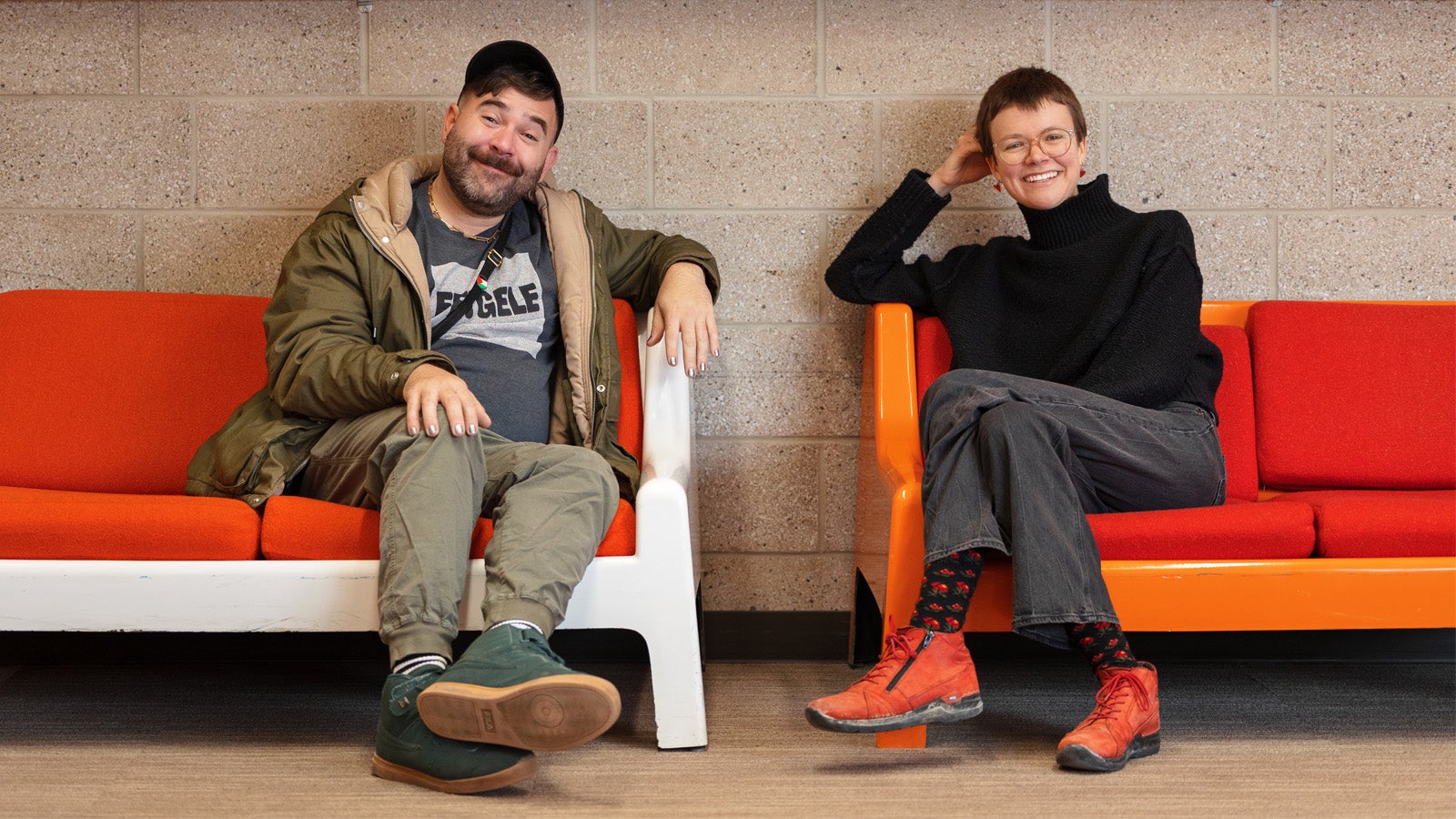
Sam Sax ’09 was the type of Obie open to trying anything during college. The celebrated author and poet took only one creative writing class at Oberlin. “I didn’t know there was a track for professionalizing my art,” Sax says. “I was just moving toward the thing I loved [writing] because I loved it.” Instead, Sax built their artistic practice through classroom experiences and on-campus performance opportunities.
Faculty in multiple disciplines, including Professor of Theater and Africana Studies Caroline Jackson-Smith and Emeritus Professor of Studio Art and Africana Studies Johnny Coleman, collapsed the invisible border Sax had been taught to believe existed between academic and activist. Their involvement in the long-form improv group the Sunshine Scouts equipped them with the ability to trust their artistic instincts and learn how to build worlds. “If there wasn’t something there [at Oberlin], you had to build it,” Sax says. “A ton of collaborative and collective work happened across campus.”
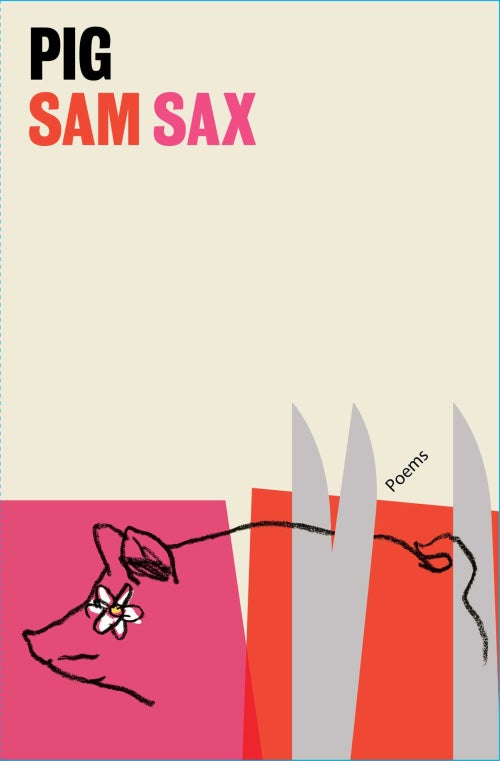
Post-Oberlin, Sax has built a robust creative life. They’ve published eight books and chapbooks, including their National Book Award-longlisted debut novel Yr Dead, a self-described “queer, Jewish, Diasporic coming-of-age tale” about protagonist Ezra confronting their death after lighting themself on fire. Sax approaches such a harrowing topic head-on with the lyricism and introspection of a poet, creating an imaginative rumination on queerness, religion, and life itself.
Most people don’t leave undergrad having been in a workshop class basically every semester. Oberlin already gave me that—the chance to develop my sense of what I like and don’t like.”
Fiona Warnick ’22
This spirit of experimentation and reflection rings true for Fiona Warnick ’22, author of The Skunks, reviewed in the New York Times and named a must-read book of 2024 by Time. The book follows the malaise of protagonist Isabel during the summer after graduation, when she returns home to western Massachusetts and attempts to figure out what to do next.
Warnick worked on The Skunks during her time at Oberlin, logging long afternoons in the Local and Slow Train coffee shops or writing after her shifts at Azariah’s Café in Terrell Main Library. Her capstone thesis class, which was taught by former Assistant Professor of Creative Writing Allegra Hyde, gave her more opportunities to polish the manuscript. Warnick ended up selling The Skunks to publisher Tin House right as she graduated; she credits her Oberlin workshop experience with strengthening the draft to the point it was publishable.
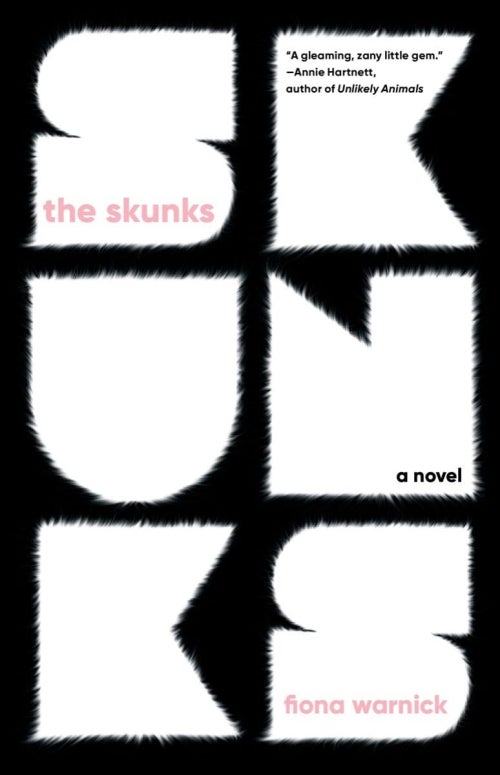
“Recently I met someone who’s applying for an MFA because she’s never been in a workshop, and I felt like, ‘Oh, right, most people don’t leave undergrad having been in a workshop class basically every semester,’” Warnick says. “Oberlin already gave me that: the chance to develop my sense of what I like and don’t like, which in my opinion is the point of a workshop.”
On top of their writing lives, both are educators. For the past five years, Sax has taught in ITALIC, an immersive arts program for first-year students at Stanford. “My favorite part of teaching is getting to be in arts school again alongside my students,” Sax shares. “Together we’re grounding ourselves in our bodies and experimentation and play and accepting being an amateur in something.”
Meanwhile, Warnick teaches kindergarten at St. Ann’s School in Brooklyn, New York. At Oberlin, she was a teaching assistant for multiple creative writing courses and took a formative class called Teaching Imaginative Writing. Taught by Emerita Professor of Creative Writing Lynn Powell, the latter enabled Warnick to design and teach poetry workshops to sixth graders at a local middle school. “I remember thinking that class felt so much more real than anything else that had happened to me at Oberlin,” Warnick says. “The stakes weren’t a grade. This group of 12-year-olds was going to have a positive or negative relationship to poetry based on what we did.”
Sax is simultaneously working on a new book of poems and a new novel, embracing the genre-breaking and embodied nature of their work. The poems draw their forms and structures from other practices—an idea Sax has been tinkering with while lecturing in ITALIC and learning from their students. “At the heart of it, the question is, ‘What can art do, and why are we doing this?’” Sax says. “The poems butt up against the material and real terror of the world and how our art practices are part of it.”
Following the success of The Skunks, Warnick sold her second novel, Alex, which is publishing in early 2027. “After you write something, you ask yourself as a writer, ‘Is that it?’” Warnick says. “It was affirming to know I could do it again—I could write a second book.” She began the novel as a joke at the suggestion of her agent, who recommended she have something new and distracting to work on while experiencing the stress of selling and editing The Skunks.
A “situationship novel where all the sex scenes are replaced by endnotes told in rhymed sonnets,” it’s quite different from her last effort, she adds. “It’s about college. It’s about how romance interacts—or doesn’t—with the rest of our lives.”
In February 2025, the authors joined forces on campus for a reading in Dye Lecture Hall at the invitation of Warnick’s mentor, Associate Professor of Creative Writing Emily Barton. “I saw many transformative talks there,” Sax says. “It was special to step into the physical space that had been so special for me.”
Both read from their books and spoke about their experiences as students and writers at Oberlin. Sax had been back to campus to read a handful of times since graduating, but this marked Warnick’s first professional return. “It was wild that the seniors in the audience were freshmen when I was a senior,” she says. “I had been their TA, and now I had this book. Because they’d known me, hopefully it felt like, ‘That can be me next.’”
This article originally appeared in the Spring 2026 issue of the Oberlin Alumni Magazine.