
Student Project Profile
Exploring the Impact of Medical Gendered Racism and Healthcare Stereotype Threat on Pelvic Pain for Black Women Using the Minority Stress Model
Project Title
Exploring the Impact of Medical Gendered Racism and Healthcare Stereotype Threat on Pelvic Pain for Black Women Using the Minority Stress Model
Faculty Mentor(s)
Project Description
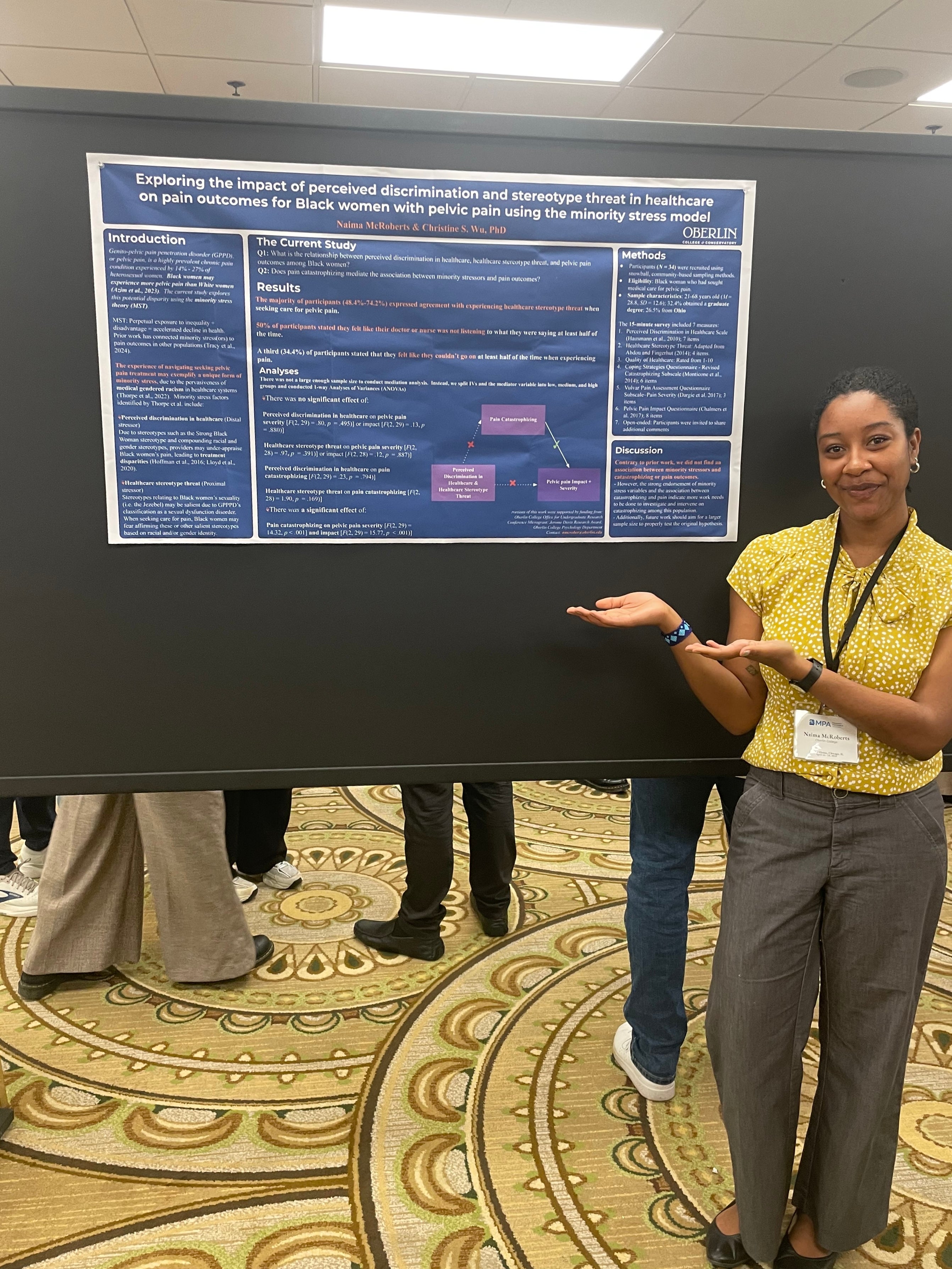
Genito-pelvic pain penetration disorder, or pelvic pain, is a highly prevalent chronic pain condition experienced by 14% - 27% of heterosexual women. While prior literature has reported that Black women are less likely to experience pelvic pain than White women, recent studies have demonstrated that Black women may experience more pelvic pain than White women. These findings indicate that Black women’s pelvic pain has likely been underreported and understudied, potentially neglecting a significant area of health disparity. This project aims to fill the gap in academic and public understanding of the roots of racial disparities in chronic pain outcomes by applying the minority stress model to Black women’s experiences of chronic pelvic pain. Extending previous work on the impact of discrimination on pain, the current study proposes that navigating minority stressors while seeking care for pelvic pain may exacerbate negative pain outcomes for Black women.
Why is your research important?
Black women's healthcare experiences are severely understudied, although they face some of the most extreme health disparities in the country. It is imperative that research be conducted to address these disparities and provide pathways to solutions.
What does the process of doing your research look like?
I started with a semester of reading to build up my literature review. I wrote much of my introduction to my thesis the following summer. Then, I spent a semester working on community-based participant recruitment. And finally, winter term and my final semester conducting data analysis and writing up my results.
What knowledge has your research contributed to your field?
Though the effects of minority stress on chronic pain outcomes have been demonstrated among some populations (such as queer youth), this study is the first of its kind to quantitatively examine the impacts of minority stress on Black women’s chronic pain. My research aims to contribute to empirical understanding of Black women’s pain experiences and the impacts of minority stress– key issues in the public health field.
In what ways have you showcased your research thus far?
I have presented my research at the Ohio Undergraduate Psychology Research Consortium Annual Conference, Highland Hills, O.H; the Midwest Psychological Association Annual Conference in Chicago, I.L., and the Oberlin College Research Symposium. I have also been invited to guest teach a class for the Massage ExCo, and discuss my research at Oberlin House of the Lord Fellowship.
How did you get involved in research? What drove you to seek out research experiences in college?
I got involved in research in high school while working with a research collective called Treatment Not Trauma. That experience inspired my love for community-based research and public health initiatives, which have guided my interests ever since!
What is your favorite aspect of the research process?
Any aspect of the process where I get to talk about my work with the people whom it impacts most. I got to do this often during my recruitment process and while disseminating my findings!
How has working with your mentor impacted the development of your research project? How has it impacted you as a researcher?
My mentors have been very supportive of my ambitions to do community-engaged research despite the limited time and resources I had to conduct this project. Their enduring guidance and cheerleading has allowed me to explore my passions and develop my values within psychology research without the pressure to conduct the perfect study.
How has the research you’ve conducted contributed to your professional or academic development?
Conducting this project has solidified my resolve to continue working in health advocacy, particularly in the women's health field. My project has also helped me to develop strong skills across a variety of areas, including project management which I think will serve me well in my professional career.
What advice would you give to a younger student wanting to get involved in research in your field?
Ask for help, and have lots of conversations with people within and outside of your field.
Students
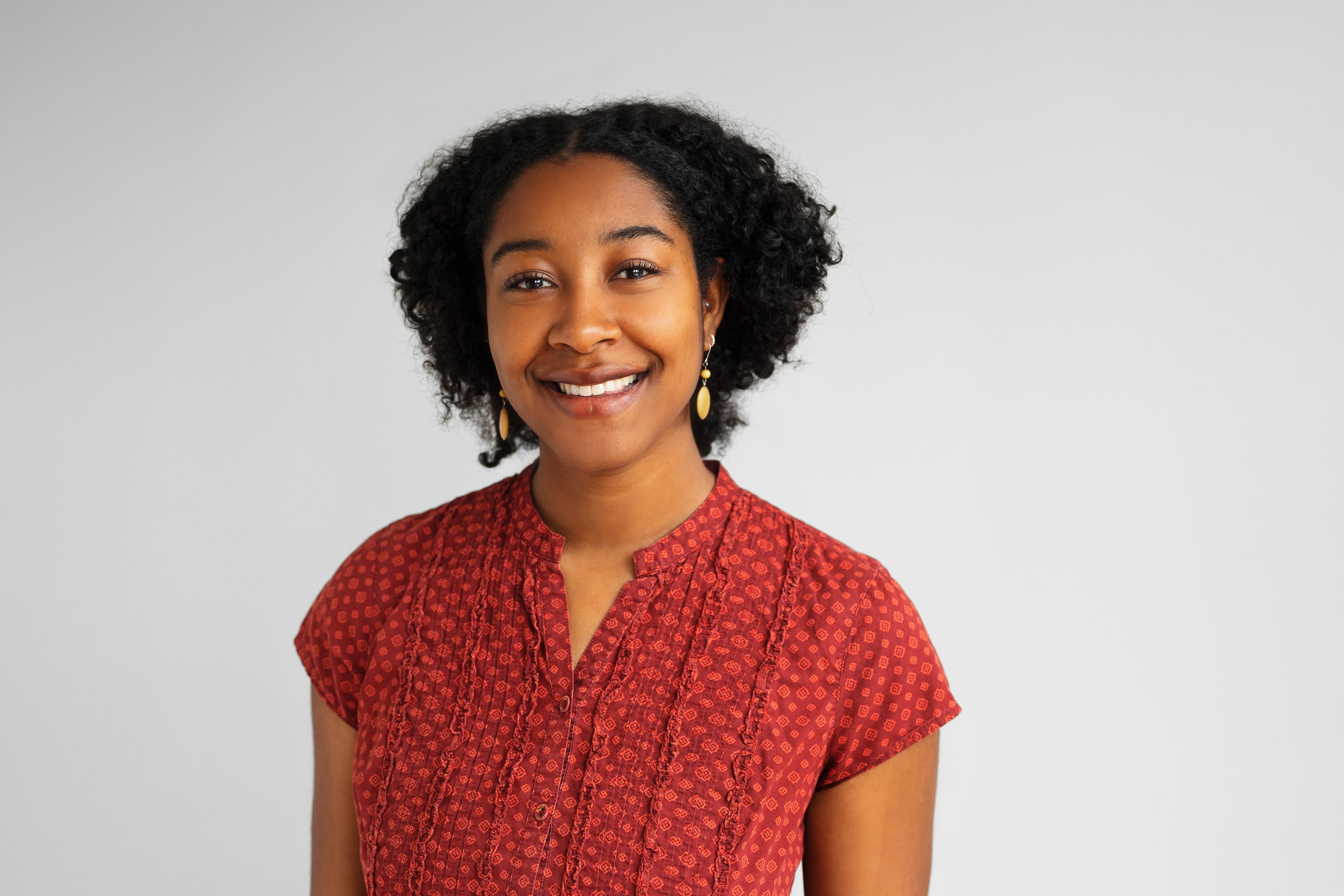
Naima McRoberts ’26
fourth-year- Major(s):
- Psychology