This World Wide Web page written by
Dan Styer,
Oberlin College Department of Physics and Astronomy;
http://www.oberlin.edu/physics/dstyer/P111/;
last updated 1 April 2024.
Technical note: To access the links marked (PDF) you must first download the free Adobe Acrobat Reader or Open Standard software.
Teachers: Classroom: Dan Styer; Laboratories: Bryan Terrazas.
Information about physics problems is available through:
Conductors in electrostatic equilibrium (PDF)
Electric potential energy (PDF)
Analogy between electric and fluid circuits (PDF)
Magnetic field due to a single moving point charge (PDF)
The sources of electric and magnetic fields (PDF)
How relativity connects electric and magnetic fields (PDF) by Michael Fowler, University of Virginia
Etymology of the term "BNC connector" (bayonet Neill Concelman)
RC circuit; slow changes (PDF)
RC circuit; fast changes (PDF)
Conclusions concerning RC circuits from our qualitative discussion (PDF)
Solution of the RC cirucit differential equation (PDF)
Humans can't, but bees can visually detect polarized light.
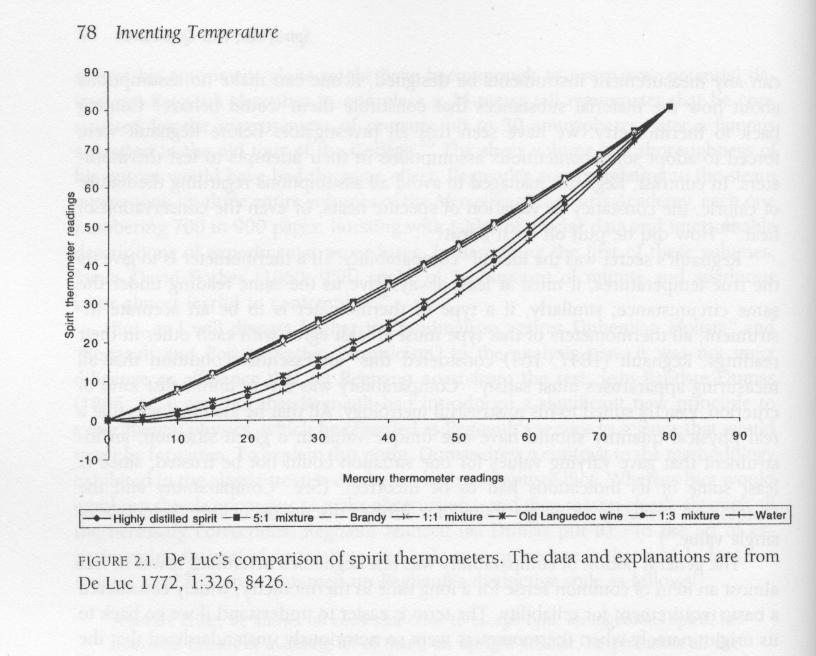
Comparison of alcohol and mercury thermometers by the Swiss scientist Jean-Andre De Luc to test for comparability. (That is, for consistency of measurments by several thermometers of the same type.) Figure from Hasok Chang, Inventing Temperature (Oxford University Press, 2004).
Efficiency of a Carnot engine (PDF)
Entropy and Rust (PDF) It's common to conflate the scientific concept of entropy with the everyday concept of decay and disorder. This misconception is shown to be hilariously off the mark.